Durability and safety are two fundamental pillars of any successful construction project. While design calculations, material specifications, and laboratory testing play a crucial role during planning, actual site conditions often differ from theoretical assumptions. Variations in weather, workmanship, material handling, and execution methods can significantly influence the final quality of a structure. This is where field testing becomes indispensable.
Field testing provides real-time insight into how materials and construction processes perform on site. By identifying issues early, it helps engineers and project teams ensure compliance with specifications, reduce long-term risks, and deliver structures that are both safe and durable.
Why Field Testing Matters in Construction
Construction projects involve multiple variables that cannot be fully replicated in a controlled laboratory environment. Transportation of materials, on-site mixing, curing conditions, and placement techniques all affect performance. Field testing bridges the gap between design intent and actual execution.
Without proper on-site testing, defects may remain unnoticed until they manifest as cracks, settlement, corrosion, or even structural failure. Field testing allows teams to verify quality at each critical stage, making it a proactive tool rather than a reactive one.
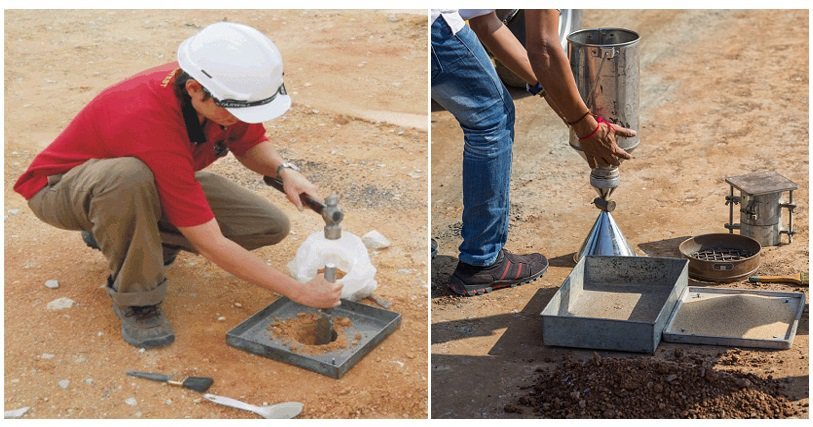
Key Types of Field Testing and Their Role
1. Concrete Field Testing
Concrete is one of the most widely used materials in construction, and its quality directly affects structural integrity.
- Slump Test: Conducted on site to assess workability and consistency of fresh concrete. Poor workability can lead to honeycombing, segregation, or weak bonding.
- Temperature Measurement: High or low concrete temperatures can impact setting time and strength development.
- Compressive Strength Samples: Field-cast cubes or cylinders are tested to confirm that in-place concrete achieves the specified strength.
These tests help ensure that concrete performs as designed under real construction conditions.
2. Soil and Compaction Testing
The performance of any structure depends heavily on the soil supporting it.
- Field Density Tests: Used to confirm proper compaction of soil layers, preventing excessive settlement.
- Moisture Content Checks: Ensure soil is compacted at optimal moisture levels.
- Plate Load Tests: Assess the bearing capacity of soil at foundation level.
Proper soil testing minimizes the risk of foundation failure and uneven settlement over time.
3. Asphalt and Pavement Testing
For roads, airfields, and pavements, field testing ensures long-term serviceability.
- Core Sampling: Verifies pavement thickness and material uniformity.
- Surface Evenness Tests: Help detect construction irregularities that could affect ride quality and drainage.
- In-situ Density Tests: Confirm adequate compaction of asphalt layers.
These tests play a critical role in preventing premature cracking and rutting.
4. Non-Destructive Testing (NDT)
Non-destructive testing techniques are particularly valuable because they assess structural elements without causing damage.
- Rebound Hammer Test: Provides an estimate of surface hardness and concrete quality.
- Ultrasonic Pulse Velocity (UPV): Detects internal flaws, cracks, or voids.
- Cover Meter Testing: Verifies reinforcement placement and concrete cover depth.
NDT methods are especially useful for quality verification and condition assessment in both new and existing structures.
Enhancing Safety Through Field Testing
Construction safety is not limited to worker protection during execution; it also includes the long-term safety of occupants and users. Field testing helps ensure that load-bearing elements, pavements, and foundations meet design requirements.
By validating material strength and workmanship, field testing reduces the likelihood of structural failures, collapses, or serviceability issues. It also supports informed decision-making when unexpected site conditions arise, allowing engineers to implement corrective measures before risks escalate.
Field Testing and Long-Term Durability
Durability issues such as corrosion, shrinkage cracks, and material degradation often originate from early-stage construction deficiencies. Field testing helps detect these vulnerabilities early.
For example:
- Improper concrete cover detected through testing can lead to reinforcement corrosion.
- Insufficient compaction identified on site can cause settlement and cracking.
- Poor-quality materials revealed through testing can be rejected before use.
Addressing these issues during construction significantly extends the service life of structures and reduces maintenance costs.
Best Practices for Effective Field Testing
To maximize the benefits of field testing, construction teams should follow a structured approach:
- Integrate Testing into the Project Plan: Field testing should be scheduled alongside construction activities, not treated as an afterthought.
- Use Standardized Procedures: Tests should follow recognized standards to ensure accuracy and consistency.
- Ensure Skilled Personnel: Proper training is essential for reliable test results.
- Maintain Accurate Records: Documenting results supports quality audits and future assessments.
- Use Reliable Testing Equipment: Consistent and calibrated tools are critical for dependable outcomes.
Access to professional testing services and equipment providers, such as those supporting field and laboratory testing solutions through platforms like Certified MTP, helps construction teams maintain testing accuracy and compliance without disrupting project timelines.
Reliable field testing also depends on access to standardized testing equipment and proper calibration. Using certified and well-maintained tools ensures accurate results, especially for critical tests related to concrete strength, soil compaction, and non-destructive evaluation. Resources such as construction material testing equipment suppliers support engineers and site teams by enabling consistent quality checks that align with recognized testing standards.
Conclusion
Field testing is a vital component of modern construction quality control. It ensures that materials, workmanship, and site conditions align with design expectations, directly influencing safety and durability. By identifying potential issues early and validating performance in real conditions, field testing protects investments and enhances the reliability of built infrastructure.
In an industry where long-term performance matters as much as initial completion, field testing remains one of the most practical and effective tools for delivering safe, durable, and high-quality construction projects.