Construction sites are among the most chemically complex workplaces in any industry. At any given time, a single site may hold dozens of hazardous substances including solvents, adhesives, cement compounds, coatings, and fuels. Workers encounter these substances daily, often without fully understanding the risks involved.
According to the International Labour Organization, around one billion workers globally are exposed to hazardous chemicals in their workplace every year. Construction is consistently one of the most affected sectors.
EU-OSHA identifies construction as a priority industry for dangerous substance exposure with 75% of construction workers in one major study reporting chemical exposure risks on site. The majority of these incidents are entirely preventable with the right information, the right equipment, and a clear system for managing chemical safety.
The Most Common Chemical Hazards on Construction Sites
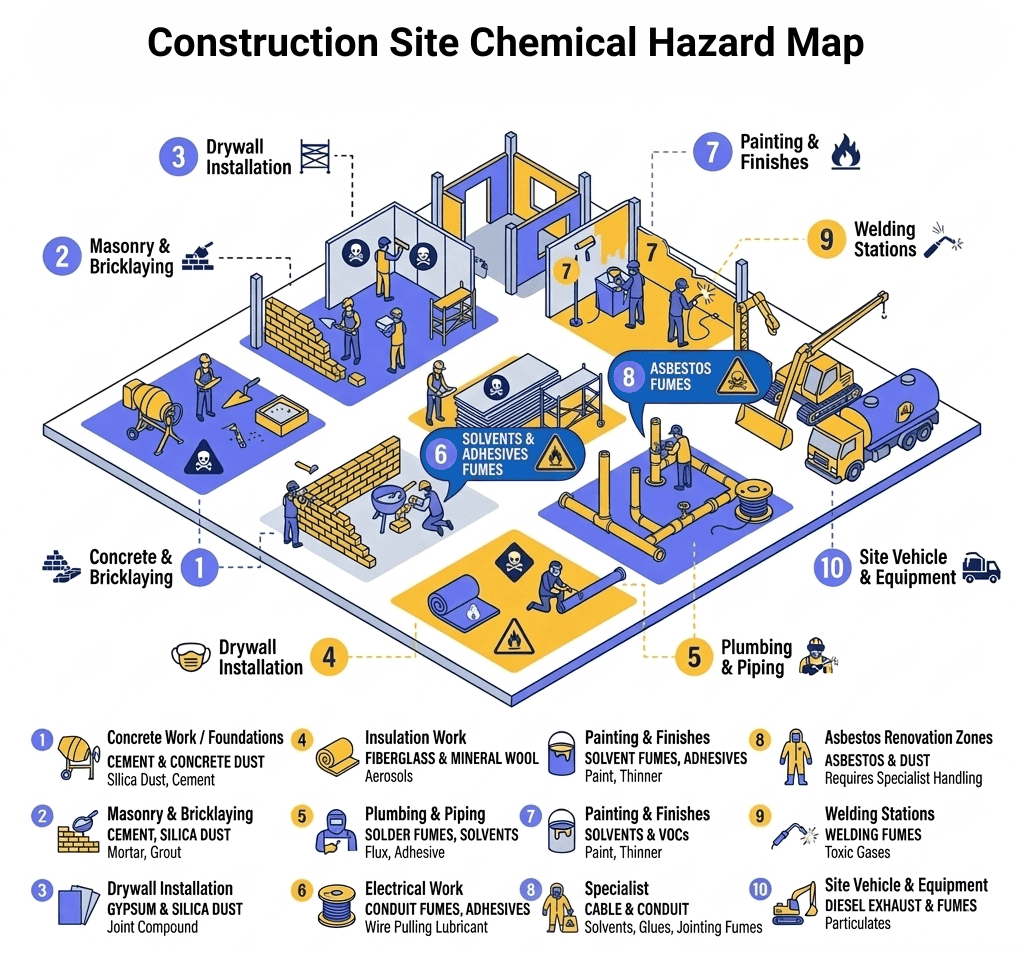
Understanding what you are dealing with is the first step. The table below outlines the most common chemical hazards found on construction sites, their health risks, routes of exposure, and the controls required.
| Chemical | Health Risks | Route of Exposure | Key Controls |
| Cement / Concrete | Chemical burns, occupational dermatitis | Skin contact | Waterproof gloves, barrier cream, washing facilities |
| Silica Dust | Silicosis, lung cancer | Inhalation | RPE, wet cutting methods, LEV |
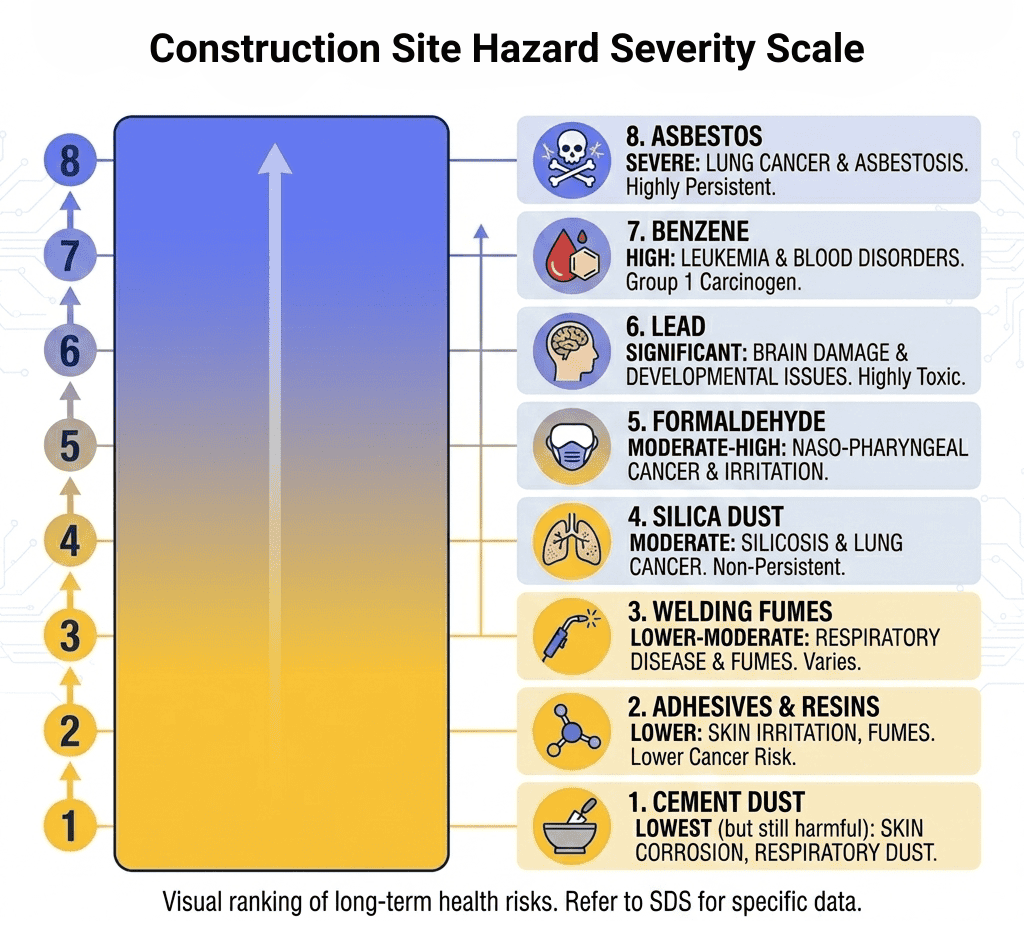
| Asbestos | Mesothelioma, asbestosis, lung cancer | Inhalation | Licensed removal, full PPE, air monitoring |
| Solvents | Neurological damage, liver disease | Inhalation, skin contact | Ventilation, gloves, RPE |
| Isocyanates | Occupational asthma, sensitisation | Inhalation | Respiratory protection, enclosed systems |
| Epoxy Resins | Dermatitis, respiratory sensitisation | Skin contact, inhalation | Nitrile gloves, ventilation, RPE |
| Lead Paint | Neurological damage, organ damage | Inhalation, ingestion | RPE, hygiene controls, air monitoring |
| Hexavalent Chromium | Lung cancer, skin ulceration | Inhalation, skin contact | LEV, PPE, substitute where possible |
How Chemical Hazards Enter the Body
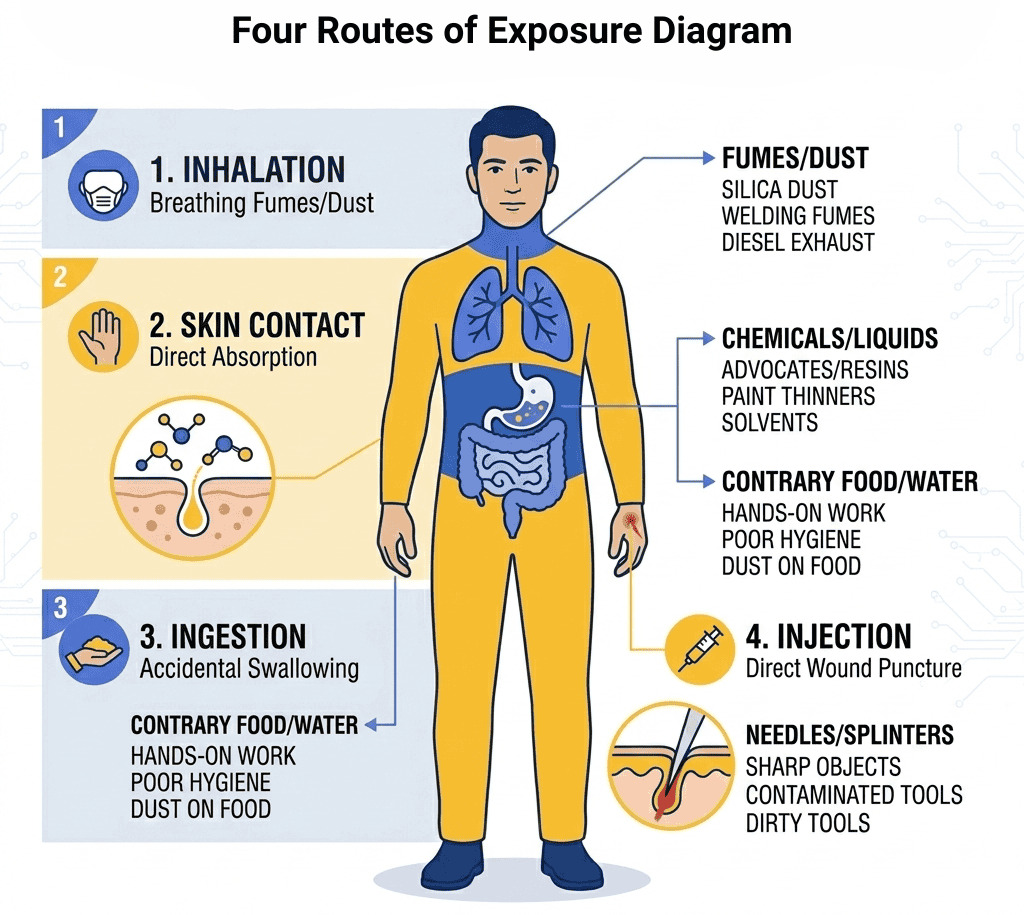
Understanding routes of exposure helps workers and site managers put the right controls in place. There are four main ways hazardous chemicals enter the body on construction sites.
Inhalation is the most common. Airborne dust, fumes, vapours, and gases are breathed in during tasks like cutting, grinding, welding, and spraying. Skin contact is the second most common route, particularly with cement, solvents, and epoxy resins.
Ingestion can occur when workers eat, drink, or touch their face in contaminated areas without washing their hands first. Injection, while less common, can happen through cuts or puncture wounds that introduce chemicals directly into the bloodstream.
Recognising the route of exposure for each chemical determines what protective measures are needed. A respirator protects against inhalation but offers no protection against skin absorption. The correct PPE for each route of exposure is specified in the chemical’s Safety Data Sheet.
Silica Dust: The Most Underestimated Hazard
Silica dust is released whenever concrete, brick, or stone is cut, drilled, or ground. When inhaled, fine silica particles cause silicosis, an irreversible and potentially fatal lung disease. OSHA estimates that more than 2.3 million workers are exposed to crystalline silica dust annually, making it one of the most widespread chemical hazards in the construction industry.
Compliance requires wet cutting methods, local exhaust ventilation, and appropriate respiratory protective equipment. Under the Carcinogens and Mutagens Directive, employers are legally required to reduce worker exposure to carcinogenic substances to as low as technically possible. The damage silica causes is permanent. There is no cure for silicosis once it develops.
Asbestos: A Legacy Hazard Still Claiming Lives
While asbestos is now banned in many countries, it remains present in millions of buildings constructed before the mid-1990s. Construction workers carrying out renovation, refurbishment, or demolition are at ongoing risk of exposure. Asbestos is one of the leading causes of occupational cancer globally, responsible for mesothelioma and lung cancer in workers exposed decades earlier.
Any work that may disturb asbestos-containing materials requires a thorough survey before work begins. Removal should only be carried out by trained, licensed contractors under strictly controlled conditions. No level of asbestos exposure is considered safe.
Solvents, Isocyanates, and Epoxy Resins
Solvents are found in paints, adhesives, and cleaning agents used across all phases of construction. Many are volatile, evaporating quickly and being inhaled without workers realising it. Prolonged solvent exposure is linked to neurological damage, liver problems, and an increased risk of certain cancers.
Isocyanates, found in spray foam insulation and two-part coatings, are among the most potent respiratory sensitisers in any industry. Once a worker becomes sensitised, even trace exposure can trigger severe asthmatic reactions. The risk is especially high when applying these products in enclosed or poorly ventilated spaces.
Epoxy resins, used in flooring, coatings, and adhesives, cause contact dermatitis and respiratory sensitisation. Like isocyanates, the effects can be permanent once sensitisation occurs. A single period of inadequate protection can affect a worker for the rest of their career.
Lead Paint and Hexavalent Chromium
Older buildings frequently contain lead-based paint. When surfaces are sanded, stripped, or burned during renovation work, lead dust and fumes are released into the air. Lead exposure causes serious neurological and organ damage, and no safe level of exposure has been identified.
Hexavalent chromium is present in cement, certain paints, and stainless steel welding fumes. It is classified as a Group 1 carcinogen by the International Agency for Research on Cancer. Construction workers involved in welding, grinding, or working with chromate-treated materials face ongoing exposure risk without adequate controls.
How to Manage Chemical Hazards on Construction Sites
The challenge on most construction sites is not that safety information does not exist. It is that the information is not accessible when and where it is needed. A Safety Data Sheet (SDS) is a legally required document that accompanies every hazardous chemical. It details the hazards, correct PPE, storage requirements, spill response procedures, and first aid measures for that specific substance. These are all structured across 16 standardised sections designed to give workers everything they need at a glance.
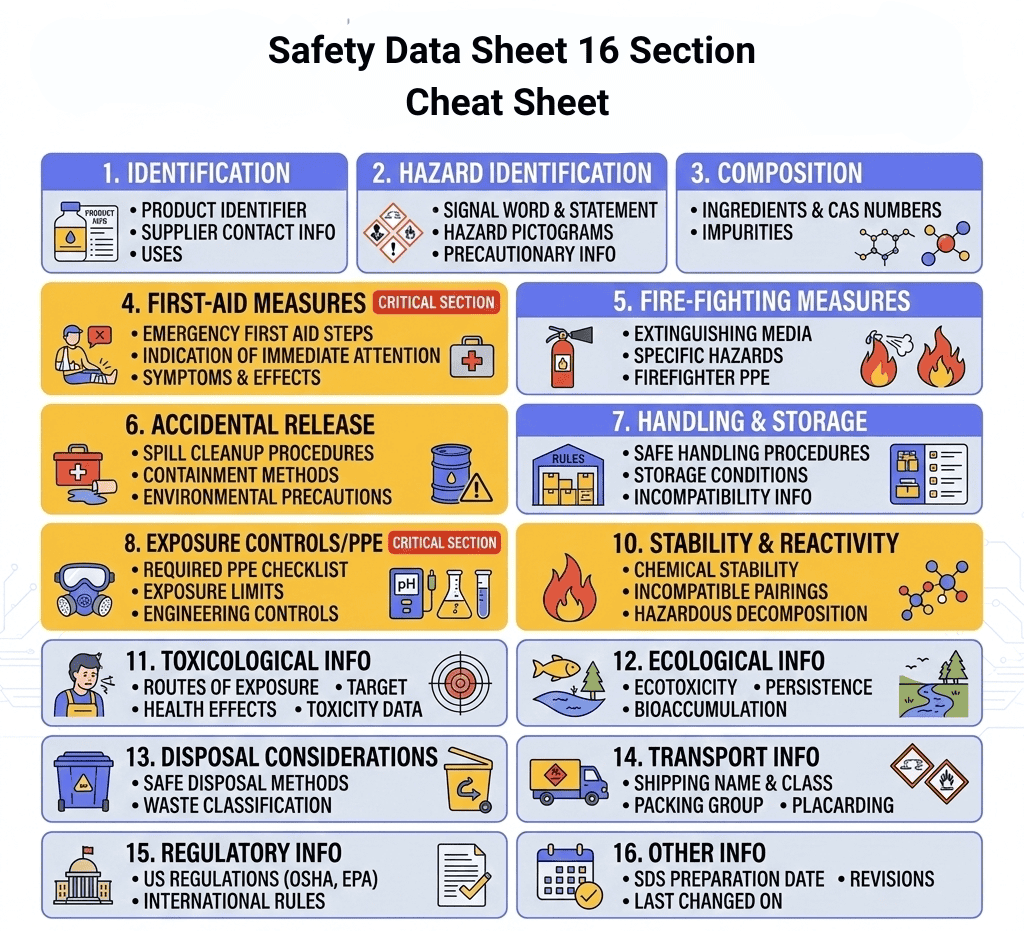
On many sites, SDS documents are kept in a binder in the site office. In practice, this means a worker handling a chemical at the far end of the site has no quick way to check the correct procedure if something goes wrong. Smaller firms in particular often experience the highest rates of chemical-related injuries, primarily due to limited safety resources and inconsistent access to safety information. Binder systems are not effective any more and are not recommended.
The right chemical safety software makes it more manageable by giving workers instant access to the correct SDS from any device via a simple QR code scan. No binders, no delays, no outdated documents.
Storage and Incompatibility Risks
Improper chemical storage is one of the most common sources of serious incidents on construction sites. Many chemicals that appear harmless in isolation become highly dangerous when stored near incompatible substances. Oxidisers stored near flammable solvents can dramatically accelerate a fire if one breaks out.
Every SDS contains a section on storage requirements and incompatibilities. Site managers should use this information to create a clear storage layout that physically separates incompatible chemicals. Storage areas should be ventilated, clearly labelled with hazard pictograms, and included in regular site inspections.
PPE, Training, and Documentation
No storage system or safety procedure replaces adequate personal protective equipment. The correct PPE for each chemical is specified in its SDS and varies significantly between substances. Gloves suitable for cement work may offer no protection against solvent exposure. Despite the scale of chemical exposure in construction, consistent PPE use remains one of the most significant gaps in site safety across the industry. Site managers must ensure the right PPE is available, in good condition, and actively being worn.
Training is equally important. Workers who understand why PPE matters and what specific risks they are managing are far more likely to follow procedures consistently. Chemical safety training should be conducted at induction and updated regularly, with practical elements that reflect actual site conditions.
Every chemical incident, however minor, should be documented. Near-misses are early warning signals. Patterns in incident records can reveal problems with a specific substance or working practice long before a serious injury occurs.
What Every Site Manager Should Know
Chemical hazards are an unavoidable reality on construction sites. What separates sites with strong safety records from those with recurring incidents is rarely the absence of dangerous substances. It is whether workers can access accurate safety information at the moment they need it.
Every hazardous chemical on your site comes with a Safety Data Sheet containing 16 standardised sections. From first aid measures to spill response, PPE requirements to storage incompatibilities, everything your team needs to handle chemicals safely is already documented. The only question is whether they can reach it when it matters most.
Frequently Asked Questions
What are the most common chemical hazards on a construction site?
The most common chemical hazards include silica dust, asbestos, cement, solvents, isocyanates, epoxy resins, lead paint, and hexavalent chromium. Each carries distinct health risks ranging from skin conditions to serious respiratory diseases and cancer.
How do chemical hazards enter the body on construction sites?
The four main routes of exposure are inhalation, skin contact, ingestion, and injection. Inhalation is the most common, particularly during cutting, grinding, welding, and spraying tasks. Understanding the route of exposure for each chemical determines which protective measures are needed.
How do you control chemical hazards in construction?
Chemical hazards are controlled through a hierarchy of measures: elimination, substitution, engineering controls such as ventilation, administrative controls such as training and work scheduling, and personal protective equipment. The correct controls for each substance are detailed in its Safety Data Sheet.
Is silica dust dangerous on construction sites?
Yes. Silica dust is one of the most serious chemical hazards in construction. Inhaling fine silica particles causes silicosis and lung cancer, both of which are irreversible. Over 2.3 million workers are exposed to crystalline silica annually according to OSHA.
Are SDS documents required on construction sites?
Yes. A Safety Data Sheet is a legal requirement for every hazardous chemical under REACH Article 31, OSHA HazCom Standard 29 CFR 1910.1200, and GHS globally harmonised guidelines, and must be accessible to workers at all times. Digital SDS management systems make this significantly easier to manage across large or multi-location sites.
What should I do if a worker is exposed to a hazardous chemical on site?
Refer to Section 4 of the relevant SDS for first aid measures immediately. Remove the worker from the exposure area, provide appropriate first aid, and seek medical attention. Document the incident fully and review your chemical risk assessment following any exposure event.