Flat roofing systems are a fundamental component of modern construction, widely used in commercial, industrial, and increasingly residential applications. Their versatility, compatibility with modular construction, and suitability for plant installations make them a preferred solution across a range of building types.
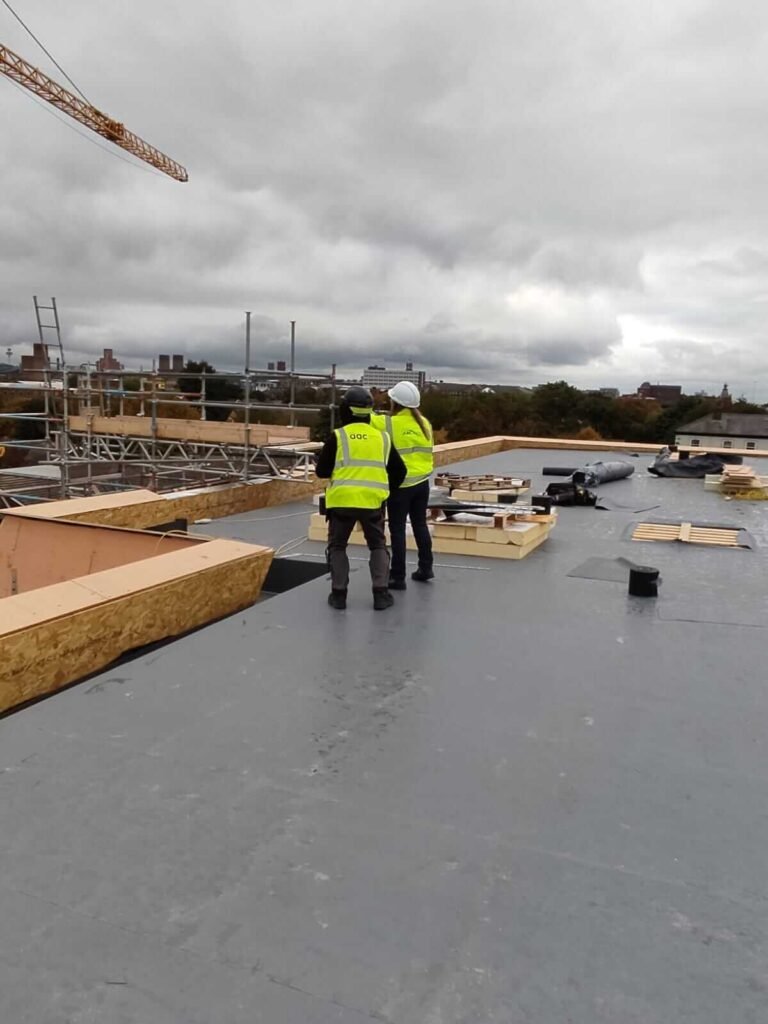
However, the performance of a flat roof is highly dependent on precise design, correct material specification, and accurate installation. Failures are often not due to the system itself, but to deficiencies in detailing, drainage, or workmanship. As such, a technical understanding of materials and structural behaviour is essential.
Common Flat Roofing Systems and Materials
Several flat roofing systems are commonly specified, each offering distinct performance characteristics.
Built-up roofing (BUR) systems consist of multiple layers of bitumen and reinforcing fabrics, providing redundancy and robust waterproofing. Modified bitumen systems, often incorporating SBS or APP polymers, offer improved flexibility and resistance to temperature variation.
Single-ply membranes such as EPDM (ethylene propylene diene monomer), PVC (polyvinyl chloride), and TPO (thermoplastic polyolefin) are widely used due to their ease of installation and consistent material properties. EPDM is valued for its durability and resistance to UV degradation, while PVC and TPO offer heat-welded seams that enhance waterproofing performance.
Thermal performance is typically achieved through insulation layers, often using PIR (polyisocyanurate) or mineral wool, designed in accordance with Part L of the Building Regulations. The overall system must achieve both thermal efficiency and watertight integrity, with careful consideration given to vapour control layers to prevent interstitial condensation.
Structural Design and Load Considerations
Flat roof design must account for a range of loading conditions. Dead loads include the weight of structural elements, insulation, and roofing membranes, while live loads may involve maintenance access or temporary loads during construction.
Wind uplift is a critical factor, particularly for lightweight roofing systems. Design must comply with BS EN 1991-1-4 (Eurocode 1), with appropriate fixings or ballast systems specified to resist uplift forces.
Drainage design is equally important. Despite the term “flat,” roofs are typically constructed with a minimum fall (commonly 1:40 to achieve a finished fall of 1:80) to promote water runoff. Poor drainage can lead to ponding, which increases loading and accelerates membrane degradation.
Deflection tolerances of the supporting structure must also be considered. Excessive deflection can disrupt falls and create localised water accumulation, compromising long-term performance.
Installation Techniques and Failure Prevention
The success of any flat roofing system depends heavily on installation quality. Substrate preparation is a critical first step; surfaces must be clean, dry, and level to allow proper adhesion or mechanical fixing of the membrane.
Detailing around penetrations, edges, and junctions is often where failures occur. Flashings must be carefully installed to maintain continuity of the waterproofing layer, particularly at upstands, parapets, and service penetrations.
Engaging experienced flat roofing experts can significantly reduce the risk of installation-related defects. Skilled contractors are better equipped to manage complex detailing and adhere to manufacturer specifications.
Common failure points include membrane punctures caused by foot traffic or poorly protected plant installations, as well as inadequate sealing at joints. Ponding water, often resulting from insufficient falls or blocked outlets, remains one of the leading causes of premature failure.
Maintenance, Lifecycle, and Sustainability
Flat roofing systems require regular inspection to maintain performance over their expected lifespan. Routine checks should include inspection of membranes, drainage outlets, and flashing details, particularly after extreme weather events.
Lifecycle expectancy varies depending on the system. BUR and modified bitumen systems may last 20–30 years with proper maintenance, while high-quality single-ply membranes can achieve similar or longer service lives under favourable conditions.
Sustainability is becoming an increasingly important consideration. Green roofs, which incorporate vegetation layers, can improve thermal performance, reduce urban heat island effects, and support biodiversity. However, they introduce additional structural loading and require careful design.
Energy efficiency can also be improved through reflective membranes or “cool roof” systems, which reduce solar heat gain and contribute to lower building energy demand.
Advanced flat roofing systems require a detailed and methodical approach to design, material selection, and installation. From load calculations and drainage planning to precise detailing and quality control, each stage plays a role in overall performance.
Adherence to relevant standards, combined with experienced installation and ongoing maintenance, is essential to achieving long-term durability. As construction methods continue to evolve, flat roofing systems will remain a key element of building design, supported by ongoing advancements in materials and technology.