About one in five U.S. workplace deaths occur in construction, with falls from height consistently topping the list. As American skylines rise with new vertical construction, the legal stakes for all involved are rising too.
A fall on a high-rise project isn’t just a tragedy. It’s the start of a complex, costly legal battle that can jeopardize an entire enterprise. The recent boom in high-rise buildings has magnified these inherent risks, leading to a significant increase in high-stakes litigation. Even a small mistake at elevation can have catastrophic consequences.
With these high stakes in mind, what does this mean for project managers overseeing vertical builds? To address these challenges, this guide breaks down the biggest legal risks and, more importantly, explains how to build a defense before an accident ever happens.
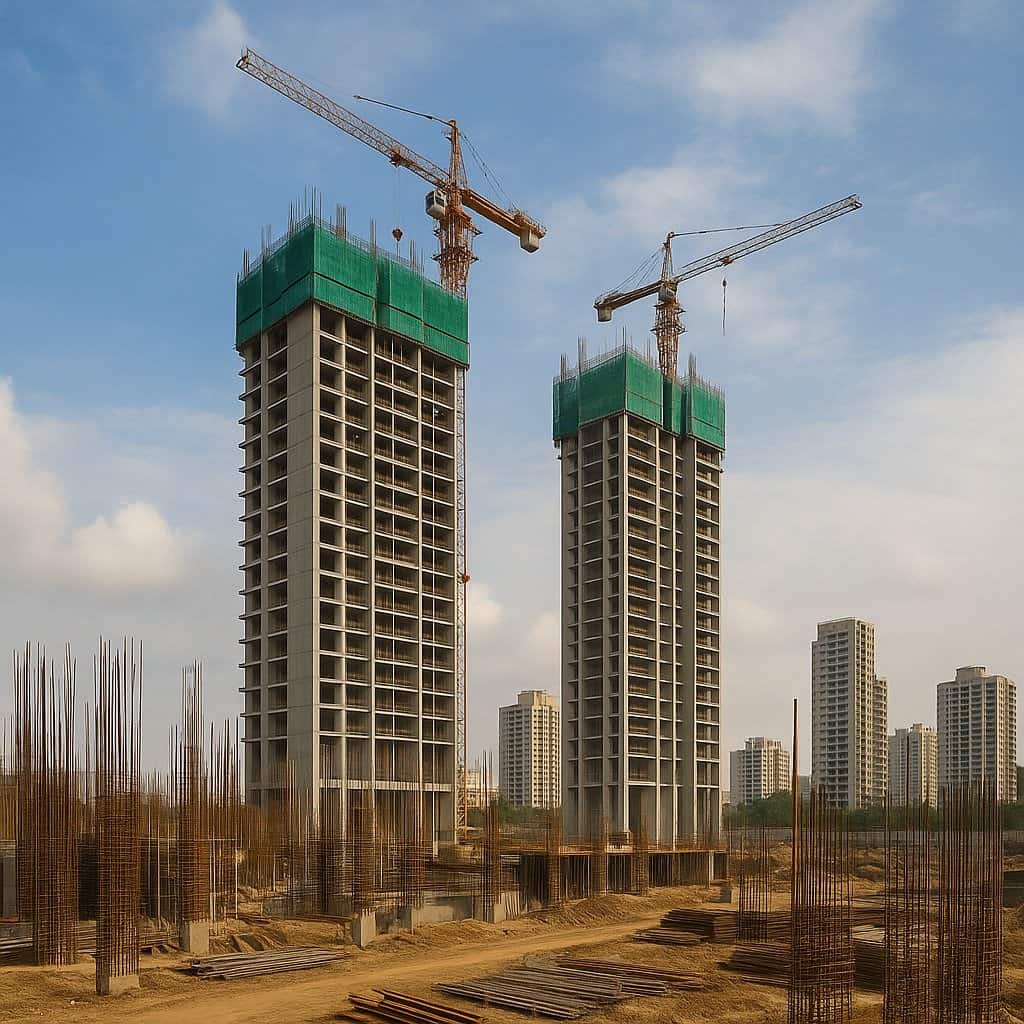
Why Vertical Construction Is a Litigation Magnet
All construction projects carry danger. But height multiplies both the severity and complexity of those risks in ways that low-rise work simply doesn’t.
Think about falling debris, intricate material logistics involving tower cranes, and the catastrophic nature of any fall from elevation. A tool dropped from the third floor is a hazard. A tool dropped from the thirtieth floor becomes a lethal projectile, putting both workers and pedestrians at serious risk.
The “Fatal Four” on High-Rise Sites
OSHA identifies the ‘Fatal Four’ as the leading causes of death in construction—falls, being struck by objects, electrocutions, and caught-in/between incidents. In a vertical environment, every one of these dangers gets amplified.
- Falls (37%): The most obvious and lethal risk in a high-rise. A fall from a significant height is almost always fatal.
- Struck by Object (8%): An object dropped from 30 stories carries far more destructive potential than one dropped from two, threatening a wide area below.
- Electrocutions (8%): High-rises require complex temporary power systems and extensive wiring, increasing the risk of accidental contact.
- Caught-in/between (5%): Moving large materials with cranes, elevators, and hoists in confined vertical spaces creates unique and deadly pinch points.
| Risk Factor | Typical Low-Rise Project | High-Rise Project |
| Severity of Falls | Serious injury or fatality possible | Near-certain fatality; potential for multiple casualties |
| Material Handling | Forklifts, smaller cranes; localized risk | Tower cranes, hoists; risk of catastrophic failure over a wide area |
| Public Safety | Contained site; limited public risk | Significant risk to pedestrians and adjacent properties |
| Emergency Response | Relatively simple access for first responders | Complex evacuation; difficult access for medical and fire crews |
How Liability Gets Determined After an Accident
After a catastrophic incident, the focus shifts from the job site to the courtroom. Courts scrutinize safety precautions that were (or weren’t) in place before the incident. They’re less interested in a single mistake and more concerned with a company’s overall safety culture and documented systems.
Liability often gets cast over a wide net, pulling in property owners, developers, general contractors, and multiple subcontractors. For example, a wrongful death lawsuit was filed after a worker fell down an unguarded elevator shaft, naming both the building owner and a custom woodwork company. And a suit against Emerson College alleged the institution was liable for a fatal worker fall, showing that responsibility can extend to the very top of the project hierarchy.
OSHA violations typically result in government fines, but they serve a more powerful purpose in civil court. An OSHA citation is frequently used as evidence of negligence in lawsuits seeking millions in damages. Proving that a company failed to meet federal safety standards can become the cornerstone of a plaintiff’s case. That makes regulatory compliance the bare minimum for a defensible position.
Building a Legally Sound Safety Program
The most effective legal strategy is preventive. The goal for any company involved in vertical construction should be a safety program that not only meets minimum regulatory standards but also exceeds them. That commitment to best practices forms the foundation of a strong legal defense.
Here are the key elements to get right:
- Mandatory scaffolding and equipment inspections. With scaffolding causing roughly 60 deaths per year, a program of daily, documented inspections by a certified individual is non-negotiable. That means thorough checks of all planks, guardrails, access points, and structural connections before every shift.
- Zero-tolerance PPE enforcement. A written policy on Personal Protective Equipment (PPE) isn’t enough on its own. Effective programs require active enforcement of 100% tie-off rules for anyone working at height, including the use of properly fitted harnesses, lanyards, and certified anchor points. Non-compliance should trigger immediate corrective action.
- Layered fall protection systems. Don’t rely on a single method. A robust plan uses a hierarchy of controls: engineered solutions like guardrails as the first line of defense, collective systems like safety netting for broader coverage, and personal fall arrest systems for individual workers.
- Empowered safety personnel. Site safety managers need explicit, documented authority to halt any work they consider unsafe, without fear of pushback from project managers watching the clock. When lives are on the line, safety has to override schedule pressure.
- Relentless documentation. In court, an undocumented safety measure might as well not exist. Record daily safety briefings (“toolbox talks”), new worker orientations, all equipment inspections, and any corrective actions. This paper trail becomes your most valuable evidence of a proactive safety culture.
Sounds like a lot? It is. But it’s far less costly than a wrongful death lawsuit. And beyond internal programs, it’s worth consulting with legal counsel experienced in construction-related cases to audit your safety protocols, review contracts for liability clauses, and make sure your practices line up with both regulatory requirements and legal best practices.
Building a Safer Future From the Ground Up
In high-rise construction, the strongest liability protection is a firm commitment to safety. The measures that save lives also hold up in court. Procedures that protect a roofer on the 50th floor also safeguard the company’s finances.
As cities keep building upward, the most successful firms will be those that match their engineering ambition with an equally sharp approach to risk management. The foundation of a great high-rise project isn’t just concrete and steel; it’s a culture of safety that protects everyone from the ground floor to the penthouse.