Most people picture water damage as something obvious. A flooded basement, a ceiling stain spreading after a storm, a puddle creeping across the floor. Those cases are real, but they are also the easy ones. The harder problem is the water you never see, the moisture that soaks into building materials and stays there long after the surface looks dry.
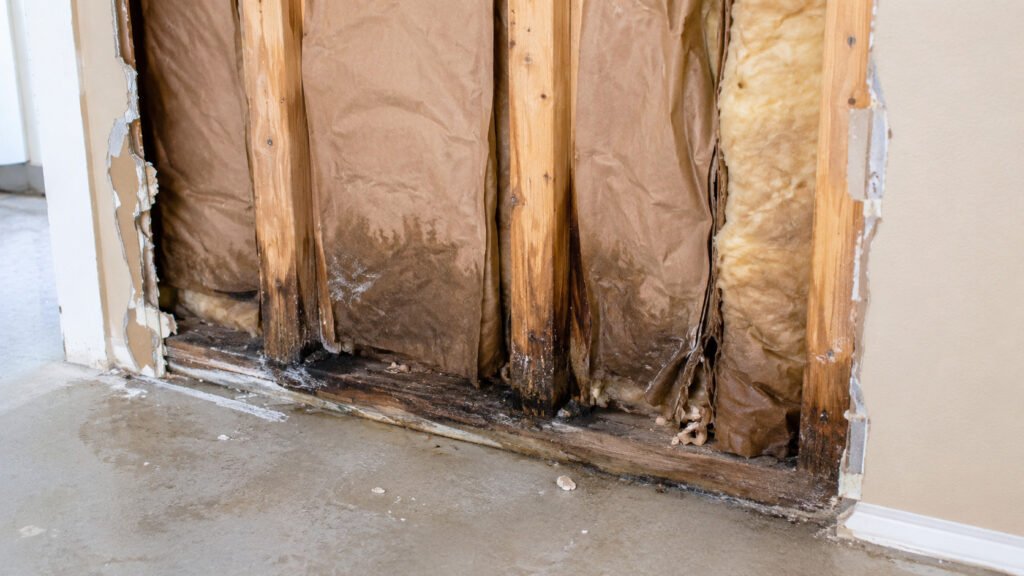
That hidden moisture is where a lot of expensive structural trouble begins. A wall can feel dry to the touch while the framing behind it is still saturated. Understanding how water moves through a building, and why it lingers, is the difference between a quick fix and a major repair.
Why Building Materials Hold Water
Most of the materials a home is built from are porous. Drywall, wood framing, insulation, subfloor, and even concrete all contain tiny voids that pull in and hold moisture. When water reaches them, it does not just sit on the surface. It wicks inward through capillary action, the same process that draws water up into a paper towel.
This is why a small leak can affect a surprisingly large area. Water that enters at a single point spreads outward and upward through the material, following the path of least resistance. Gypsum drywall is especially absorbent, and once it takes on water it loses strength and can begin to crumble. Wood swells, warps, and eventually rots. Insulation that gets wet compresses and stops working, both as a thermal barrier and as a sound barrier.
Concrete is often assumed to be waterproof, but it is not. It is porous enough to absorb and transmit moisture, which is why basements and slabs can stay damp for a long time after the visible water is gone.
The Problem With Surfaces That Look Dry
A surface drying out tells you very little about what is happening underneath. Air moving across a wall will dry the outer layer first, leaving the core wet. The result is a building that looks fine to the eye while moisture continues to work on the structure from the inside.
This delay is what catches homeowners off guard. The visible signs of trouble, such as warped flooring, a musty smell, peeling paint, or dark staining, usually appear weeks after the water event that caused them. By then the moisture has had time to spread into framing, subfloor, and wall cavities where it is far harder to reach and remove.
Because so much of this happens out of sight, diagnosing it is not really a do-it-yourself task. Restoration professionals such as Sunrise Water Damage use moisture meters and thermal imaging cameras to map where water has actually traveled inside walls and floors, then dry the structure to a measured target rather than guessing from how the surface feels. Speed matters here as much as accuracy, because the EPA notes that the key to mold control is moisture control and that water-damaged materials should be dried within 24 to 48 hours. The CDC makes the same point, advising that you fix the moisture source and dry the area fully rather than treating only what you can see.
Getting that window right is what keeps a contained leak from turning into a structural and air-quality problem.
How Trapped Moisture Damages a Structure
Once water is locked inside building materials, the damage compounds in a few predictable ways.
Wood framing loses strength as it stays wet, and prolonged saturation invites rot and wood-destroying organisms that weaken load-bearing members. Drywall and plaster soften and sag, and fasteners lose their grip. Metal connectors, nails, and fittings begin to corrode in the constant dampness. Trapped moisture in wall cavities and under flooring also becomes the ideal environment for mold, which the CDC links directly to leaks in roofs, windows, and pipes and to areas that have flooded.
None of this announces itself loudly. It progresses quietly behind finished surfaces, which is exactly why hidden moisture tends to be more costly than an obvious flood. The visible flood gets cleaned up. The hidden saturation gets ignored until something fails.
Where Hidden Moisture Tends to Collect
Some areas in a building are far more prone to holding unseen water than others:
- Wall cavities behind drywall, where a slow plumbing leak can soak studs and insulation for months
- Subfloor and the underside of flooring, especially after appliance or supply-line leaks
- Crawl spaces and the lower portions of basement walls, where concrete wicks ground moisture
- Around window and door framing, where failed seals let rain track inward
- Beneath and behind cabinetry, where leaks stay dark and undisturbed
These spots share a common trait. They are enclosed, poorly ventilated, and rarely inspected, so moisture that reaches them has every chance to settle in and spread.
Catching It Early
The practical takeaway for homeowners and builders is to treat moisture as a structural issue, not a cosmetic one. A faint musty odor, a section of flooring that flexes underfoot, paint that blisters for no clear reason, or a water stain that keeps returning are all worth investigating rather than painting over. Each can be the visible edge of a much larger wet area inside the assembly.
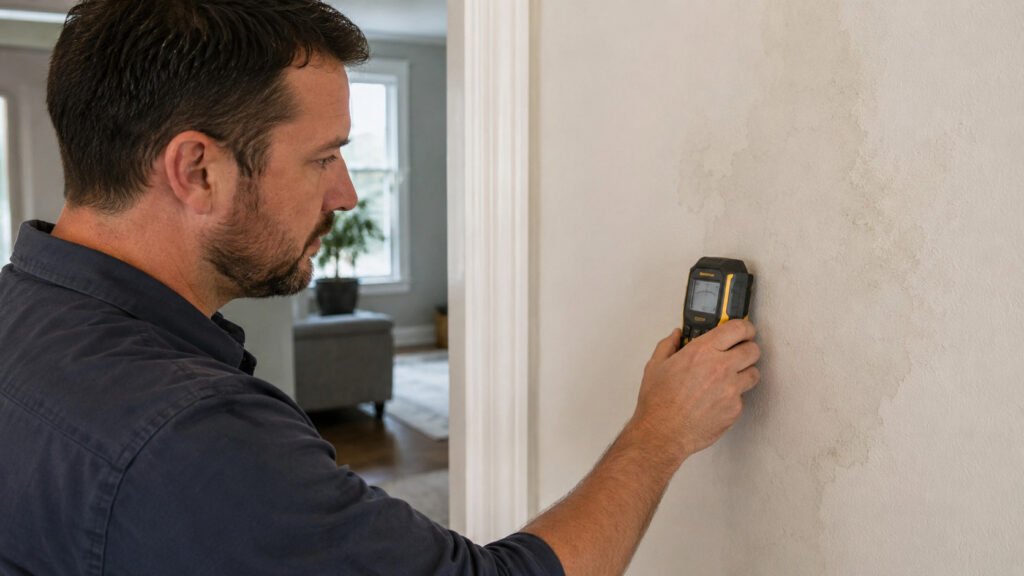
After any leak or flood, the goal is not just to mop up and move on, but to confirm the materials themselves have actually dried. That often means looking past the surface, because the part of the building that stays wet the longest is usually the part you cannot see. Handle the hidden moisture early and quickly, and you protect the structure long before it has a chance to fail.
Sunrise Water Damage Restoration
975 Second Street Pike, Suite B
Richboro, PA 18954
(215) 399-6538