Estimating mistakes rarely stay inside the estimate. Once a bid is accepted, a missed scope item can turn into a margin issue. An outdated material price can turn into a cash flow problem. An unclear exclusion can turn into a customer dispute. A rushed takeoff can turn into rework, schedule pressure, and an uncomfortable conversation the contractor would rather avoid.
That is why contractors are paying closer attention to how estimates are built before the proposal goes out. The goal is not just to create faster bids. The goal is to create bids that are easier to review, easier to explain, and less likely to carry hidden risk into the job.
AI can help with that shift, but only when it supports a better estimating process. It can organize documents, assist with takeoff, surface possible scope gaps, structure pricing inputs, and reduce repetitive work. The contractor still owns the final number. The value comes from using AI to clean up the estimate before human review and approval.
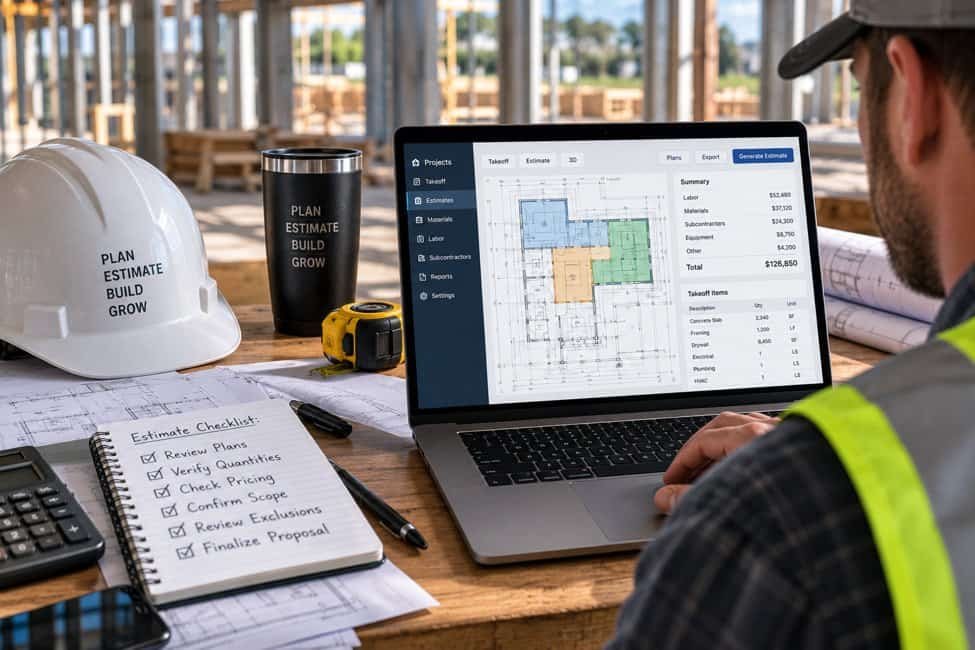
Estimating Errors Usually Start Early
Many estimating problems start long before the final price is calculated. The risk often begins at project intake, document review, takeoff setup, scope interpretation, pricing, or proposal preparation. A team may be working from an older drawing set. A spec note may be missed. A supplier quote may not include the full scope. A copied exclusion may not apply to the current job.
The final number can look precise even when the process behind it is weak. That is one of the dangers of estimating. A clean spreadsheet or polished proposal can hide the fact that you never reviewed important details properly.
Common causes of estimating mistakes include:
- Outdated drawings or missing addenda.
- Manual takeoff errors.
- Scope details buried in specs or notes.
- Stale labor or material pricing.
- Subcontractor quotes with unclear inclusions.
- Missing exclusions or vague proposal language.
- Rushed review before submission.
- Poor handoff after the bid is won.
Contractors that want to reduce estimating errors with AI need to start with the process around the number. AI can help, but the workflow still needs structure, ownership, and review.
Better Document Review Helps Prevent Missed Scope
Scope gaps are among the most expensive estimating mistakes. A contractor may calculate quantities correctly and still underbid the job if the scope is incomplete. A requirement may appear in a plan note, schedule, addendum, spec section, or customer email. If that detail doesn’t make it into the estimate, the bid may already carry risk.
AI-supported workflows can help estimators organize documents and review project information with less manual digging. This does not mean the software understands every job perfectly. It means the team has a better way to surface details that need attention before finalizing pricing.
A stronger document review should help answer:
- Are the latest plans being used?
- Are all addenda included?
- Do specs change what the drawings show?
- Are there contradictions between documents?
- Are allowances, alternates, and exclusions clear?
- Are customer requirements captured?
- Are there questions that need clarification before submission?
The best estimating teams do not treat document review as a casual step. They build it into the workflow, because missed scope can damage profit faster than almost any other estimating mistake.
Takeoff Should Be Faster Without Becoming Careless
Takeoff is one of the most time-consuming parts of estimating. Contractors may need to measure areas, count items, compare sheets, review plan details, and organize quantities before pricing begins. Under deadline pressure, this work can become repetitive and easy to rush.
AI-supported takeoff can help create a stronger first pass. It can help identify quantities, organize outputs, and reduce repeated measuring. That gives the estimator more room to focus on review, assumptions, and scope.
That review still matters. A first pass is not a final estimate. The contractor needs to confirm that the quantities make sense, that the correct plan set was used, and that the output matches the reality of the job.
A good takeoff workflow should help contractors:
- Reduce repetitive measuring and counting.
- Review quantities faster.
- Compare plan details more easily.
- Keep takeoff outputs organized.
- Spend more time on judgment.
- Move from takeoff to proposal with less rework.
Speed is valuable, but it should never come at the cost of control. The best takeoff process gives contractors both.
Pricing Assumptions Need To Be Easy To Check
Not every estimating mistake comes from a missed quantity. Pricing assumptions can create just as much risk. Labor productivity may be too optimistic. Material costs may be outdated. Supplier quotes may be old. A subcontractor may exclude something the estimator assumed was included. Markup, overhead, delivery, equipment, disposal, and contingency may be applied inconsistently.
AI can help organize pricing inputs so those assumptions are easier to review. That does not mean AI decides the right price. It means the estimator can see more clearly what is driving the number before the bid reaches the customer.
Contractors should review:
- Labor rates and productivity assumptions.
- Current material pricing.
- Supplier quote dates.
- Subcontractor included and excluded scope.
- Equipment, delivery, disposal, and mobilization costs.
- Markup, overhead, and profit rules.
- Allowances, alternates, and contingencies.
- Site conditions that could affect production.
Pricing confidence improves when assumptions are visible. A contractor should be able to explain the number internally and defend it externally. If the logic is buried across old spreadsheets, emails, and copied templates, the risk is harder to see.
Scope Notes And Exclusions Need To Stay Connected
A good estimate can still create confusion if the proposal does not clearly explain the scope. Customers need to understand what is included, what is excluded, what is assumed, and what could change. If those details don’t carry from the estimate into the proposal, the contractor may win the job with unclear expectations.
This is where a connected estimating workflow becomes useful. Scope notes, exclusions, allowances, and alternates should not disappear between the internal estimate and the customer-facing proposal. They should stay connected so the final bid reflects what was actually reviewed.
Clear proposal language helps:
- Reduce customer confusion.
- Protect the contractor from scope disputes.
- Make revisions easier to manage.
- Support a cleaner handoff after award.
- Help project teams understand what was sold.
- Reduce change order pressure caused by unclear expectations.
The proposal is not just a document. It is part of the project record. If it is vague, the project starts with avoidable risk.
Review Checkpoints Keep AI From Becoming A Shortcut
AI can speed up estimating, but contractors should not let it become a shortcut around review. A clean AI-supported output still needs human validation. The estimator needs to review documents, quantities, scope, pricing, exclusions, allowances, risk, and customer-facing language before sending the bid.
A structured review process helps the team avoid overtrusting the software. It also creates consistency across estimates, especially when several people are involved in the bid.
A final review should confirm:
- The project documents are current.
- Quantities are reasonable.
- Scope has been checked against plans and specs.
- Pricing inputs are current.
- Exclusions are clear.
- Allowances and alternates are explained.
- Proposal language matches the estimate.
- A qualified person has approved the bid.
AI should make review easier, not optional. Contractors get better results when software supports the estimator instead of replacing the estimator’s responsibility.
Task Ownership Reduces Missed Steps
Estimating is not one calculation. It is a workflow with multiple steps, and often multiple people. Someone gathers project details. Someone reviews plans. Someone completes takeoff. Someone requests supplier pricing. Someone checks scope. Someone prepares the proposal. Someone follows up with the customer.
If those tasks live in texts, inboxes, notebooks, and memory, mistakes are more likely. A bid may be waiting on one missing quote. A scope question may never get answered. A proposal may be sent before final approval. A customer revision may not be assigned.
A stronger workflow should show:
- Which estimates are waiting on project details.
- Which takeoffs need review.
- Which supplier or trade quotes are missing.
- Which proposals are ready to send.
- Which revisions need ownership.
- Which customers need follow-up.
- Which tasks are blocking the bid.
Task visibility helps contractors reduce errors because fewer steps fall through the cracks. It also reduces status chasing, giving the team more time to focus on estimate quality.
Learning From Past Mistakes Makes Future Estimates Stronger
The best contractors do not treat estimating mistakes as isolated events. They learn from them. If a job lost margin because a scope item was missed, that lesson should improve the next estimate. If a material category keeps running over budget, review pricing assumptions. If customers keep asking the same clarification questions, tighten proposal language.
AI-supported workflows can help create better records of estimates, revisions, assumptions, and outcomes. That makes it easier to see patterns over time.
Useful questions include:
- Which mistakes happen most often?
- Which job types create the most scope gaps?
- Which pricing categories need more frequent updates?
- Which exclusions create confusion?
- Which revisions slow down the bid process?
- Which won jobs start with weak handoff information?
Better estimating is not only about avoiding mistakes today. It is about building a system that gets smarter with every bid.
Final Thoughts
Estimating errors are expensive because they follow contractors into the job. A missed detail can affect margin, schedule, customer trust, and crew productivity. AI can help reduce that risk by organizing information, supporting takeoff, surfacing scope questions, and making assumptions easier to review.
The strongest approach is not blind automation. It is AI-supported and contractor-led. Software can clean up the workflow, but experienced estimators still make the final call.
Contractors that want fewer surprises need a process built around review, visibility, ownership, and learning. Better estimates come from better habits, and AI can help those habits become easier to repeat.
Frequently Asked Questions About Reducing Estimating Errors With AI
What Are The Most Common Construction Estimating Mistakes?
Common estimating mistakes include missed quantities, outdated drawings, missing addenda, stale pricing, unclear exclusions, incomplete scope review, and rushed proposal preparation. Many mistakes start early in the workflow before the final number is calculated. A bid can look polished while still carrying hidden risk. Contractors reduce those mistakes by improving intake, document review, takeoff, pricing checks, and final approval.
Can AI Help Contractors Reduce Estimating Errors?
Yes, AI can help contractors reduce estimating errors by organizing documents, assisting with takeoff, surfacing possible scope gaps, and making pricing assumptions easier to review. It can also reduce repetitive manual work that often leads to mistakes. The contractor still needs to validate the estimate before sending it. AI is most useful when it strengthens review instead of replacing it.
Does AI Replace Construction Estimators?
No, AI does not replace construction estimators. Estimators still bring trade knowledge, field experience, pricing judgment, supplier awareness, and customer context. AI can help organize and structure the work, but the final bid still needs human review. The best estimating workflow keeps contractors in control.
How Does AI Improve Estimating Accuracy?
AI can improve estimating accuracy by creating better review conditions. It can help teams work from cleaner documents, more organized quantities, clearer scope notes, visible pricing assumptions, and stronger revision tracking. Accuracy still depends on input quality and the estimator’s final review. AI helps reduce blind spots, but it does not remove responsibility.
Why Is Scope Review So Important In Estimating?
Scope review is important because an estimate can be mathematically correct and still miss the real work required. A missed spec note, unclear exclusion, or unreviewed addendum can create serious cost problems after award. Contractors should review what is included, what is excluded, what is unclear, and what needs clarification. Better scope review protects margin and customer trust.
How Can Contractors Avoid Pricing Errors?
Contractors can avoid pricing errors by keeping labor rates, material pricing, supplier quotes, subcontractor assumptions, overhead, markup, allowances, and contingencies easy to review. Pricing inputs should not be buried across old spreadsheets and emails. A cleaner workflow makes it easier to catch outdated or incomplete assumptions. Always review the final price before sending the proposal.
Why Do Estimates Need Final Review If AI Was Used?
Final review is needed because AI-supported outputs can still miss project-specific realities. The estimator needs to confirm documents, quantities, scope, pricing, exclusions, allowances, and proposal language. Human review turns software-supported work into a bid the contractor can stand behind. Skipping final review creates unnecessary risk.
How Can Contractors Learn From Past Estimating Mistakes?
Contractors can learn from past estimating mistakes by reviewing won and lost jobs, comparing estimates to actual outcomes, tracking missed scope, identifying pricing drift, and improving templates. Use patterns to improve future bids. AI-supported workflows can help keep estimates, revisions, assumptions, and outcomes easier to review. The goal is to make every bid smarter than the last.