Elkhorn, NE roofs take a pounding. The tornado that tore through Elkhorn on April 26, 2024, later rated EF-4 by the National Weather Service, is still fresh, and spring hail arrives most years. That kind of stress makes roof replacement a pro job, not DIY. You’ll want a contractor who pulls the City of Omaha permit, photographs the bare deck for the inspector and your insurer, and sticks around when the storm chasers leave. We profiled seven roof-replacement services that work in Elkhorn and lined up what each company publishes about its base, warranty, claims help, and inspection process. ReThink Construction & Claims tops the list. Always re-check credentials yourself before you sign.
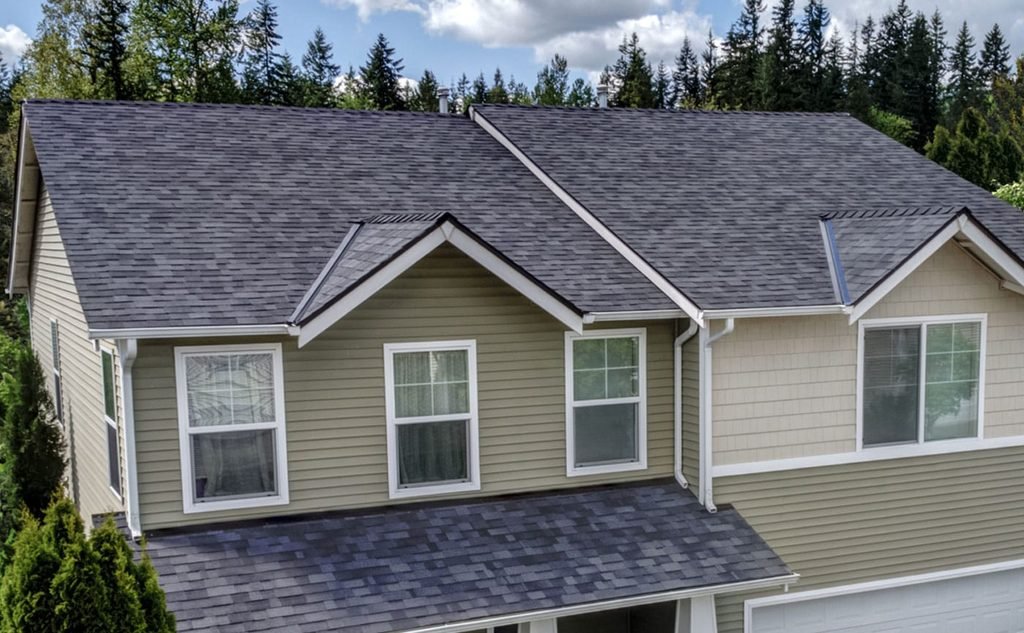
Quick comparison of Elkhorn roof replacement companies
Need a 30-second overview? The grid below lines up each company’s base, storm-claim support, warranty, and other essentials; scroll down for the story behind every entry. Where a company does not publish a detail, the cell says so, and that is your first question for the estimator.
| Rank | Company | Best fit | Base | Storm-claim help | Workmanship warranty | Free inspection | Permit & deck-photo docs |
| 1 | ReThink Construction & Claims | One-stop storm restoration | Millard, serves Elkhorn | Full: photos, adjuster meeting, supplements | Written 5 years | Yes | Confirm |
| 2 | Husker Hammer | Long-time Elkhorn presence | Elkhorn | Meets the adjuster | Up to 50 years, varies by trade and product | Yes | Ask |
| 3 | Anderson Roofing | Elkhorn track record since 1997 | Elkhorn | Ask | Ask | Free estimate | Ask |
| 4 | TeVelde & Co. | Roofing + exterior package | Elkhorn | Claim guidance | Ask | Free consultation | Ask |
| 5 | Andy Janovich Roofing | Replacement specialist | Confirm | Ask | Ask | Ask | Ask |
| 6 | D&M Roofing and Siding | West-metro coverage | Waterloo | Claim assistance | Ask | Roof inspections offered | Ask |
| 7 | Royalty Roofing and Siding | Review volume | Omaha, Elkhorn page | Documentation, adjuster communication, scope advocacy | Ask | Yes | Ask |
Focus on the column that matters most to you, then read each profile for what the company itself states and what you still need to confirm.
How we picked the seven
We built this list from what each contractor publishes on its own website and from public sources such as the Better Business Bureau. We did not score anyone on private data, and we did not verify licenses on your behalf. Here is what we looked for:
- Compliance and process. A City of Omaha building-contractor license in the right class, a Nebraska Department of Labor contractor registration, and a willingness to pull the permit and request the final inspection.
- Storm-claim fluency. Photo evidence, adjuster coordination, and zero deductible-waiver language.
- Local presence. An Elkhorn, West Omaha, or nearby address, reachable after storm season.
- Reputation. Google and BBB patterns, not one isolated rant.
- Materials and warranties. Manufacturer certifications and written workmanship terms.
- Homeowner conveniences. Free inspection, financing, responsive communication.
Any contractor who offers to cover or waive your deductible is breaking Nebraska law, and that is an instant disqualification. Verify licenses and registrations yourself before you sign; a website claim is a starting point, not proof.
1. ReThink Construction & Claims: best for storm-claim coordination and one-stop exterior work
Spring hail in Elkhorn rarely stops at shingles; it dents gutters, cracks siding, and pits window frames on the same afternoon. ReThink covers that full scope. The Millard-based firm serves Elkhorn and the Omaha metro, holds an active Class A Omaha contractor license, is BBB accredited with an A+ rating, and is Malarkey and IKO certified. Confirm the license in the City of Omaha database before you sign.
What sets ReThink apart is process:
- Free inspection. ReThink offers free inspections and documents storm damage with photos.
- Insurance-claim assistance without hype. The team meets the adjuster on site, and if the carrier overlooks a code item, ReThink submits a photo-backed supplement, with no deductible-waiver talk.
- Full-exterior crew. ReThink handles asphalt, metal, flat, and impact-resistant shingle roofing, roof replacement, siding, gutters, windows and doors, and storm-damage restoration, saving you separate contracts.
- Written 5-year workmanship warranty. The published warranty covers leaks from craftsmanship defects and property damaged by workmanship errors, and it is transferable once to a new owner within 90 days of completion. Read the exclusions; storm damage is not workmanship.
- Permit and inspection. Ask ReThink, like any contractor, to pull the City of Omaha permit in its name and hand you the final inspection record. Reviews praise the company’s claim hand-holding, communication, and on-schedule work.
Want the full menu of roofing, siding, and storm-restoration services? Explore the ReThink Construction & Claims roof replacement page.
2. Husker Hammer: best for a true Elkhorn base
Prefer to hire a neighbor over a metro franchise? Husker Hammer’s office sits on Veterans Drive in Elkhorn, and the company says it has served Elkhorn homeowners and businesses for more than 25 years.
Husker Hammer states that it is a BBB Integrity Award recipient and a West O Chamber of Commerce member. Confirm its Omaha license class and Nebraska Department of Labor registration in the public databases before you sign. The company handles residential and commercial roofing, siding, windows, gutters, and storm-damage repair.
Process highlights, as published by the company:
- Offers free exterior and roof inspections after storms.
- Will meet with your adjuster and work with your insurance company.
- Advertises up to 50 years of warranty on labor and materials, depending on trade and product; ask for the written workmanship term that applies to your shingle system.
- Ask whether the crew pulls the Omaha reroof permit and emails you the number before tear-off, and whether they photograph each slope after shingles come off.
If long roots in Elkhorn and a company office you can drive to top your list, start your estimate tour with Husker Hammer.
3. Anderson Roofing: best for an Elkhorn track record
Anderson Roofing, Inc. is a family-owned contractor at 228th Plaza in Elkhorn that says it has served the greater Omaha area since 1997. The company displays a BBB A+ rating and a Google Guarantee badge and offers a free evaluation. Verify its Omaha license number and Nebraska Department of Labor registration yourself before you sign.
Key strengths, as published:
- Long local history. Nearly three decades in the same market makes it easy to find neighbors who have used the company.
- Residential and commercial roofing. Anderson also lists siding, gutters, and painting, and it is a certified Roof Maxx dealer for shingle rejuvenation treatments, which is worth asking about if your roof is aging but not failing.
- Training. The company states its crews have completed current industry training and follow OSHA standards.
- What to confirm. Anderson does not publish a workmanship warranty term or a written permit and deck-photo process online. Ask for the warranty in writing, ask whether the company pulls the Omaha permit in its own name, and ask whether estimators photograph the plywood before demo so soft sheets are priced up front.
If you want a contractor with a long Elkhorn record, Anderson’s history makes due diligence easy; just get the paperwork questions answered first.
4. TeVelde & Co.: best for roofing plus exterior upgrades
Need a new roof, fresh siding, and window replacements under one contract? TeVelde & Co. works from an office on South 205th Street in Elkhorn and says it has been part of the Elkhorn community for over a decade. Its services cover shingle, tile, and metal roofing, siding including James Hardie fiber cement, window installation, and commercial roofing, so you juggle one timeline, not three.
- Credentials. TeVelde lists itself as a James Hardie Preferred Contractor, a Pella Certified Contractor, and a CertainTeed Master Applicator. Confirm its Omaha license class and Nebraska Department of Labor registration before you sign.
- Claim guidance without hype. The company says it will guide you through the insurance-claim process; ask how it documents damage and whether it prepares supplements when the adjuster’s scope falls short. Walk away from anyone who promises a “free roof.”
- Job-site controls. Ask whether the permit number is posted on site, whether the crew follows a deck-photo shot list, and how nails are contained and swept.
- Warranty and financing. TeVelde does not publish a workmanship warranty term online; get it in writing. Financing is available with approved credit; confirm rates and minimums.
For homeowners planning a full exterior refresh, TeVelde’s all-in-one model cuts project-management headaches to a single point of contact.
5. Andy Janovich Roofing: a replacement specialist to vet with the same checklist
Need the roof replaced, minus upsells? Andy Janovich Roofing is a small local roofing outfit that focuses on roofing rather than a full exterior menu. Because the company publishes little detail online, run it through every question below before you sign.
- Credentials. Ask for the Omaha contractor license number and class, and check the Nebraska Department of Labor registration in the public database.
- Permit first. Ask whether staff file the reroof permit and send you the number before the first bundle hits the driveway, and who schedules the final inspection.
- Deck transparency. Ask whether crews photograph every slope during tear-off, flag soft sheathing, and charge a pre-agreed per-sheet rate so there are no change-order surprises.
- Site care. Ask about cleanup, magnet sweeps, and where the trailer sits.
- Warranty. Ask for the written workmanship warranty term, what it covers, and whether it transfers.
A smaller specialist can keep the process short and the paperwork clear, but only if the answers to the questions above are in writing.
6. D&M Roofing and Siding: best for west-metro coverage
With headquarters in Waterloo, a few minutes west of Elkhorn, D&M can roll trucks and trailers onto your block while competitors fight I-80 traffic during peak storm season.
- Credentials. D&M says its history spans back to 1965 and displays a BBB Accredited A+ rating. Confirm its Omaha license class and Nebraska Department of Labor registration before you sign.
- Roof and siding menu. The company lists asphalt, metal, tile, slate, cedar shake, and rubber roofing, plus siding, gutters, and commercial flat systems such as TPO, EPDM, and PVC.
- Insurance clarity. D&M advertises roof inspections and insurance-claim assistance. Ask whether its estimates are itemized line by line for adjuster review, whether crews photograph the deck, and who requests the final inspection.
- Warranty and access. D&M does not publish a workmanship warranty term online; get it in writing along with any manufacturer registration steps. Ask about financing and how you reach the office after hours.
If you live west of 168th and want a contractor whose yard is practically your neighbor’s, D&M turns geographic advantage into faster staging and quicker closeouts.
7. Royalty Roofing and Siding: best for big-sample reviews
If public proof tops your list, Royalty is hard to ignore. The company’s Elkhorn page states a 4.9-star rating across more than 500 Google reviews and seven Best of Omaha wins, meaning many neighbors have already tested the company for you.
- Credentials. Royalty is based on B Street in Omaha and says it has served Elkhorn and the greater Omaha area since 2010. Confirm its Omaha license class and Nebraska Department of Labor registration before you sign.
- Warranty. Royalty does not publish a workmanship warranty term online. Ask for the term, exclusions, and transfer rules in writing with the contract, so there is no “call us later” shrug.
- Full system menu. CertainTeed, Brava, and DaVinci roofing lines, James Hardie and LP SmartSide siding, seamless gutters, windows, and commercial TPO, EPDM, and modified bitumen systems. Financing is mentioned; ask for terms.
- Process discipline. Royalty offers a free inspection and says it handles documentation, adjuster communication, and scope advocacy on claims. Ask whether the permit number is posted on site and whether deck photos are shared with you.
Royalty lands in seventh place only because high demand can stretch lead times after big storms. If review volume matters to you, add Royalty to your short list and confirm license status and warranty paperwork before you commit.
Initial inspection tools and outputs
A roof replacement starts with a fact-finding walk-through, not a bid. Your contractor arrives in full fall-protection gear, harness, rope-grab, and ladder stabilizer, then opens the toolbox:
- Drone or pole-mounted camera to capture an overhead mosaic of every slope.
- Close-up lens for blisters, nail pops, and hail bruises.
- Pitch gauge to record roof slope.
- Pin-type moisture meter to flag damp sheathing.
- Ventilation tally inside the attic, intake versus exhaust, so the new system can breathe.
The findings land in a PDF you keep forever: date-stamped photos, a measured roof diagram, ventilation math, and a clear call, repair or replace. That same packet backs the permit valuation and any insurance estimate that follows.
Written scope before work begins
A solid roof contract reads like a recipe, not a riddle. Before the first shingle budges, every ingredient and cost sits in writing:
- Demo and disposal. List the number of tear-off layers and the dumpster or landfill fee.
- Deck allowance. Spell out a per-sheet price for plywood or OSB replacement.
- Underlayment and ice barrier. Name the product brand and coverage area in squares.
- Edge and valley metal. Separate lines for drip edge, valley metal, and step and counterflashing.
- Ventilation upgrades. Price new intake vents or a shingle-over ridge vent independently so shortcuts jump off the page.
- Permits and inspections. The contractor, not you, should be listed as the permit holder; include the fee and who schedules the final inspection.
- Cleanup. Require magnetic sweeps and trailer removal in writing.
- Payment and lien waiver. Tie progress payments to milestones and state that a lien waiver follows final payment.
- Workmanship warranty. Show the term (years), what is covered, transfer steps, and how to file a claim.
If any item hides behind “as needed,” push back. A complete written scope protects your budget, your insurance settlement, and your peace of mind.
Tear-off and deck inspection
Demo day is the moment of truth. As shingles slide into the dumpster, the plywood tells its story: solid, spongy, or rotten.
A qualified crew pauses here. They scan every slope for dark water stains, delaminated plies, and cracked plank decking, and they take moisture readings on anything suspect. Close-up photos (tape measure in frame) become your undeniable record. If even one sheet feels like a trampoline, the foreman circles the square footage on the scope, confirms the pre-agreed per-sheet price with you, and swaps it before underlayment hides the evidence.
That pause protects both code compliance and your warranty. Shingle manufacturers can void coverage if new product is nailed over mushy sheathing, and a city inspector will fail a sagging deck. Document, replace, then seal. Your roof’s lifespan depends on it.
Installation quality controls
With fresh decking secure, precision takes center stage. Every shingle manufacturer publishes an installation manual, and the City of Omaha applies the 2018 International Residential Code:
- Fastening. Follow the manufacturer’s nail count and nail length for your wind rating, and set the compressor so nail heads sit flush without slicing the mat.
- Layout. Crews snap chalk lines every few courses to keep rows straight; crooked courses telegraph across the entire roof.
- Flashing. Metal slides under the shingle above, never stapled on top. Valleys get ice-and-water membrane first, then woven shingles or exposed W-metal, depending on the system you picked.
- Ice barrier. Omaha requires an ice barrier at the eaves under the 2018 IRC, extending at least 24 inches inside the warm wall line. Existing ice barrier can be left in place and overlaid only once.
- Ventilation. Balance intake and exhaust to the ratio the code and your shingle manufacturer specify.
- Photo sign-off. The foreman photographs ridge caps, pipe boots, step flashing, and chimney counterflashing slope by slope before the caulk sets. Those images ride with your warranty, proving the roof went on by the book.
Precise nailing, straight courses, correct flashing, and balanced airflow are not trivial; they keep shingles seated in strong gusts, stop winter ice dams, and give inspectors no reason to fail the final.
Elkhorn roof permits, deck photos, and final inspection
Follow these five checkpoints and your roof will be bullet-proof on paper as well as on plywood.
Step 1: Confirm who issues the permit.
Check with the City of Omaha Planning Department whether your parcel sits inside the city limits. If it does, your contractor must hold an active Omaha building-contractor license and file the reroof permit with the city. Outside that line, Douglas County or a Sanitary Improvement District takes over, so verify before demo day.
Step 2: Verify both credentials.
Look up the contractor’s Omaha license (class, bond, insurance) and Nebraska Department of Labor registration number. Omaha issues five building-contractor classes; Class E covers roofing, siding, window, and deck installers, and Class A covers all structures.
Step 3: Get the permit number up front.
Omaha’s roof repair and replacement guidance says any roof work of two squares (200 square feet) or more is not routine maintenance and requires a permit. Ask for the PDF showing the permit number, address, contractor name, valuation, and fee. Keep the file handy; an unpermitted crew can halt work and trigger fines. In August 2025, WOWT reported that Omaha-area homeowners discovered their new post-hail roofs had been installed without permits, and one homeowner said, “I wish we had proof of permits. We should have asked for the proof of it before he was allowed to start the work.”
Step 4: Photograph the exposed deck.
Omaha requires photographs of the clean roof deck and the installed underlayment for the inspector’s review at the final inspection, and the photos must clearly show the structure being inspected. Ask for:
- full-roof panoramas of each slope
- close-ups of soft or delaminated sheets with a tape measure in frame
- valleys, chimneys, plumbing boots, and skylight openings
File names should read Permit#_Street_Date.jpg so adjusters or future buyers instantly know what they are seeing.
Step 5: Close out the permit.
All roof repairs and replacements in Omaha require a final inspection. The contractor requests it when the work is done. Confirm with the city that the permit is closed out; anything else leaves liability on your deed. Save the inspector’s pass sheet, paid invoice, lien waiver, warranty certificates, and deck photos in one PDF packet and back it up to cloud storage.
How to choose among Elkhorn roofing companies
A ranking is handy, but the real power comes from how you compare bids. Run every contender through these four checks:
- Match scopes, not bottom lines. Line up identical items: tear-off, decking allowance, underlayment, flashing, ventilation, permit fee, cleanup. A roofer who budgets a realistic number of replacement sheets is more candid than one who prices only two and adds extras later.
- Confirm the crew on the ladder. Ask whether installers are W-2 employees or 1099 subs, who supervises them on site, and whether the company carries workers’ compensation coverage. Consistent, insured crews mean consistent workmanship and fewer liability surprises.
- Scan recent reviews for patterns. Filter Google or BBB feedback to the past year. One random rant matters less than repeated notes on missed start dates, poor communication, or sloppy cleanup.
- Check permanence. Look for a physical office, active Omaha license, Nebraska Department of Labor registration, and closed-out permits dated before the last hailstorm. Call the listed number after 5 pm; if no one answers now, imagine calling during a leak.
Run these four tests and any roofer, ranked here or not, has to clear the same high bar.
Roof replacement after hail or wind damage
1. Inspect before filing a claim
When hail or a straight-line gust rips shingles, do not call your carrier first. Ask a licensed roofer to:
- Photograph every bruise and count how many squares lost their seal.
- Check soft metals such as vents, gutters, and A/C fins for impact dings that confirm hail size.
- Price repair versus replacement down to each sheet of plywood and roll of ice membrane.
Compare that number with your deductible. Opening a claim for work that costs no more than the deductible adds a loss to your record without a payout.
2. Keep roles clear
Contractor = diagnoses damage and prepares an itemized estimate.
Adjuster = determines what the policy pays.
If the carrier omits code-required valley metal or ventilation, the contractor submits a documented supplement, not a promise of approval.
3. Pay the deductible every time
Nebraska law is explicit: you, not the contractor, pay the deductible. The Nebraska Insured Homeowners Protection Act (Neb. Rev. Stat. sections 44-8601 to 44-8608) prohibits a residential contractor from promising to rebate any portion of an insurance deductible, including through discounts or allowances. Pay it directly and save the receipt; it protects you during any audit.
4. Know the cost of emergency tarping
Ask for the tarping price in writing before the crew climbs; after-hours service usually costs more. Photograph damage before the tarp goes on; many homeowner policies reimburse reasonable mitigation costs when you submit the invoice with your claim, so check yours.
Roofing materials that fit Elkhorn conditions
Choosing shingles versus metal is not only about color; it is about hail dents, wind gusts, and winter ice dams on the west side of Omaha.
Architectural asphalt shingles
Elkhorn’s workhorse. Laminated mats and factory seal strips stand up to the spring gusts we see most years. Today’s products carry Class A fire ratings and high-wind warranties when installed to the manufacturer’s nailing pattern. Pair manufacturer starter, underlayment, ridge, and vents and you can unlock enhanced material coverage plus longer workmanship protection; ask for the exact terms.
Impact-resistant (Class 4) shingles
Class 4 shingles pass the UL 2218 impact test, which is good for modest insurance discounts but not “hail-proof.” Expect a premium over standard asphalt. Installation is the same, so you are paying for a beefier mat and lab testing. Keep the product data sheet with your permit file; carriers ask for proof at claim time.
Metal roofing
Residential standing-seam and stamped metal shrug off hail and shed snow fast. Installed cost runs well above architectural asphalt, but the service life is far longer. Painted metal can also cut summer cooling loads. Panels must float on clips; over-tightened screws invite oil-canning and void the finish warranty, so hire an experienced installer.
Flat and low-slope systems (TPO, PVC, EPDM)
For low-slope porches or sunrooms, membranes beat shingles.
- TPO: white, heat-welded seams, most common on new installs.
- PVC: similar welds, adds chemical resistance for greasy exhaust areas.
- EPDM: black rubber that stretches around odd shapes; great for retrofits.
Look for welded laps, termination bars at walls, and tested metal edges. Ensure drainage: standing water voids many warranties. Price ranges widely because insulation thickness often drives cost.
Pick the system that meets your hail-risk tolerance, budget, and house style, and verify the installer’s manufacturer certification before you sign.
Hail, high winds, freeze-thaw, and ice dams
Elkhorn’s roof threats change with the calendar, so treat each season as a checkpoint.
Spring: hail tests the armor. Hail can bruise shingle mats and dimple roof vents. After every storm, scan soft metals first; dimples there usually mean hidden shingle damage.
Summer: wind yanks at the seal strip. Straight-line winds lift shingle corners. Manufacturer nailing patterns and fully activated seal strips keep shingles down; lifted corners caught early often mean a small repair instead of a full tear-off.
Fall: leaves start trouble. Clogged gutters back water onto the eaves, where poorly flashed drip edges invite rot. Blow gutters clear regularly until leaf drop ends, then flush with a garden hose.
Winter: freeze-thaw and ice dams. Warm attic air melts snow; runoff refreezes at cold eaves, forming dams that force water under shingles. Balance attic ventilation and install ice-and-water membrane from the eave to at least 24 inches inside the warm wall, as Omaha’s code requires, to stop leaks. If ridges still form, add attic insulation and seal air leaks; roofing alone cannot fix heat loss.
Conclusion
Elkhorn’s weather makes roof replacement a precision job, one that demands permits, deck photos, and a contractor who will still answer the phone after the storm season ends. Use the comparison table, the license checks, and the five-step permit process above to vet each bidder, and your new roof will stand up to hail, wind, and Omaha code inspectors alike.