Industrial and concrete surfaces are exposed to conditions that ordinary cleaning methods cannot always handle.
Oil, grease, scale, coatings, residue, corrosion products, and hardened buildup can accumulate over time and interfere with maintenance, inspection, or repair work. In these situations, conventional pressure washing may not provide enough force to remove the material effectively.
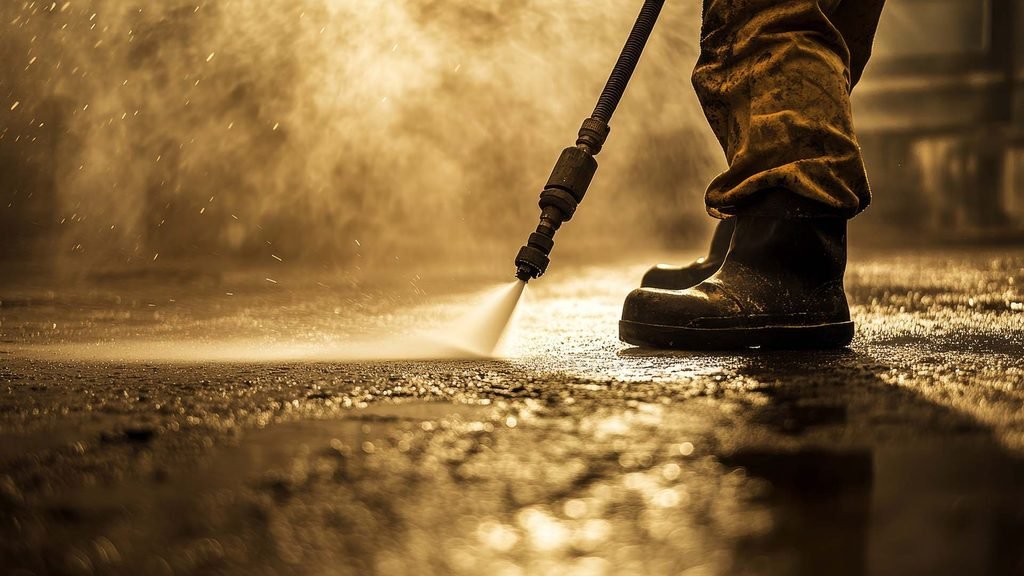
High-pressure water cleaning offers a more powerful option for difficult maintenance tasks while avoiding some of the disadvantages associated with abrasive blasting.
Why Industrial Surfaces Need More Than Routine Cleaning
Cleaning requirements vary widely depending on the environment.
A warehouse floor may only need periodic washing, while a refinery, manufacturing facility, tank, pipe system, or concrete structure may develop buildup that is much harder to remove.
Common problem materials include:
- Grease and oil
- Mineral scale
- Process residue
- Paint and coatings
- Rust and corrosion deposits
- Concrete laitance
- Hardened dirt
- Chemical residue
When these materials are strongly bonded to a surface, low-pressure cleaning may remove only the loose outer layer.
That can leave behind contamination that affects coating adhesion, inspection accuracy, or equipment performance.
Conventional Pressure Washing Has Limits
Standard pressure washing is useful for many maintenance applications.
It works well for surface dirt, mud, mildew, and other relatively loose contaminants. It is also widely used because the equipment is readily available and straightforward to operate.
However, there is a point where higher cleaning force becomes necessary.
Thick coatings, hardened deposits, and industrial scale may require pressures far beyond those used in ordinary pressure washing.
That is where specialized high-pressure water methods become more appropriate.
High-Pressure Water Can Remove Difficult Buildup
For stubborn contamination, hydroblasting can provide significantly greater cleaning force than conventional pressure washing while reducing the need for abrasive media.
The process uses highly pressurized water to break the bond between the unwanted material and the underlying surface.
Depending on the application, it may be used to remove:
- Heavy industrial residue
- Paint and protective coatings
- Scale
- Corrosion buildup
- Concrete deposits
- Process material
- Hardened grease
The goal is not simply to make the surface look cleaner.
In many cases, the surface must be prepared for inspection, repair, recoating, or continued industrial use.
Concrete Maintenance Is a Common Application
Concrete structures can develop buildup that affects both appearance and maintenance access.
High-pressure water may be used on:
- Floors
- Walls
- Pits
- Foundations
- Containment areas
- Parking structures
- Industrial slabs
In certain applications, water-based cleaning can also help expose deteriorated material before repair work begins.
The pressure level must be matched carefully to the condition of the concrete.
Too little pressure may leave contaminants behind, while excessive pressure can damage a weakened surface.
A proper assessment is important before cleaning begins.
Surface Preparation Can Affect Coating Performance
Coatings depend on proper surface preparation.
If grease, scale, old coating material, or other contaminants remain on the substrate, new coatings may not bond correctly.
This can lead to:
- Peeling
- Blistering
- Premature coating failure
- Uneven adhesion
- Corrosion beneath the coating
High-pressure water cleaning can be used as part of the preparation process when the existing surface is heavily contaminated.
The exact method depends on the coating system, surface material, and required preparation standard.
Industrial Equipment Can Also Benefit
High-pressure water cleaning is not limited to concrete.
It can also be used on certain industrial equipment and systems where buildup interferes with operation or maintenance.
Applications may include:
- Tanks
- Pipes
- Heat-transfer equipment
- Process vessels
- Industrial floors
- Structural surfaces
- Production equipment
In these environments, cleaning may be required before inspection or maintenance crews can evaluate the condition of the equipment.
Removing accumulated residue can make cracks, corrosion, worn surfaces, and other problems easier to identify.
Water Can Reduce the Need for Abrasive Media
Abrasive blasting remains useful in many applications, but it also creates additional material that must be contained and removed.
Sand, grit, or other blasting media can produce significant cleanup requirements.
Water-based methods may reduce the amount of abrasive material introduced into the work area.
This can be especially useful in facilities where contamination control or cleanup is a major concern.
However, the wastewater still needs to be managed properly.
The removed material does not disappear. It becomes part of the water stream and may require collection, treatment, or disposal.
Wastewater Management Is an Important Part of the Job
High-pressure cleaning can generate large amounts of wastewater containing the material removed from the surface.
Depending on the site, that water may contain:
- Oil
- Grease
- Paint particles
- Sediment
- Chemicals
- Metals
- Industrial residue
Allowing contaminated water to enter storm drains or surrounding soil may create environmental problems.
Before work begins, contractors should determine how wastewater will be captured and managed.
Possible methods include:
- Vacuum recovery
- Temporary containment
- Berms
- Drain isolation
- Collection tanks
- Filtration systems
Wastewater handling should be considered part of the cleaning plan rather than an afterthought.
Safety Requirements Increase With Pressure
High-pressure water is extremely powerful.
At industrial pressure levels, the stream can cause severe injuries and damage nearby equipment.
Safety planning is therefore essential.
Work areas may need:
- Controlled access
- Protective barriers
- Specialized personal protective equipment
- Trained operators
- Pressure-rated hoses and fittings
- Emergency procedures
- Clear communication between workers
Operators must understand both the equipment and the hazards created by the specific work environment.
High-pressure cleaning should not be approached like ordinary pressure washing.
Pressure Should Match the Surface
More pressure is not always better.
The correct pressure depends on:
- Surface material
- Type of buildup
- Surface condition
- Required finish
- Nearby equipment
- Coating requirements
A heavily contaminated steel surface may tolerate a different cleaning approach from aging concrete or masonry.
Using excessive pressure can remove sound material along with the contamination.
Testing a small area first can help determine whether the selected method is appropriate.
Access and Site Conditions Matter
Industrial cleaning projects often take place in difficult environments.
Crews may need to work around:
- Active equipment
- Tight spaces
- Elevated structures
- Production schedules
- Confined areas
- Vehicle traffic
- Sensitive machinery
The cleaning method must fit the site conditions.
In some cases, work may need to be performed during shutdowns or low-production periods to minimize disruption.
Planning access, containment, and equipment placement before the job begins can reduce delays once cleaning starts.
Cleaning Should Support the Next Maintenance Step
Industrial cleaning is rarely the final objective.
Usually, the surface is being cleaned so something else can happen afterward.
That may include:
- Inspection
- Painting
- Coating
- Repair
- Welding
- Concrete restoration
- Equipment maintenance
The cleaning standard should therefore be based on the next step.
A surface being prepared for a protective coating may require a different result from one being cleaned only for inspection.
Understanding the end goal helps determine the right pressure, equipment, and cleaning method.
High-Pressure Water Is a Specialized Maintenance Tool
High-pressure water cleaning is valuable because it can address difficult buildup without relying entirely on mechanical scraping or abrasive blasting.
It is especially useful where surfaces need to be cleaned thoroughly before inspection, repair, or recoating.
The method still requires careful planning.
Surface condition, pressure selection, safety controls, wastewater recovery, and downstream maintenance requirements all need to be considered.
When those factors are managed correctly, high-pressure water can be an effective tool for maintaining concrete and industrial surfaces that ordinary cleaning methods cannot handle.