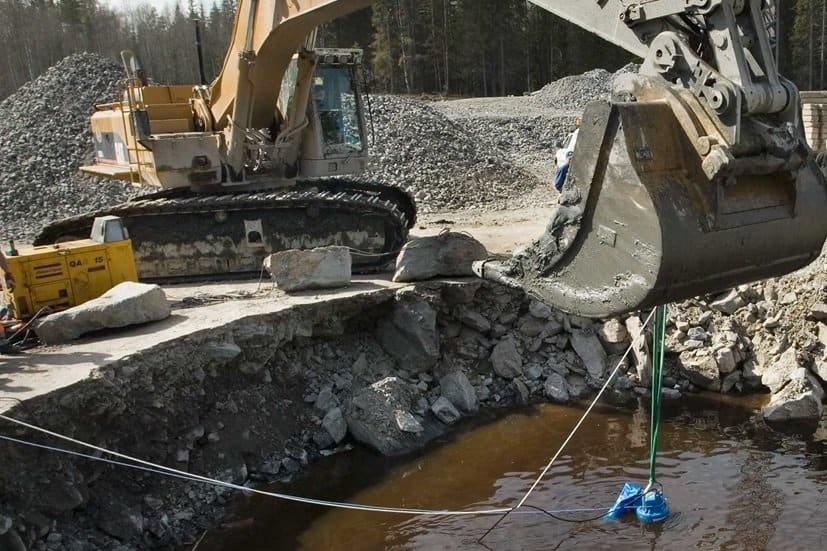
A foundation pit full of water is more than an inconvenience. Crews can’t place rebar or pour concrete in standing water, soft soil loses its bearing capacity, and trench walls become unsafe. Dewatering is the set of methods that keeps an excavation dry enough to work in, and getting it right early saves days that would otherwise be lost to pumping and rework.
Where the Water Comes From
Excavation water usually arrives from three directions. Rain and surface runoff flow into the pit from the surrounding grade. Groundwater seeps through the walls and floor when the excavation reaches below the water table. In some soils, water also moves upward through the base of the pit and carries fine particles with it.
Each source behaves differently, so the first step is a look at the geotechnical report. Soil type, water table depth, and seasonal variation tell you whether you are managing a few inches of rain or a steady inflow that will run for the length of the job. Sandy soils drain quickly and let a lot of water through. Clay releases water slowly but turns into slurry once it is disturbed.
Common Groundwater Control Methods
The right method depends on depth, soil permeability, and how long the work will last.
Sump Pumping
For shallow excavations, a sump is often enough. Crews dig a low point at the edge of the pit, line it with gravel or a perforated casing, and let water drain into it. A pump removes that water and discharges it away from the work area. It is simple, cheap to set up, and the most common approach on small and medium foundation jobs.
Wellpoints and Deep Wells
When the water table sits well above the planned dig depth, sumps struggle to keep up. Wellpoint systems place small pumped wells around the excavation to lower the water level before digging starts. Deep wells do the same job at greater depth. Both cost more and need design input, but they keep the pit walls stable by drawing water down ahead of the excavation instead of chasing it once it has already entered.
Cutoff Walls
Sheet piles or secant walls can block groundwater from entering at all. They are common on urban sites with deep basements, where lowering the water table might affect neighboring buildings.
Setting Up a Sump System That Keeps Working
Most dewatering problems on small sites come from poor sump setup, not from the pump itself. A few habits make a big difference:
- Place sumps below the planned excavation floor so water has somewhere to go as digging continues.
- Line the sump with gravel or a filter fabric to slow the entry of fine soil.
- Keep discharge hoses short, free of kinks, and pointed away from the excavation so water does not flow back in.
- Plan for a standby pump, since a single failure at night can flood the pit by morning.
Matching the Pump to Muddy, Silty Water
Pump selection is where many crews run into trouble. Water pulled from an excavation is rarely clean. It carries sand, silt, clay, small stones, and sometimes bits of roots or construction debris. When the water on a site carries sand, silt, or clay, a standard clean water unit clogs quickly, so crews switch to a solids handling pump built to pass debris.
Before ordering or renting, check the maximum solid size the pump can pass, the type of impeller, and how the wetted parts handle abrasion. Gritty water wears down parts quickly, so a unit rated for light duty can fail within a few weeks on a sandy site. Ask what the pump will run on in practice, including how often it will start and stop and how much head it must overcome, rather than relying on the headline flow rate alone.
Discharge, Permits, and Monitoring
Pumped water has to go somewhere. Many jurisdictions limit how much sediment can leave a site, and discharging muddy water into a storm drain or waterway can bring fines and stop-work orders. Settling tanks, sediment bags, and filter strips help reduce what leaves the site. Check local requirements before the pump is switched on, since permits for discharge can take time to arrange.
Once pumping starts, someone should check the system every day. Look at water levels, discharge clarity, and pump condition. A sudden rise in turbidity can signal soil washing out from behind a wall, which is a warning worth acting on right away. Good records of pumping rates also help if neighbors or inspectors raise questions later.