Underground utilities remain one of the most significant hidden risks in construction and infrastructure projects. Gas lines, electrical cables, fiber optic networks, water pipes, sewage systems, and communication conduits run beneath most construction sites, often with incomplete or outdated documentation. When these utilities are struck during excavation, the consequences can include serious safety incidents, service outages, environmental damage, regulatory penalties, and major project delays.
Despite advances in construction technology, utility strikes continue to occur because underground risk is not managed through a single action or a single technology. Underground utility detection is not just about locating utilities before digging begins. It is a broader process that includes planning, locating, mapping, verification, and, increasingly, detection during excavation itself.
Construction companies, utility contractors, and infrastructure project teams rely on different types of companies to manage underground risk. Some companies specialize in pre-excavation utility locating, others focus on subsurface utility engineering and mapping, and some provide technologies designed to detect utilities during active excavation. Together, these companies form the ecosystem that supports underground utility detection and damage prevention across the construction industry.
The Different Approaches to Underground Utility Detection
Underground utility detection is often misunderstood as a single service, when in reality it includes several different methods and phases that occur throughout a construction project. Understanding these approaches helps explain why different companies specialize in different parts of the process.
Public Utility Locating Services
In many regions, public utility locating services are used before excavation begins. These services mark the approximate location of utilities based on utility company records and field locating methods. Their role is to help contractors avoid damaging major utility lines during excavation.
Private Utility Locating
Private utility locating companies are hired by contractors, engineers, and project owners to perform more detailed utility locating. These companies use technologies such as ground-penetrating radar and electromagnetic locating to identify utilities that may not appear in public records.
Subsurface Utility Engineering (SUE)
Subsurface Utility Engineering is a process used on infrastructure and transportation projects to locate, map, and document underground utilities before construction begins. SUE helps engineers design projects around existing utilities and reduce conflicts during construction.
Ground-Penetrating Radar Surveys
Ground-penetrating radar is used to detect underground utilities and structures that may not be detectable using electromagnetic locating alone, particularly non-metallic pipes such as plastic water pipes or fiber optic conduits.
Electromagnetic Locating
Electromagnetic locating is commonly used to detect metallic utilities such as electrical cables and metal pipes. This method is widely used in utility locating and damage prevention programs.
Utility Mapping and Documentation
Once utilities are located, they are often mapped and documented so engineers and contractors can plan construction work safely and maintain accurate records for future projects.
Detection During Excavation
Even after utilities are located and marked, risks remain during excavation. Some technologies are designed to detect utilities during active excavation so operators can avoid strikes in real time.
Each of these approaches plays a role in reducing underground risk, and different companies specialize in different parts of this process.
The 5 Best Companies Offering Underground Utility Detection
1. RodRadar – Utility Detection During Excavation to Avoid Strikes
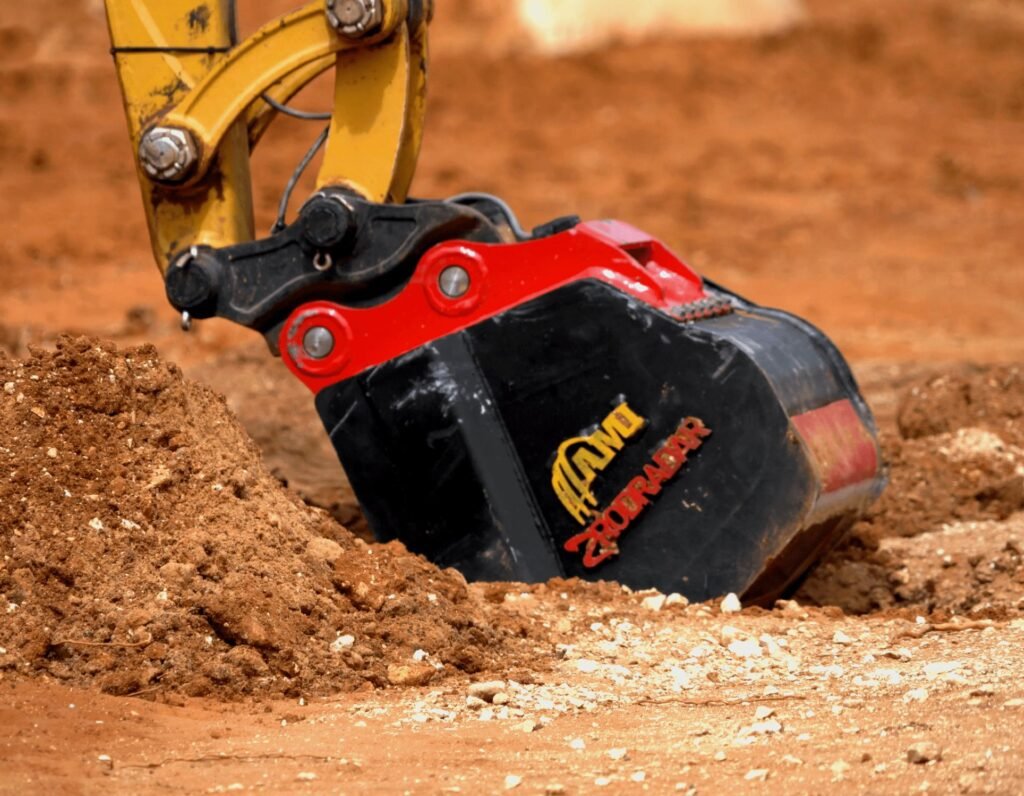
RodRadar focuses on detecting underground utilities during active excavation rather than only before digging begins. Its technology integrates ground-penetrating radar into excavator buckets, allowing the system to scan the ground continuously while excavation is taking place and alert operators when utilities are detected ahead of the bucket.
This approach addresses a common limitation in underground utility detection. Even when utilities are located and marked before excavation, site conditions can change, markings can be moved or lost, and undocumented utilities may still be present. Detection during excavation helps reduce this risk by identifying utilities at the moment excavation is taking place.
This type of detection is particularly relevant for trenching, earthworks, road construction, and urban construction projects where underground infrastructure is dense and excavation risk is high. By providing alerts to operators while digging is taking place, the system helps reduce reliance on pre-dig data alone and supports safer excavation practices.
The company recently introduced an additional layer of safety for construction sites – Stop Before Strike (SBS). The solution closes a critical safety gap by automatically stopping the excavator bucket before it strikes buried utilities during excavation. When Live Dig Radar® (LDR) detects a utility, it triggers an automatic bucket stop via a safety-grade hydraulic control system – helping prevent contact before it occurs.
2. GPRS – Private Utility Locating and Subsurface Investigation
GPRS provides private utility locating and subsurface investigation services for construction and infrastructure projects. These services are typically used before excavation begins to identify underground utilities and mark their locations on the ground so contractors can excavate more safely.
Private utility locating is often used when public utility records are incomplete or when projects require more accurate information about underground utilities. This is common in commercial construction, renovation projects, and infrastructure work where existing utilities may not be fully documented.
Subsurface investigation services may include ground-penetrating radar scanning, electromagnetic locating, and documentation of underground utilities. The information collected during these surveys helps project teams plan excavation work, avoid utility conflicts, and reduce the risk of damage during construction.
3. USIC – Utility Locating and Damage Prevention Programs
USIC focuses on utility locating and damage prevention services performed before excavation begins. The company works with utility companies, municipalities, and contractors to locate and mark underground utilities so excavation can be performed more safely.
Damage prevention programs are an important part of the construction and utility industries. Before excavation begins, utilities are located and marked to reduce the risk of strikes. These services are particularly important in urban environments and infrastructure projects where multiple utilities are located in the same area.
Utility locating and marking services help contractors understand where underground utilities are located so excavation work can be planned accordingly. These services are typically performed before excavation begins and are part of standard excavation safety procedures in many regions.
4. Blood Hound – Subsurface Utility Engineering and Utility Mapping
Blood Hound provides private utility locating and Subsurface Utility Engineering (SUE) services. Subsurface Utility Engineering is used to locate, map, and document underground utilities before construction begins so engineers and contractors can plan projects more safely.
SUE services are commonly used on transportation projects, infrastructure projects, and large construction projects where accurate information about underground utilities is required during the planning and design phase. Utility mapping and documentation help engineers design around existing utilities and reduce conflicts during construction.
By identifying utilities early in the project, subsurface utility engineering helps reduce redesign work, construction delays, and utility conflicts that can occur when utilities are discovered after construction has already begun.
5. Radiodetection – Equipment Used for Underground Utility Detection
Radiodetection provides equipment used to locate underground utilities, including electromagnetic locating equipment and ground-penetrating radar systems. This equipment is used by utility locating professionals, contractors, and infrastructure companies to detect underground utilities before excavation begins.
Electromagnetic locating is commonly used to detect metallic utilities such as electrical cables and metal pipes. Ground-penetrating radar can be used to detect non-metallic pipes such as plastic water pipes and fiber optic conduits. Together, these technologies help locate underground infrastructure so excavation work can be performed more safely.
Radiodetection equipment is widely used as part of utility locating workflows and damage prevention programs and is commonly used on construction sites before excavation begins.
Underground Utility Detection as a Risk Management Process
Underground utility detection should not be viewed as a single task performed before excavation begins. In well-managed construction and infrastructure projects, it is treated as a risk management process that starts during planning and continues through excavation and project completion.
The reason is simple: underground conditions are uncertain, documentation is often incomplete, and excavation introduces risk every time soil is removed. Because of this, companies that consistently avoid utility strikes do not rely on a single locating method. Instead, they follow a structured process that combines records, surveys, field verification, and safe excavation practices.
The Typical Utility Risk Management Process
While the exact process varies by project, most construction and infrastructure projects follow a similar sequence:
1. Utility Records Research
Before any field work begins, project teams collect existing utility records from utility companies, municipalities, and previous project documentation. This step helps identify known utilities and provides an initial understanding of underground conditions.
2. Site Surveys and Utility Locating
Utility locating companies perform field surveys using technologies such as ground-penetrating radar and electromagnetic locating to identify underground utilities. These surveys help detect utilities that may not appear in existing records.
3. Utility Marking and Communication
Once utilities are located, their positions are marked on the ground so construction crews can see where utilities are located before excavation begins. Clear communication between survey teams, project managers, and equipment operators is critical at this stage.
4. Excavation Planning
Project teams plan excavation routes and methods based on utility locations. In high-risk areas, excavation methods may be adjusted to reduce the chance of damaging utilities.
5. Verification and Exposure
In some cases, utilities are carefully exposed using controlled excavation methods to verify their exact position and depth before heavy excavation continues.
6. Excavation with Risk Controls
During excavation, crews follow safe digging practices and, in some cases, use detection technologies that help identify utilities while excavation is taking place.
7. Mapping and Documentation
As utilities are exposed or verified, their locations are documented to create accurate records for future work.
How Construction Companies Reduce Utility Strike Risk
Construction companies that successfully reduce utility strikes typically use multiple layers of protection rather than relying on a single method. Underground risk is managed through a combination of planning, field practices, and technology.
Common Practices Used to Reduce Utility Strike Risk
Construction and infrastructure companies often implement the following practices:
- Reviewing utility records and drawings before construction begins
- Using public utility locating services before excavation
- Hiring private utility locating companies for more detailed surveys
- Using ground-penetrating radar to detect non-metallic pipes
- Using electromagnetic locating to detect metallic utilities
- Marking utilities clearly on the ground before excavation
- Holding utility coordination meetings before excavation work begins
- Using controlled excavation methods near known utilities
- Verifying utility locations before major excavation
- Documenting utilities for future projects
These steps help reduce uncertainty and improve safety, but they do not eliminate risk entirely. Underground utilities are not always where records indicate, and conditions can change during construction. Because of this, many companies now view underground utility detection as an ongoing safety process rather than a one-time locating activity.
Why Underground Utility Detection Is Becoming More Important
Several industry trends are making underground utility detection more important than ever before.
Increasing Underground Infrastructure
Cities and infrastructure networks continue to expand, with more utilities being installed underground each year. Fiber optic networks, electrical systems, water infrastructure, and communication lines are often installed in the same corridors, increasing underground congestion.
Urban Construction and Limited Space
Many construction projects now take place in dense urban environments where underground space is limited and utilities are located close together. This increases the risk of accidental damage during excavation.
Safety and Regulatory Requirements
Safety regulations and damage prevention requirements have become stricter in many regions. Construction companies are expected to take reasonable steps to locate utilities and prevent damage before excavation begins.
Cost of Utility Strikes
Utility strikes can be extremely expensive. Costs may include:
- Emergency repairs
- Project delays
- Equipment downtime
- Fines and penalties
- Liability claims
- Service interruption costs
Because of these risks, underground utility detection is increasingly viewed as a necessary part of project planning and risk management rather than an optional service.
As underground infrastructure continues to expand and construction projects become more complex, underground utility detection will remain a critical part of construction planning, excavation safety, and infrastructure development. The companies that provide utility locating services, subsurface engineering, detection equipment, and excavation safety technologies all play a role in helping construction teams reduce risk and complete projects safely.