When your kitchen footprint is tight, you don’t need to move walls to gain room for dishes, dry goods, and prep gear. With the right layouts and fittings, you can recapture cubic inches from corners, toe kicks, and dead space above the fridge. The ideas below pair proven floor plans with space-smart details so every shelf, drawer, and nook works harder for you.
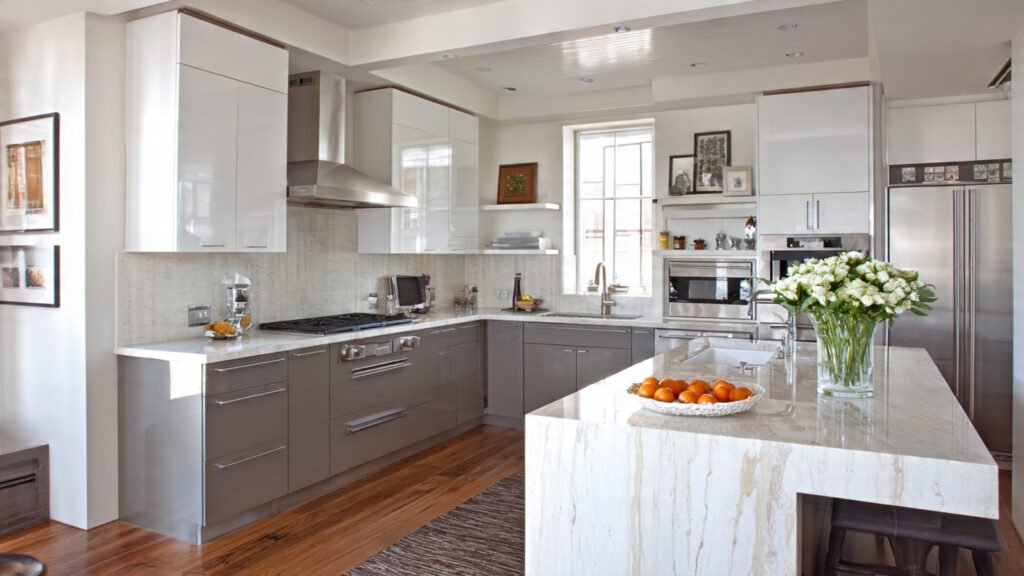
Pro tip: Opting for frameless cabinets increases usable shelf width in tight spaces.
1) One‑Wall Stretch With a Tall Storage Column
Why it works
A single run keeps everything streamlined and frees up walking and dining space. By stacking storage vertically, you gain a full pantry’s worth of capacity along one plane.
Smart fittings to add
- Full‑height pantry pull‑outs (8–12 inches wide) at one end for spices, cans, and baking staples.
- Deep over‑fridge cabinet fitted with vertical dividers for trays and cutting boards.
- Rail system under uppers for utensils, mugs, and a paper‑towel holder to clear counters.
Sizing tips
- Plan at least 36 inches of clear aisle in front of appliances.
- Use 15‑inch‑deep uppers if you can; they store dinner plates without crowding the counter.
- Run cabinets to the ceiling and add a step stool tucked into a narrow base cabinet.
2) Classic Galley Reimagined
Why it works
Two parallel runs concentrate storage on both sides, turning every step into reach distance. It’s efficient for cooking and easy to organize.
Smart fittings to add
- Toe‑kick drawers for baking sheets and platters that rarely leave the kitchen.
- 3‑ to 6‑inch filler pull‑outs beside the range or fridge to hold oils and spices.
- Under‑cabinet knife block and magnetic strip to free a drawer.
Sizing tips
- Target a 42‑inch aisle if two people cook; 36 inches works for solo cooks.
- Stagger appliance doors so they don’t collide when open.
- Keep uppers symmetrical to avoid a cramped feel; glass doors on a few cabinets can soften the look.
3) L‑Shaped Corner That Actually Stores
Why it works
An L makes room for prep along one leg and cleanup along the other. With the right corner gear, you reclaim space that usually gets lost.
Smart fittings to add
- LeMans or “magic corner” trays that swing contents fully into view.
- A corner sink with a shallow bowl to free space beneath for a recycling pull‑out.
- Tiered corner drawers that use the full diagonal for utensils and wraps.
Sizing tips
- Keep landing zones near appliances: 15 inches of counter next to the range and fridge helps.
- If the window sits in the corner, choose a compact faucet and low backsplash shelf for soaps and scrubs.
4) U‑Shape With a Slim Peninsula
Why it works
A compact U wraps storage on three sides and adds a short peninsula for seating or extra drawers. It adds capacity without introducing a freestanding island.
Smart fittings to add
- 18‑ to 24‑inch‑wide peninsula stack of drawers: shallow top for tools, deeper bottoms for pots.
- Appliance garage at the turn for the blender, toaster, and kettle.
- Hidden charging drawer in the peninsula to keep cords off the counter.
Sizing tips
- Keep the mouth of the U at 42 inches or more so the space doesn’t feel pinched.
- Clip peninsula corners with a radius edge to improve circulation and reduce bumps.
5) Corridor Kitchen With a Pocket Pantry Wall
Why it works
If your kitchen sits in a hallway, a shallow pantry wall can ride along one side without shrinking the main aisle.
Smart fittings to add
- 12‑inch‑deep, floor‑to‑ceiling cabinets for cereals, cans, and small appliances.
- Pull‑down racks inside uppers so top shelves are reachable without a step stool.
- Tall broom closet with back‑of‑door storage for wraps, foils, and cleaning tools.
Sizing tips
- Keep the main walkway to 36 inches minimum.
- Use slab or simple Shaker doors with low‑profile pulls so nothing snags in a narrow pass.
6) Appliance Wall + Worktable Combo
Why it works
Consolidate fridge, microwave, and oven in one tall bank. Then use a slim worktable (butcher block or stainless) opposite to add drawers and open shelves without blocking flow.
Smart fittings to add
- Over‑fridge cabinet with a flip‑up door for seldom‑used roasters and holiday gear.
- Narrow drawer stacks (12–15 inches wide) under the worktable for linens and tools.
- Ceiling‑mounted pot rack over the worktable to clear a base cabinet.
Sizing tips
- Choose counter‑depth or panel‑ready appliances to keep the path smooth.
- Keep 15 inches of counter landing space near the microwave or oven for hot dishes.
7) “Vertical Zoning” to the Ceiling
Why it works
When floor space is fixed, the ceiling line becomes your best storage asset. Zoning by height turns blank wall into a tidy tower.
Smart fittings to add
- Two‑tier uppers: everyday shelves at eye level, lift‑up doors above for bulk goods.
- Library ladder or hook‑on step that parks in a 3‑inch slot beside a tall cabinet.
- Over‑window shelf or bridge cabinet to house serving pieces and vases.
Sizing tips
- Leave 18 inches between counter and the first shelf line for comfortable prep.
- If your ceiling is 9 feet or taller, break uppers into two stacked boxes for easier access and clean sightlines.
Layout‑Agnostic Storage Upgrades That Pay Off
Pull‑outs and dividers
Swap fixed shelves for full‑extension drawers and tray dividers. You’ll see everything at once and stop losing items at the back.
Under‑sink order
Add a U‑shaped pull‑out around the drain, a caddy for cleaners, and a tilt‑out tray at the sink front for brushes.
Lighting that helps you work
Use slim LED strips under uppers and inside deep drawers. Bright task lighting reduces fumbling and keeps counters clear while you cook.
Surfaces that stay tidy
A cutting board over the sink, a roll‑up drying rack, and a lidded compost bin all free up room during prep and cleanup.
FAQs
What’s the best layout for a very narrow kitchen?
A galley with 36–42 inches between runs is hard to beat. Pair it with toe‑kick drawers, filler pull‑outs, and a full‑height pantry to store more without crowding the aisle.
How can I store pots and pans in a small kitchen?
Use a 24‑inch drawer base with peg organizers for pots and lids, or hang pans on a short rail near the range. Vertical tray dividers above the oven handle baking sheets and cutting boards.
Are open shelves smart in a tiny space?
Yes—when they’re purposeful. Limit open shelves to daily dishes and glasses, and add a shallow lip so items don’t creep forward. Keep everything else behind doors to cut visual clutter.
As you fold these layouts and fittings into your plan, your kitchen starts to work like a custom system—without touching a single wall. Small choices, multiplied across corners, aisles, and uppers, add up to real storage you feel every day.