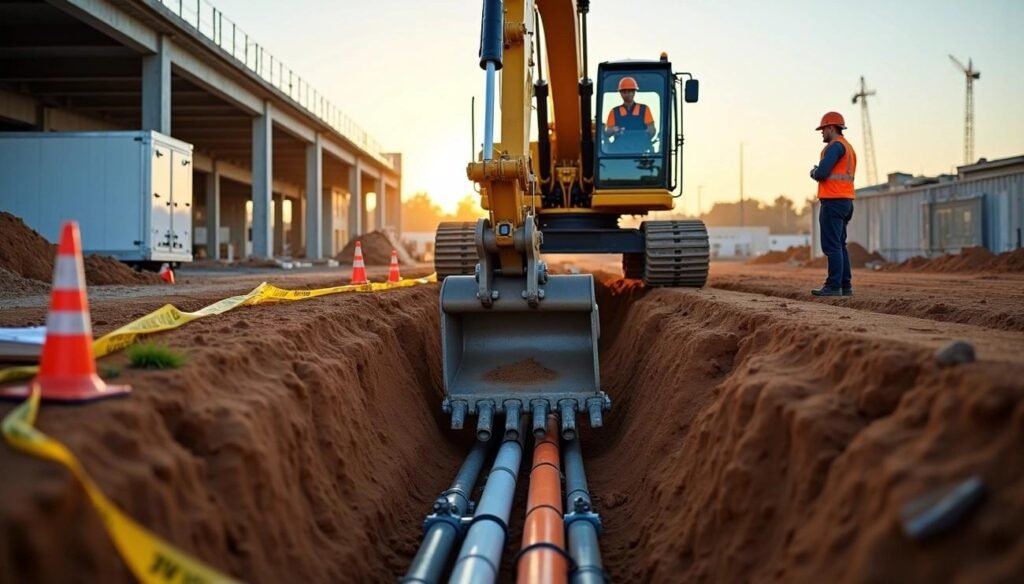
Traditional methods for locating underground utilities often leave critical gaps once excavation begins. Pre-construction surveys can indicate where utilities may be buried, but they offer little protection when digging actually starts and conditions on site begin to change.
Contractors need solutions that remain active throughout the excavation process. Modern detection systems can identify buried utilities in real time and provide immediate alerts before equipment makes contact. This added layer of awareness helps crews respond quickly and avoid costly and dangerous mistakes.
We have evaluated leading underground utility detection companies based on their real-time capabilities, integration with excavation equipment, and effective detection depth. This article highlights five trusted providers that contractors depend on to reduce the risk of utility strikes and maintain safer, more efficient job sites.
1. BHUG: Utility Locating for Construction Safety
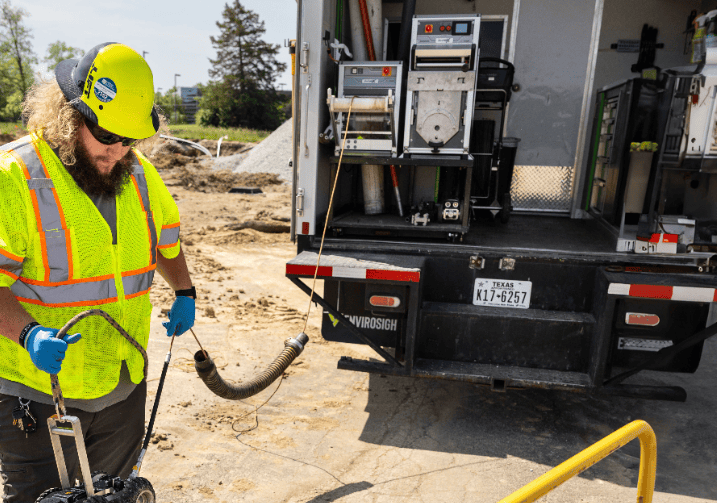
Blood Hound operates as a specialized underground utility detection company that deals with a critical gap in standard utility marking services. The Midwest-based company brings 25 years of experience and provides nationwide coverage for projects requiring complete subsurface mapping.
The company’s core value proposition centers on a stark reality: over 65% of underground utilities are privately owned and don’t get marked when contractors call 811. This creates substantial risk during excavation because 811 services only locate public utilities from the main line to the meter box. Everything beyond that point falls into a blind spot that causes most utility strikes.
Blood Hound fills this gap by locating the private infrastructure that 811 misses. Their technicians detect irrigation systems, parking lot lighting, sewer laterals from the main to the building, private gas lines, storage tanks, fire suppression lines, water lines, CCTV security cables, and diesel tanks. Contractors working in Arizona often turn to Blood Hound for Phoenix utility locating services that identify these hidden private utilities and reduce excavation risks.
Customer feedback presents a mixed picture worth noting. Professional testimonials highlight the team’s professionalism, communication, and problem-solving capability. One contractor credits Blood Hound with proving the non-existence of a sewer line that appeared on survey documents and saved tens of thousands of dollars and months of delays.
2. Utilocate: Advanced Ground Penetrating Radar Solutions
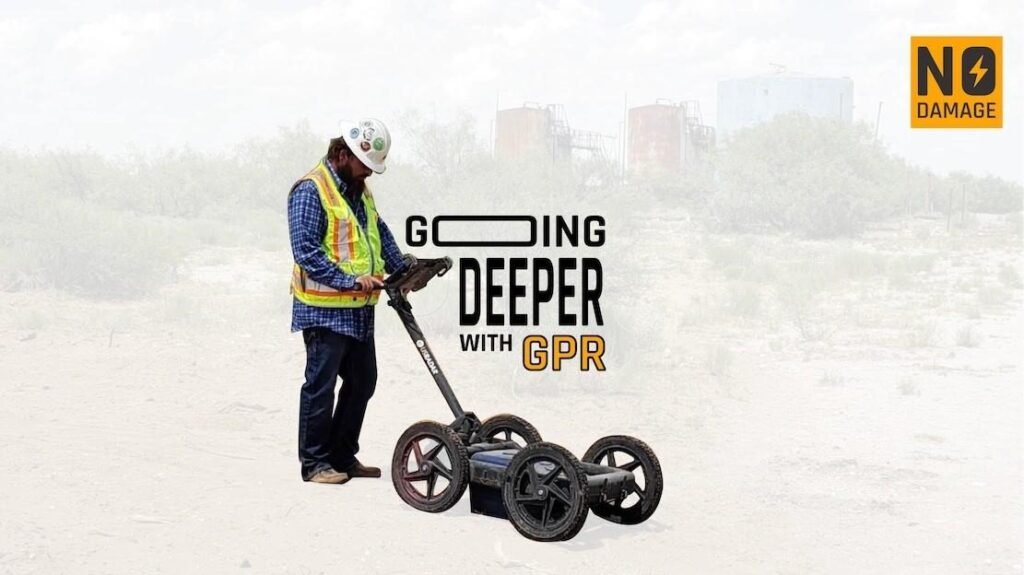
Util-Locate approaches underground utility detection through specialized Ground Penetrating Radar technology backed by 13+ years of field experience. Their California-based operation focuses on GPR solutions and separates them from multi-technology providers by delivering deep expertise in radar-based subsurface imaging.
The company’s core technical capability centers on equipment that achieves 97% accuracy for utility lines positioned as deep as 13 feet below grade. This detection range handles most commercial and residential utility installations, where critical infrastructure runs between 2 and 10 feet underground depending on local codes and utility type.
Soil composition affects GPR performance and detection depth. Radar signals travel faster and penetrate deeper in sandy soil conditions because low moisture content reduces signal attenuation. Detection depth in sandy soil reaches 5 to 7 feet. Clay soils contain higher moisture levels that absorb and scatter radio waves, which limits effective penetration to 2 to 3 feet. Water, air pockets, and dense objects restrict radar signal travel and require technicians to adjust scanning parameters based on site conditions.
The company provides real-time data delivery on-site, coupled with 3D imaging capabilities that visualize subsurface conditions. Contractors receive actionable utility location information during the survey rather than waiting days for processed reports. This data access keeps construction schedules moving and allows on-the-spot excavation planning adjustments.
3. SafeDig Systems: Integrated Excavator Protection
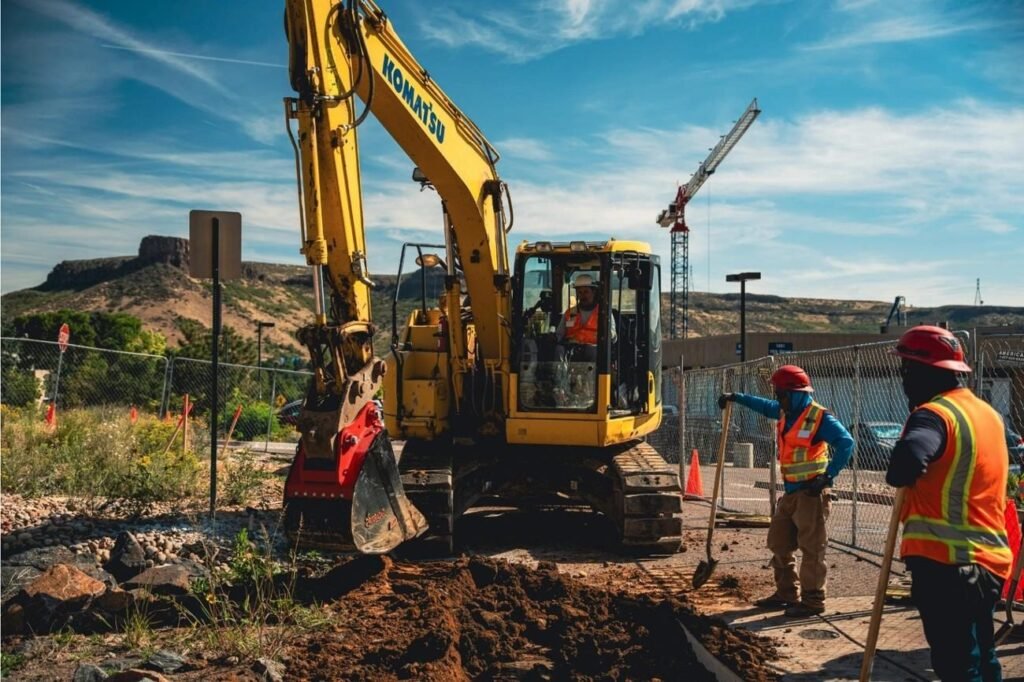
Excavator responsibilities for protecting underground utilities extend far beyond calling 811 before breaking ground. Federal, state, and local regulations establish specific duties that contractors must fulfill during actual excavation work. These create legal obligations that many underground utility detection companies help excavators meet through integrated protection systems.
The tolerance zone represents a critical regulatory concept that defines where extra caution becomes mandatory. This zone extends 18 inches on each side of a marked utility facility in most states. Contractors must verify the location, type, size, direction, and depth of the facility through visual exposure before excavating within this zone. This requirement addresses a fundamental limitation of surface markings, which indicate approximate horizontal position but provide no depth information.
Vacuum excavation emerges as the preferred soft dig technology for safe utility exposure. This non-destructive method uses high-pressure air to loosen soil and vacuums it away, substantially reducing the risk of underground cable strikes and worker injuries. Contractors minimize damage risk to underground utilities while maintaining the integrity of essential services by using advanced digging technology.
Digital integration represents the next progress in excavator protection systems. M Group Services implemented a digitized SafeDig pack that collects and unifies all information about subsurface assets. Street excavation work involves multiple hazards including electricity cables, gas pipes, water pipes, and telecoms cables. Locating accurate information about these hazards was complex and time-consuming, affecting service levels and causing delays.
4. SubSurface Instruments: Multi-Sensor Detection Platform
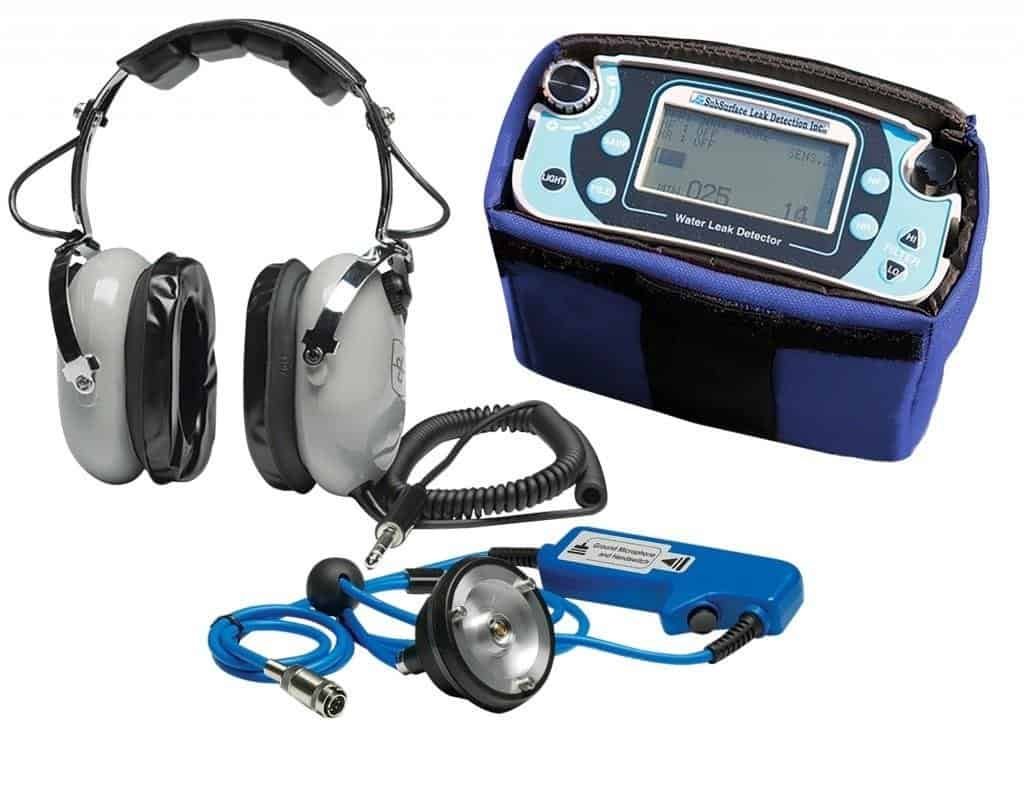
SubSurface Instruments manufactures detection equipment that underground utility detection companies deploy when standard locating methods prove insufficient. This US-based manufacturer has operated since 1996 and builds high-frequency locators, magnetic locators, pipe and cable locators, leak detectors, correlators, and pipe inspection camera systems distributed in 90+ countries.
The company’s multi-sensor approach addresses a persistent challenge in subsurface detection. No single technology can locate every utility type in all soil conditions. Their product line combines different detection methodologies and allows contractors to select equipment matched to specific utility materials and site characteristics.
The AML Pro all-materials locator represents their flagship breakthrough in non-conductive utility detection. This scientific instrument transmits modulated, ultrahigh radio frequency signals that identify differences in subsurface densities. The technology detects buried PVC pipes, PE pipes, and nearly any object with an edge at depths exceeding 20 feet. Materials including plastic, metal, wood, cable, and concrete all produce detectable density contrasts when ultrahigh frequency waves pass through surrounding soil.
Both AML models locate utilities that electromagnetic induction equipment misses entirely. Water departments commonly install non-metallic PE and PVC piping that carries no electrical current and generates no electromagnetic field. Gas utilities deploy plastic lines throughout distribution networks. Fiber-optic telecommunications cables contain no conductive elements. These non-metallic utilities remain invisible to standard electromagnetic locators but produce clear signals when scanned with ultrahigh radio frequency technology.
5. UtilityGuard Pro: Bucket-Mounted Safety Technology
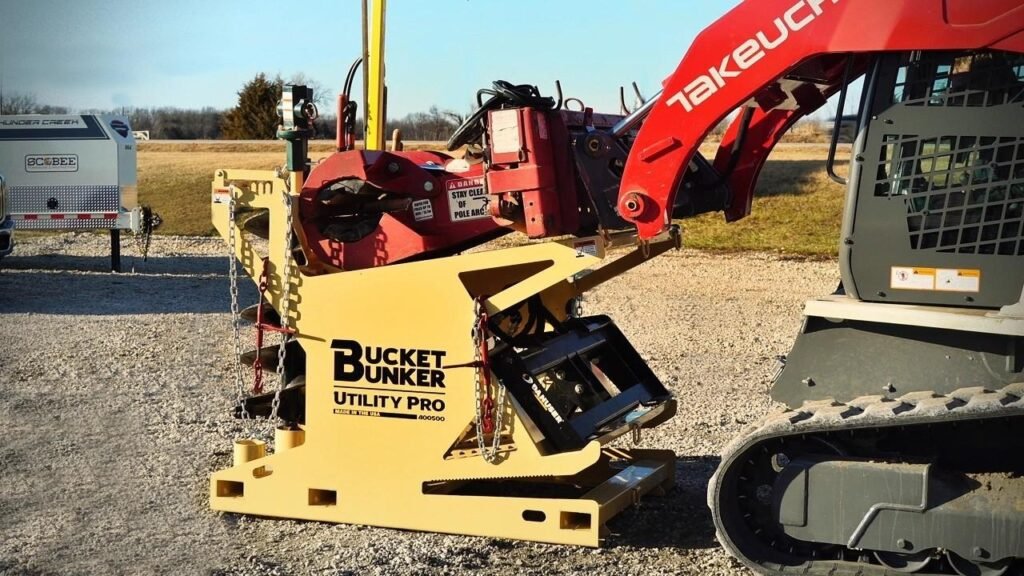
Bucket-mounted detection technology brings underground utility detection directly onto excavation equipment, scanning the ground live as digging progresses. Rodradar developed Live Dig Radar that modernizes onto any excavator bucket, adding radar sensors and a control screen inside the machine cab. The system scans before and during excavation, displaying utility locations on the operator’s screen with immediate feedback. Scanning takes seconds, allowing operators to verify safe dig zones without stopping work.
The technology delivers automatic on-site alerts that prevent damage to underground infrastructure during active excavation. This live protection addresses a gap between pre-construction surveys and actual digging operations, where marked utilities sometimes appear in unexpected positions or depths.
Subsite Electronics manufactures the UtiliGuard locating system, which tackles a different challenge: electromagnetic interference that degrades detection accuracy on congested job sites. The system has Ambient Interference Measurement (AIM) that scans surrounding areas for electrical noise and recommends optimal frequencies among 70 available options. This frequency selection capability produces faster and more accurate locates by avoiding interference from power lines, radio signals, and other electromagnetic sources.
UtiliGuard provides both horizontal and vertical distance measurements to buried utilities. Depth information proves especially valuable for obstructed utilities where surface conditions prevent direct visual confirmation. The six-button interface operates in multiple languages, accelerating operator proficiency in a variety of crews. A high-contrast LCD display maintains visibility in direct sunlight and low-light conditions.
Conclusion
Now that you’ve explored these five underground utility detection companies, it’s time to determine which solution fits your project requirements.
Each provider addresses different aspects of utility detection. Blood Hound excels at private utility mapping that 811 misses. Util-Locate brings specialized GPR expertise for non-metallic lines. SafeDig Systems offers integrated excavator protection through vacuum excavation. SubSurface Instruments provides multi-sensor equipment for complex detection scenarios. UtilityGuard Pro delivers bucket-mounted immediate alerts during active digging.
Contractors should review detection depth requirements and utility types. You also need to consider whether you need pre-construction mapping or active excavation protection. The right choice depends on your specific job site conditions and safety priorities.