Floating staircases have become a go-to feature in modern homes because they make a space feel open, architectural, and intentionally designed. Instead of looking like a heavy, boxed-in structure, a floating staircase gives the impression that the treads are suspended in the air. That “lighter” look fits perfectly with contemporary interiors that prioritize clean lines, natural light, and minimal visual clutter. Even in smaller homes, a floating design can make the entry or main living area feel bigger because it doesn’t block sightlines the way a traditional staircase can.
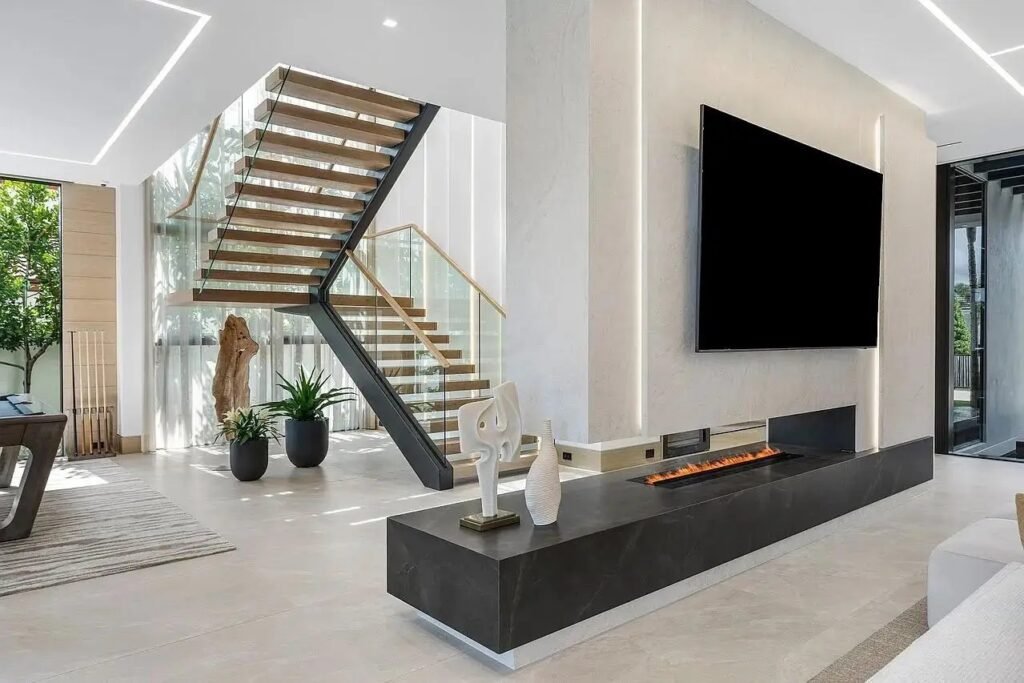
Homeowners also like floating staircases because they instantly modernize a space. You can update a home without changing the entire layout just by replacing a bulky stair and railing system with something that looks sleek and custom. They pair well with open-concept floor plans, high ceilings, large windows, and modern finishes like wide-plank flooring, stone, metal, and glass.
Another reason floating stairs stay popular is flexibility. The same concept can be executed with different materials and styles, so it can feel ultra-modern or more warm and transitional. For example, wood treads with a simple black railing can feel modern but still cozy. Add glass, and the whole staircase becomes almost invisible. Done well, the stairs don’t just connect floors. They become a design centerpiece that also improves the overall feel of the home.
How Floating Designs Change Light, Space, and Flow
The biggest visual benefit of floating stairs is how they interact with light. Traditional staircases often create a dark “tunnel” effect, especially near entryways or in the center of the home. Floating designs reduce that. Because the structure is more open, light can travel through the staircase instead of being blocked by solid risers and heavy side framing. If your home has windows near the stairs, this can noticeably brighten the area and make the whole space feel less closed off.
Space and flow improve for the same reason. When you can see through the stairs, the room feels wider. Sightlines stay clean, and the staircase doesn’t visually cut the floor plan in half. This is especially important in open layouts where the stairs sit near a living room or kitchen. A floating design can feel like part of the room rather than an obstacle sitting inside it.
Floating stairs can also make movement feel smoother. When the stair and railing are designed with the surrounding rooms in mind, the transition between levels feels intentional. Homeowners often choose slimmer rail profiles or transparent infill like glass or thin vertical balusters to keep the staircase from dominating the space. The result is a cleaner path through the home and a look that feels modern without feeling cold.
Structural and Material Choices to Consider
A floating staircase may look simple, but the structure behind it matters a lot. Most designs rely on strong support, such as a central stringer (mono stringer), side stringers hidden in the wall, or a steel frame that carries the load. The engineering and installation quality are critical because these stairs must be stable, quiet, and safe. If the structure is underbuilt or poorly anchored, you can end up with bounce, squeaks, or long-term movement that becomes a serious problem.
Material choices shape both appearance and performance. Wood treads are popular because they add warmth and feel comfortable underfoot. Metal components can create a crisp modern look and offer strong support. Glass panels keep the design open, but they require precise installation and regular cleaning if fingerprints bother you. Cable systems can look clean, but they may not be ideal for every household, especially if children are likely to climb.
You’ll also want to consider details that affect everyday use. Tread depth and spacing. Whether you want open risers or a more closed look. Slip resistance, especially if you wear socks on wood treads. Sound control, since open designs can amplify footstep noise if not planned well. And of course, railing design needs to match both style and safety standards.
This is where working with a specialized team like Luxury Staircase Railings helps. With the right fabrication and installation approach, a floating staircase can stay solid, safe, and visually clean for years, while still delivering the modern “wow” effect people love.