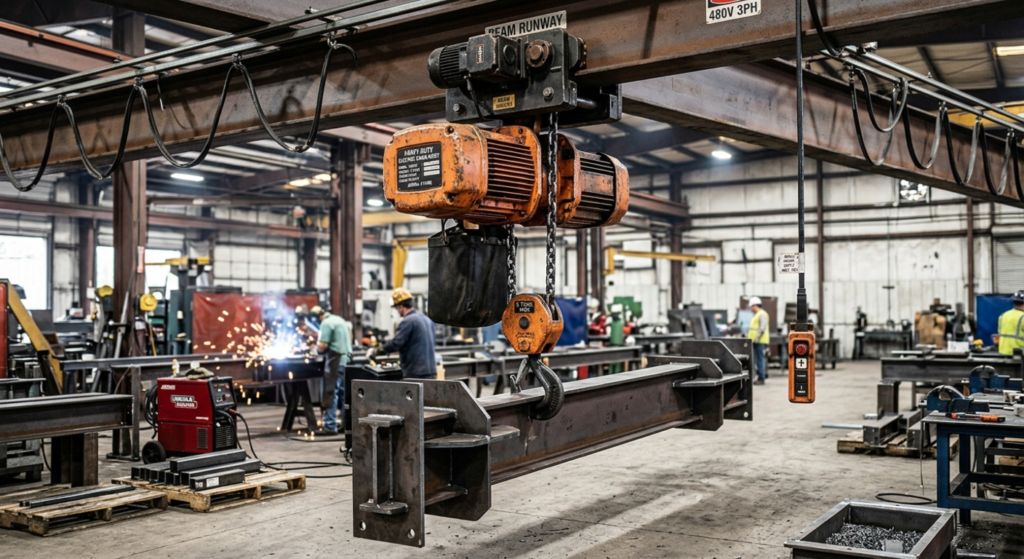
Material handling plays a critical role in modern industrial operations. Whether in manufacturing plants, warehouses, or assembly units, efficient lifting equipment improves productivity, enhances safety, and reduces manual labor. Among the most widely used solutions are jib cranes, workstation cranes, and electric chain hoists. Each serves a specific purpose, yet they often work together to create a streamlined lifting system.
In this guide, we’ll break down how these systems work, their key benefits, and how to choose the right one for your application.
What Are Jib Cranes?
Jib cranes are versatile lifting devices designed to move loads within a limited circular area. They consist of a horizontal arm (jib) attached to a vertical support, allowing rotation to lift and transfer materials efficiently.
Key Features of Jib Cranes
- 180° to 360° rotation capability
- Compact design suitable for tight spaces
- Easy installation on floors, walls, or columns
- Ideal for repetitive lifting tasks
Common Applications
Jib cranes are widely used in:
- Manufacturing units
- Workshops
- Loading docks
- Maintenance areas
Their ability to handle localized lifting tasks makes them highly efficient for workstations where materials need to be moved frequently within a fixed radius.
Understanding Workstation Cranes
Workstation cranes are designed for larger coverage areas compared to jib cranes. These systems typically consist of overhead rails and bridges that allow movement along multiple axes.
Types of Workstation Cranes
- Overhead bridge systems
- Monorail cranes
- Enclosed track systems
Benefits of Workstation Cranes
One of the biggest advantages of workstation cranes is their flexibility. They allow workers to move loads across an entire workspace without heavy manual effort.
Other benefits include:
- Improved workflow efficiency
- Reduced operator fatigue
- Increased safety and load control
- Customizable configurations
Where They Are Used
Workstation cranes are ideal for:
- Assembly lines
- Packaging units
- Warehouses
- Automotive industries
These cranes are especially useful when materials need to travel across multiple stations or along a production line.
What Are Electric Chain Hoists?
Electric chain hoists are lifting devices powered by electricity that use a chain to raise and lower heavy loads. They are often integrated with jib cranes or workstation cranes to perform the actual lifting operation.
How Electric Chain Hoists Work
An electric motor drives a chain mechanism, allowing controlled lifting and lowering of loads. Operators can control the hoist using a pendant or remote system, ensuring precision and safety.
Key Advantages
- High lifting capacity
- Smooth and precise operation
- Reduced manual effort
- Enhanced safety features
- Suitable for continuous use
Typical Applications
Electric chain hoists are commonly used in:
- Heavy manufacturing
- Construction sites
- Warehousing
- Steel and fabrication industries
They are especially valuable where frequent lifting of heavy materials is required.
How These Systems Work Together
While each piece of equipment has its own function, they are often combined to create a complete material handling solution.
- Jib cranes provide localized movement
- Workstation cranes enable broader area coverage
- Electric chain hoists handle the vertical lifting
For example, in a manufacturing plant:
- A workstation crane may transport materials across the production line
- A jib crane may handle specific tasks at a workstation
- An electric chain hoist performs the lifting in both setups
This integration improves efficiency and ensures smooth operations across different stages of production.
Key Factors to Consider When Choosing Equipment
Selecting the right lifting solution depends on several important factors:
1. Load Capacity
Always determine the maximum weight you need to lift. Overloading equipment can lead to safety hazards and equipment failure.
2. Workspace Layout
Evaluate your facility’s size and layout.
- Small areas may benefit from jib cranes
- Larger spaces require workstation crane systems
3. Frequency of Use
If lifting tasks are frequent and repetitive, electric chain hoists and automated systems are the best choice.
4. Installation Requirements
Consider whether the crane will be:
- Floor-mounted
- Wall-mounted
- Ceiling-supported
Each option has different structural requirements.
5. Safety Features
Modern lifting equipment includes:
- Overload protection
- Emergency stop functions
- Limit switches
These features are essential for safe operation.
Advantages of Using Modern Lifting Systems
Investing in jib cranes, workstation cranes, and electric chain hoists offers several long-term benefits:
Increased Productivity
Automated lifting reduces manual handling time, allowing workers to focus on core tasks.
Improved Workplace Safety
Minimizing manual lifting reduces the risk of injuries and accidents.
Cost Efficiency
Although initial investment may be high, these systems reduce labor costs and improve operational efficiency over time.
Better Load Control
Precision handling ensures materials are moved safely and accurately.
Maintenance and Best Practices
To ensure optimal performance, regular maintenance is essential.
Maintenance Tips
- Inspect chains, hooks, and motors regularly
- Lubricate moving parts
- Check electrical components
- Test safety mechanisms
Operator Training
Proper training is crucial. Operators should understand:
- Load limits
- Safe handling techniques
- Emergency procedures
Regular training reduces accidents and extends equipment lifespan.
Future Trends in Material Handling Equipment
The material handling industry is evolving with new technologies. Some emerging trends include:
- Smart cranes with IoT integration
- Remote monitoring systems
- Energy-efficient hoists
- Automation and robotics integration
These advancements aim to further improve efficiency, safety, and operational control.
Conclusion
Jib cranes, workstation cranes, and electric chain hoists are essential components of modern material handling systems. Each serves a unique purpose, yet together they create a powerful solution for lifting and moving materials efficiently.
Choosing the right equipment depends on your operational needs, workspace, and load requirements. With proper selection, installation, and maintenance, these systems can significantly enhance productivity, improve safety, and reduce operational costs.
If you’re planning to upgrade your material handling setup, understanding these systems is the first step toward making a smart investment.