Dust is one of those things crews tend to accept as part of the job until someone gets sick or a regulator shows up. Concrete, drywall, masonry, and soil all generate fine particulates that drift far beyond the work area, settling on neighboring properties, infiltrating HVAC systems, and loading into workers’ lungs. For site supervisors and general contractors, getting dust control right isn’t just about keeping the site tidy. It’s about staying compliant, protecting health, and avoiding the costly stop-work orders that follow a failed inspection.
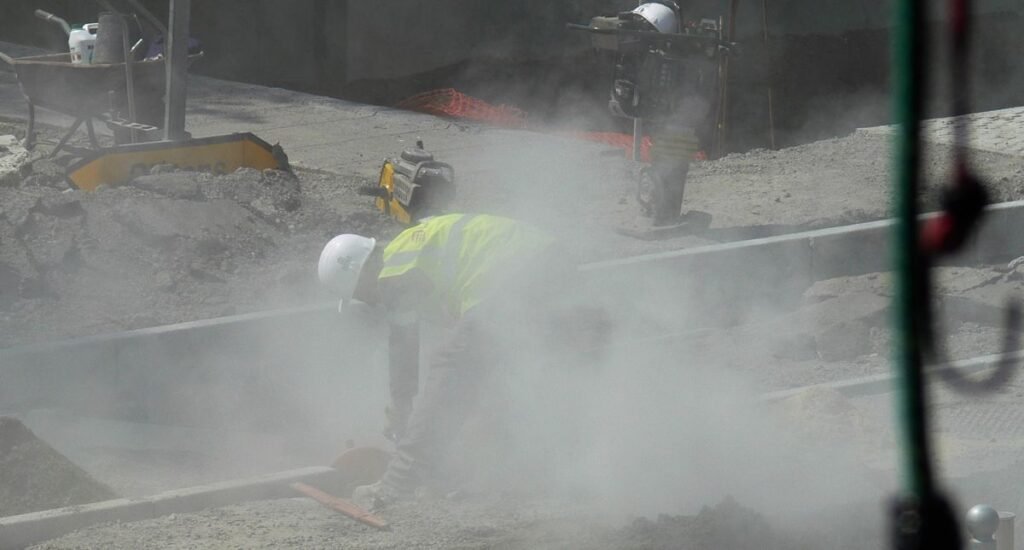
Here’s a practical look at where construction dust comes from and the engineering controls that actually keep it under control.
Understand the OSHA Silica Standard
Respirable crystalline silica is the dust that gets the most attention, and for good reason. OSHA’s silica rule (29 CFR 1926.1153) sets a permissible exposure limit of 50 micrograms per cubic meter of air, averaged over an eight-hour shift. Hit half that number and the action level kicks in, which means medical surveillance, written exposure control plans, and documented training.
The rule covers any task that disturbs concrete, stone, brick, mortar, or fill containing crystalline silica. That includes cutting, grinding, drilling, jackhammering, abrasive blasting, and demolition. Table 1 of the standard lists specific tasks paired with required controls, and following it correctly is often the simplest path to compliance.
Identify Your Dust Sources
Before you can control dust, you need to know where it’s coming from. The biggest contributors on most active sites include:
- Concrete and masonry cutting with handheld or walk-behind saws
- Surface grinding, tuckpointing, and polishing
- Demolition of slabs, walls, and finishes
- Drilling, chipping, and jackhammering
Each of these has a different dust profile. A walk-behind saw cutting outdoors generates a different exposure problem than a grinder running inside a sealed bathroom on a remodel. Matching the control to the source is the part most teams skip.
Use Water Suppression as the First Line of Defense
Wet methods are the cheapest and most effective starting point for most cutting and grinding tasks. A continuous water stream at the point of cut suppresses dust before it ever becomes airborne, and most modern saws and grinders come with integrated water ports for exactly this purpose.
The catch is volume and consistency. A drizzle isn’t enough. OSHA expects flow rates sufficient to wet the cut continuously, and slurry has to be managed so it doesn’t dry out and resuspend later. On occupied buildings or finished interiors where water isn’t practical, you’ll need to move to dry capture methods.
Build Enclosures and Containment Zones
For interior demolition and renovation work, physical containment keeps dust from spreading to the rest of the building. Plastic sheeting on a temporary stud frame, sealed with tape and zipper doors, creates a defined work zone that can be cleaned independently.
The mistake most crews make is treating containment as a static barrier. It only works when paired with negative pressure inside the enclosure, which pulls air through filtration and exhausts it cleanly. Without that pressure differential, every door opening pushes a cloud of dust into the surrounding occupied space.
Specify Negative Pressure and HEPA Filtration
Negative-pressure containment is built around air scrubbers, which are portable units that pull contaminated air through a series of filters and exhaust clean air either back into the room or through ductwork to the outside. The terminal filter is always HEPA, rated to capture 99.97 percent of particles at 0.3 microns, which is the size range that does the most damage in human lungs.
Sizing the system matters more than most people realize. You need enough airflow to achieve the right number of air changes per hour for the enclosure volume, and the pre-filters need to be staged so the expensive HEPA element isn’t loading up on bulk debris. Working with an experienced air filter manufacturer during the planning phase helps you match equipment to the actual work scope rather than buying generic units that underperform on a real site. It also makes change-out schedules predictable, which keeps the project moving.
Train the Crew and Document Everything
Engineering controls only work when the people using them know why they matter. A short toolbox talk before each silica-generating task, covering what’s being cut, what controls are in place, and what to do if equipment fails, does more for compliance than any binder on the trailer shelf.
Keep written records of exposure assessments, equipment maintenance, filter changes, and training attendance. When OSHA shows up, the paperwork is what separates a quick walkthrough from a serious citation.
Next Steps
Dust control isn’t a single product or a one-time setup. It’s a layered approach that starts with knowing your sources, applies the right combination of water, containment, and filtration, and depends on a crew that takes it seriously day after day.
The sites that get this right tend to share a few habits: they plan controls into the bid rather than tacking them on later, they invest in equipment that’s actually rated for the job, and they treat compliance as a baseline rather than a target. Build those habits into your operation and you’ll spend less time dealing with citations, complaints, and sick workers, and more time finishing projects on schedule.