Source: Magnific (Previously Freepik)
Key Takeaways:
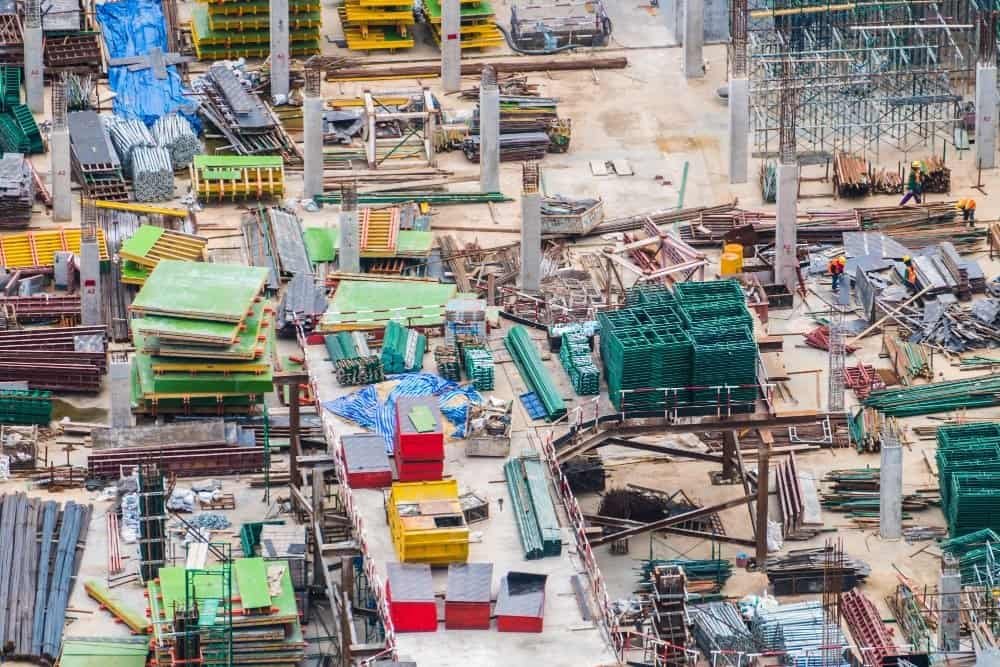
Construction sites are a hub for different kinds of material whose effective management influences various critical aspects of the project including its:
- Schedule
- Waste control
- Costs
- Productivity
By carefully planning procurement, organizing site storage, and using appropriate material handling equipment, contractors can ensure their projects stay on track.
From heavy machinery to piles of bricks, cement, concrete, steel, and wood – a diverse range of materials can be found on any construction site. In fact, they take up a huge chunk of the project’s budget, making effective material management necessary for its profitability and timely completion.
Conversely, material waste is a huge cause of financial concern. Damaged, replaced or excess inventory can quickly drain a project’s budget without providing any real value. Even small inefficiencies at every stage of the project can add up to a considerable amount.
That is why construction site material management is not up for debate. Successful initiatives hinge on strong site coordination where project managers, procurement teams, suppliers, and site crews work together to ensure the timely delivery, appropriate storage, and easy access of materials onsite.
This blog will uncover five productive and actionable strategies that guarantee proper construction material management.
Strategy 1: Improve Material Planning Before The Project Starts
Material planning should ideally begin long before construction starts. Formulating a meticulous plan helps teams prepare for site management. They are also better equipped to anticipate requirements, coordinate deliveries, and minimize expensive disruptions.
Forecasting material quantities accurately
Accurate quantity estimates prevent instances of under- and over-stocking. With the help of detailed blueprints and historical project data, contractors can accurately predict realistic material requirements before kick-starting the procurement cycle.
Aligning procurement with project phases
Materials should be ordered with the construction timeline in mind. Aligning both prevents excess inventory from taking up considerable storage space onsite, which can inevitably lead to clutter and product damage. It is better to schedule their availability when required.
Preventing overordering and shortages
By regularly reviewing the progress of their project, procurement teams can quickly adjust orders as per the project’s current demands. This reduces unnecessary spending on redundant materials while avoiding delays caused due to the dearth of the right products.
Creating a site delivery schedule
Synchronizing deliveries with project milestones is a great way to avoid a number of issues ranging from site congestion to damages caused by double handling. It also supports efficient material movement across the entire site.
Pre-Planning Essentials Checklist
Avoid stock issues by:
- Estimating quantities based on historical data
- Getting supplier confirmations concerning order details
- Scheduling delivery as per project stage
- Planning storage for damage-free access
- Backing up procurement options to prevent delays
Strategy 2: Optimise Material Storage and Site Organization
While planning procurement is a good idea, it can backfire if it is not backed up with proper material storage and site organization practices. Optimizing both reduces unnecessary handling of goods, thereby protecting them from possible damage.
Organising materials based on usage frequency
Storing frequently used materials closer to active work zones makes access easy. On the other hand, less frequently items should be kept away from ground zero for their safety. This also prevents site clutter.
Protecting materials from weather damage
While every item present onsite should be protected from the elements, those likely to suffer from moisture damage must feature waterproof covering and elevated storage platforms. These also prevent materials from excess sunlight exposure and other environmental conditions that are likely to impact their quality. For large construction sites with a sizable inventory, it is best to create a temporary shelter space.
Reducing unnecessary material movement
Every extra step involved in moving materials from one spot to the next is bound to incur extra labor costs while increasing the risk of damage. Having an efficient and flexible storage layout that adapts to the changing phases of a construction project can fix this problem.
Improving access for workers and equipment
For multi-level or constrained construction sites, it is critical to install incline conveyors to optimize material flow. These intelligent time-saving machines are capable of handling and transferring heavy loads without manual effort, allowing crews to maintain productivity while reducing physical strain.
Strategy 3: Use Equipment to Improve Material Movement Efficiency
Specialized machinery to move heavy materials is a common sight on construction projects. However, selecting the most appropriate equipment is key to enhancing productivity and preventing physical strain or related injuries.
Reducing manual handling on-site
Of all the causes of injuries on construction sites, manual material handling holds the top spot. Fortunately, this risk can be mitigated with the help of mechanical equipment. Capable of performing repetitive lifting tasks, they save crews from the hazards of manual lifting.
Improving vertical access for materials and tools
Multi-story projects depend on reliable transportation methods to move both material and man between different sections of the building. Having efficient elevated access equipment onsite minimizes downtime that is characteristic of manual transport and repeated climbing. It cuts down safety risks too.
Enhancing safety during elevated work
Working at heights is fraught with additional safety risks when compared to ground work. The use of purpose-built equipment such as boom lifts is essential for safe and incident-free installations. Not only do they improve access, but they also enable precise placement of heavy loads for efficient and high-quality construction.
Preventing delays caused by access limitations
Compact mobile elevating work platforms can solve access constraints and prevent them from turning into project bottlenecks. With these machines, crews can easily and safely complete overhead work without relying on risky ladders or complex and costly scaffolding.
Strategy 4: Track Material Usage in Real Time
Having real-time visibility into current material usage is a great way to optimize inventory throughout the various phases of a construction project.
Using digital inventory systems
The primary purpose of digital inventory platforms is to offer accurate records of incoming deliveries, current stock levels and material usage across the various work zones of a single construction site.
Monitoring daily consumption rates
By monitoring daily usage of existing inventory, supervisors can keep track of unexpected changes or increased consumptions. This supports prompt investigation of stock anomalies, preventing them from turning into major losses.
Preventing stockouts and theft
Real-time visibility into the project’s current material usage is also helpful in identifying missing materials, either due to theft or misplacement.
Improving reorder accuracy
With accurate inventory data available at their fingertips, procurement teams are better equipped to place stock orders based on actual usage rather than assumptions. This reduces waste and unnecessary expenses.
Strategy 5: Strengthen Supplier Communication and Delivery Coordination
Strong supplier relationships is one of the pillars of successful material management. Reliability across the supply chain has a positive ripple effect that manifests itself in multiple ways.
Establishing reliable delivery timelines
Clear communication concerning critical details such as delivery dates and order quantities support the more efficient planning of labor and equipment requirements along with proper storage layouts.
Reducing supply chain disruptions
Being in regular touch with suppliers is a simple strategy to identify and avert potential delays early on in the procurement process. This gives project teams enough time to devise and implement a well thought out contingency plan.
Improving flexibility for urgent material needs
Partnering with reliable suppliers improves the odds of getting quick replacements or urgent supplies during construction emergencies.
Maintaining better vendor relationships
Forging long-term supplier partnerships supports enhanced communication and services while streamlining material procurement for any current and future projects.
Common Material Management Mistakes to Avoid
Even experienced contractors are likely to face a couple of common material management challenges which should be promptly addressed to prevent any kind of budget issues. These include:
- Poor delivery scheduling: Deliveries arriving at the wrong time can disrupt workflows
- Inefficient storage layouts: Disorganized storage areas compromise safety and efficiency
- Over-reliance on manual handling: Excessive manual handling increases the risk of damage and injuries
- Lack of inventory tracking: Missing inventory records can lead to duplicate orders or material losses
Conclusion
With the right construction material management strategies in place, site supervisors can keep multiple issues at bay – including significant ones such as losses, injuries, and damages. All it takes is effective planning, organized storage, efficient handling, inventory tracking, and strong supplier relations to keep a project productive and on schedule.