West Texas weather does not give homeowners much warning. A clear afternoon can turn into a hailstorm within the hour, and high winds off the Caprock regularly strip shingles that were never rated for the region in the first place. For homeowners across Lubbock and the surrounding communities, the roof is one of the few parts of the house that has to perform against genuinely extreme conditions year after year, which makes the choice of who repairs or replaces it more consequential than it might seem in calmer climates.
Why Local Weather Patterns Change the Calculus
Roofing materials that hold up fine in a mild coastal climate can fail quickly under West Texas conditions. Hailstorms are common in the spring, and sustained winds above 40 miles per hour are not unusual during dust events. A roofing system installed without accounting for these stresses tends to show cracking, granule loss, and lifted shingles well before its rated lifespan. That is one reason experienced roofers Lubbock homeowners work with tend to specify materials and fastening patterns rated specifically for high-wind, high-hail regions rather than defaulting to national baseline products.
Reading Past the Marketing: What Actually Signals Quality
Licensing and insurance are the minimum bar, not a differentiator — any contractor operating legally should carry general liability coverage and workers’ compensation, and homeowners should ask to see proof rather than take it on faith. Beyond that baseline, the more useful signals are harder to fake: a physical local address rather than a P.O. box, a multi-year track record in the specific service area, and a body of completed projects a homeowner can actually verify through reviews or referrals. Crews that show up after every major storm from out of state, sometimes called storm chasers, rarely have that kind of local accountability.
The Insurance Claims Process Is Often the Hardest Part
For wind and hail damage, the roofing work itself is frequently the easier half of the project. Filing an insurance claim, getting an adjuster to properly document damage, and negotiating a fair settlement can take weeks and derail homeowners who are not familiar with the process. Contractors who routinely handle storm damage in this region tend to build claims assistance into their standard workflow, walking the roof with the adjuster and providing documentation that supports an accurate payout rather than leaving homeowners to manage it alone.
A Case in Point: How One Lubbock Company Approaches the Work
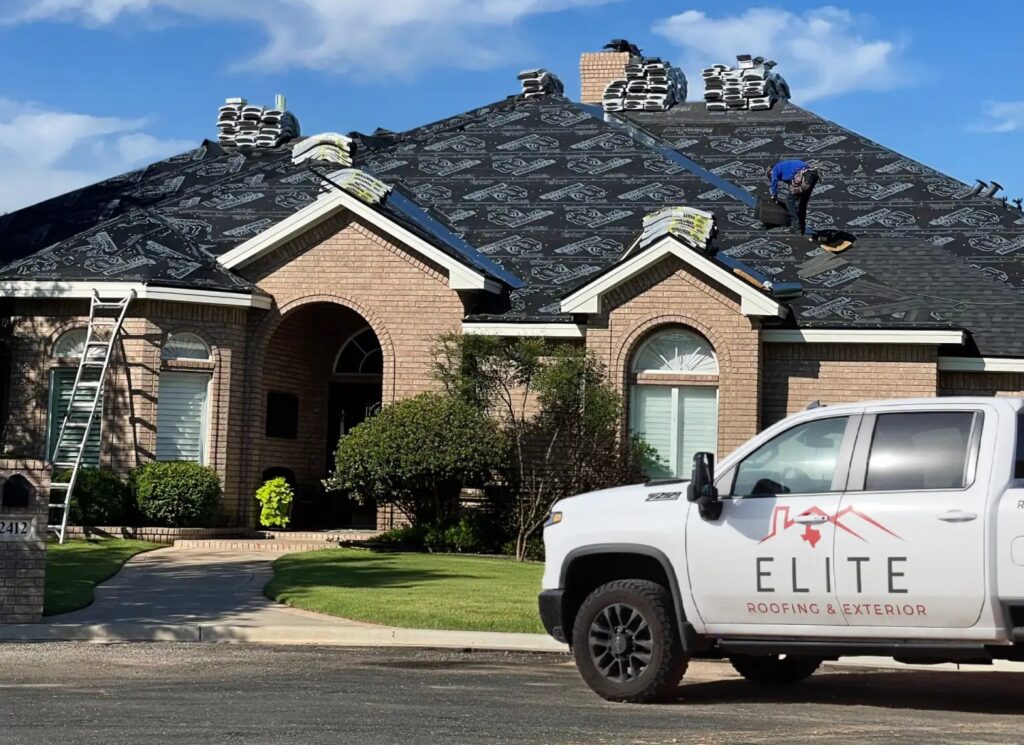
Elite Roofing & Exterior, a locally owned company based in Lubbock, Texas, illustrates the pattern well. Founded in 2018 by owner Tom, the company has spent close to a decade working exclusively in Lubbock and nearby communities such as Wolfforth and Shallowater, building a reputation on straightforward pricing and direct assistance with storm-damage insurance claims rather than the high-pressure tactics sometimes associated with traveling crews. That kind of continuous local presence — as opposed to a name that appears only after a headline storm — is generally a better predictor of long-term accountability than any single credential.
Questions Worth Asking Before Signing a Contract
Before committing to any roofing project, homeowners are well served by asking a short set of direct questions: How long has the company operated in this specific area, and can they provide local references? What manufacturer warranties apply, and are they backed by a workmanship guarantee from the installer as well? Will the company meet the insurance adjuster on-site, and how do they document damage for the claim? What happens if hidden decking damage is found once the old roof is removed? A contractor confident in their work will answer each of these without hesitation, while vague or evasive answers are usually a warning sign worth taking seriously.
Do Not Ignore the Rest of the Exterior
A roof rarely exists in isolation. Gutters, fascia, ventilation, flashing, siding, fencing, and concrete around the property all influence how well a home handles heavy rain and wind. During an inspection, homeowners should ask whether the contractor is checking the areas where roof materials meet walls, chimneys, vents, and skylights, because these transition points are common sources of leaks. Proper attic ventilation also matters: without a balanced flow of intake and exhaust air, heat and moisture can build up beneath the roof deck, shortening shingle life and contributing to uneven wear.
How to Compare Estimates Fairly
Comparing three written estimates can be useful, but the lowest total should not automatically win. Each proposal should identify the roofing material, underlayment, flashing, ventilation work, cleanup process, disposal of old materials, payment schedule, and warranty terms. Homeowners should also confirm whether the estimate covers permits and whether any potential decking replacement is described as a clearly defined allowance or an open-ended extra. A lower bid that leaves out essential preparation can become more expensive once work begins. The strongest proposal is usually the one that makes the scope easy to understand, not the one with the fewest numbers on the page.
When Repair Makes More Sense Than Replacement
Not every damaged roof needs to be replaced immediately. A localized leak, a small area of wind-lifted shingles, or damaged flashing may be repairable when the rest of the system remains sound. At the same time, repeated patching can become false economy when a roof is near the end of its useful life or has widespread granule loss and moisture damage. A trustworthy inspection should explain both options and the expected trade-offs instead of treating every service call as a replacement opportunity. Homeowners can then weigh the age of the roof, the extent of the damage, insurance coverage, and their longer-term plans for the property.
Protecting the Investment for the Long Term
A roof replacement or major repair in this part of Texas typically represents one of the larger home maintenance investments a family will make, and the right decision is rarely the cheapest bid. Homeowners who prioritize regional experience, transparent pricing, proper insurance-claim support, and materials matched to local weather conditions tend to get a roof that performs reliably through the next hailstorm rather than one that needs revisiting after a single bad season. Taking the time to vet a contractor properly before the next storm rolls through the Caprock is, in the end, far cheaper than fixing a rushed decision after the fact.