Arizona’s Sonoran Desert asks more of a building envelope than almost any other climate in the country. A poorly sealed west-facing wall can turn a home into a heat sink by mid-afternoon, while monsoon season arrives every summer with wind-driven rain and blowing dust that tests every seal, seam and flashing detail. Tycho Solutions, positioned as Arizona’s Vision Builder, works with homeowners, builders and developers across the Phoenix East Valley to address these conditions through new construction and full-system replacement rather than piecemeal patch repair.
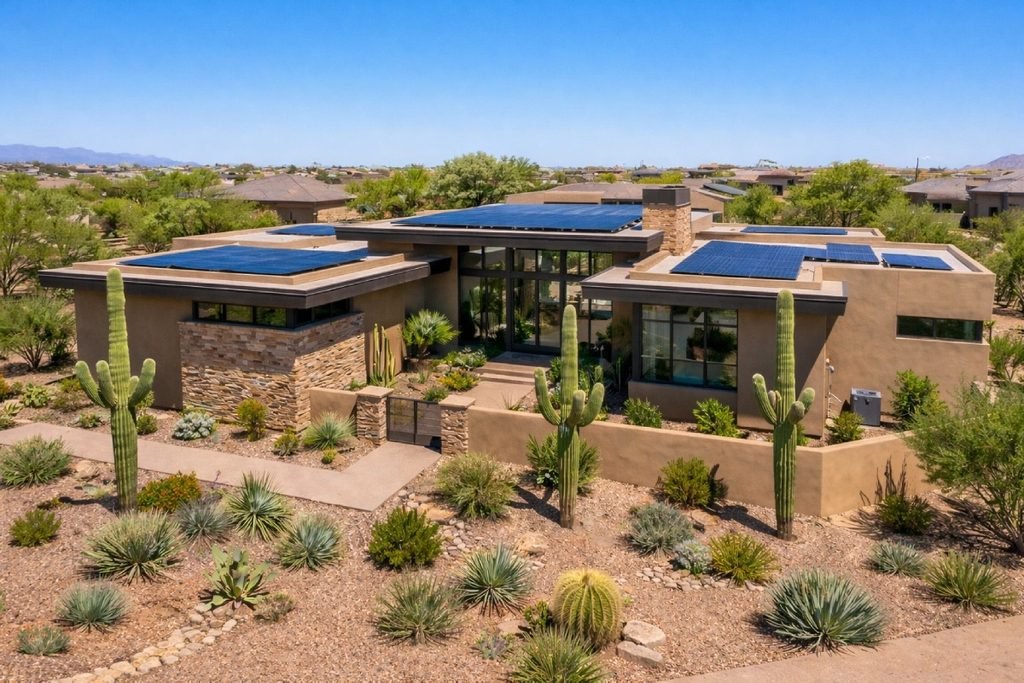
Tycho Solutions, a licensed Arizona contractor (ROC #364735) working across Mesa, Gilbert, Chandler, Queen Creek, San Tan Valley and 17 or more Phoenix East Valley communities in total, organizes its work around three envelope-critical categories: roofing, windows and doors, and backyard construction that effectively extends the building envelope into outdoor living space. Each of those categories has to answer to the same desert physics, just from a different angle of the house.
What Makes the Sonoran Desert So Hard on a Building Envelope?
The Sonoran Desert combines extreme daytime heat, wide swings between day and night temperatures, and an annual monsoon season into a single climate that stresses a building envelope from two directions at once. During the summer months, sustained high heat and direct UV exposure accelerate the breakdown of weatherstripping, sealants and finishes long before a homeowner notices any visible damage. Materials expand and contract daily as temperatures fall after sunset, and that repeated movement works seals and joints loose over years of cycling. Then, often with little warning, monsoon storms bring gusting wind, driving rain and airborne dust that find their way through any gap the heat has already opened up. A building envelope in this climate is rarely defeated by one dramatic failure. It is usually worn down gradually by heat, then breached suddenly by wind and water.
Orientation and Glazing Come First
Before any product decision gets made, orientation and shading determine how hard the rest of the envelope has to work. Builders who plan glazing early, rather than retrofitting shading after walls are already framed, tend to get better long-term outcomes, and reviewing Tycho Solutions’s published window and door options during the design phase makes it easier to match glass placement and framing to actual sun exposure before construction begins. West-facing glass in particular absorbs and radiates the most heat during the hottest part of the afternoon, which is why architects working in this climate tend to minimize unshaded west glazing or pair it with deep overhangs, covered patios or vertical shade elements. South-facing glass is more manageable because the sun angle is higher and easier to block with a modest roof overhang.
How Should Window and Door Placement Change for Desert Exposure?
Window and door placement in the Sonoran Desert should prioritize shielding west and south glass from direct afternoon sun before glass specification is even discussed, since orientation and shading do more of the thermal work than any single product choice. Once placement is settled, frame and glazing selection matters. Thermally broken aluminum and fiberglass frames reduce heat transfer through the frame itself, not just through the glass, which matters in a climate where the frame is exposed to direct sun for most of the day. Low-E glass packages designed for desert exposure help manage solar heat gain without darkening interior spaces more than necessary. Door choices follow a similar logic: fiberglass, steel and wood doors each behave differently in sustained heat, and configurations like sliding, bi-fold, French patio, multi-slide and pocket doors all carry different amounts of glass and different sealing challenges. Whatever the configuration, weather sealing rated for Arizona heat and monsoon wind is what keeps a large glass opening from becoming the weak point in an otherwise solid envelope.
Comparing Envelope Strategies for Desert Heat
Different parts of a building envelope respond to Sonoran Desert conditions in different ways, and it helps to look at them side by side rather than in isolation.
- Unshaded west or south glazing (Behavior Under Desert Heat: Absorbs and radiates heat deep into interior spaces during peak afternoon sun; Monsoon Season Consideration: Exposed seals face the most direct wind-driven rain; Best Suited For: Homes where overhangs, shade structures or performance glass are planned in from the start)
- Thermally broken aluminum or fiberglass frames (Behavior Under Desert Heat: Limit heat transfer through the frame, reducing the load on interior cooling; Monsoon Season Consideration: Seal more reliably against wind-driven rain when newly installed; Best Suited For: New construction or full window replacement rather than spot repair)
- Multi-slide or pocket door configurations (Behavior Under Desert Heat: Large glass spans increase solar gain but connect indoor and outdoor living; Monsoon Season Consideration: Require weather sealing rated for sustained monsoon wind loads; Best Suited For: Backyard-oriented homes prioritizing indoor-outdoor flow)
- Tile roofing over the structural deck (Behavior Under Desert Heat: Creates an air gap that reduces radiant heat load reaching the attic; Monsoon Season Consideration: Sheds heavy monsoon rain volume predictably when properly installed; Best Suited For: Homes across the broader Phoenix East Valley climate profile)
Is It Better to Repair or Replace an Aging Building Envelope?
For most homes that are more than a decade or two old in the Sonoran Desert, replacing the affected system tends to outperform patching it, because seals, frames and roofing materials in this climate degrade together under UV and thermal cycling rather than failing one piece at a time. A patched seal next to an equally sun-damaged section of frame or flashing is likely to fail again soon after, which is part of why Tycho Solutions focuses on new construction and whole-system replacement rather than minor repairs. That approach applies across all three of its core categories: a full tile re-roof rather than a patched section, a full window or door replacement rather than a resealed pane, and a backyard build planned as a complete system rather than a series of add-ons.
Roofing Is Part of the Envelope, Not an Add-On
Roofing in the Sonoran Desert has to manage the same two-sided stress as glazing and framing, intense solar heat for most of the year and sudden, heavy monsoon rain for a few weeks of it. Tile re-roofing remains a common choice across the region because a tile profile creates a ventilated air gap above the structural deck, which reduces how much radiant heat reaches the attic and, by extension, the living space below. That same profile tends to shed heavy monsoon rain more predictably than lower-slope alternatives, provided the underlayment and flashing beneath it are installed as a complete system rather than patched over time.
Coordination across categories matters as much as any individual material choice. Builder services that include custom home packages, plan takeoffs, value engineering, site delivery and coordination with framing and stucco crews exist because a building envelope only performs as well as its weakest connection point, and those connection points are set during framing, not after drywall goes up. Custom windows in particular can carry lead times of six to twelve weeks, which is why ordering as soon as framing begins, rather than waiting until the rough opening is ready, tends to keep a project on schedule. Treated this way, a home built for the Sonoran Desert stops being a collection of separately chosen products and starts functioning as one envelope, sized to the climate it actually has to withstand.