Asphalt pavement remains one of the most widely used surfacing systems in civil engineering, covering roads, driveways, parking lots, and industrial yards around the world. Its popularity comes down to a simple combination of factors: it is durable, relatively fast to install, cost effective compared to concrete, and flexible enough to handle the freeze-thaw cycles and traffic loads that would crack more rigid materials. For engineers and site supervisors managing a paving project, understanding how asphalt pavement is designed and built is essential to avoiding costly failures down the line.
The Layers of an Asphalt Pavement System
A properly built asphalt pavement is not a single slab of material. It is a layered system, and each layer has a specific structural role.
The subgrade is the native soil beneath the pavement, compacted and graded to provide a stable foundation. If the subgrade is weak or poorly compacted, every layer above it will eventually fail, no matter how good the asphalt mix is.
Above the subgrade sits the base course, usually made of crushed aggregate. This layer distributes the load from traffic across a wider area of the subgrade, reducing the stress that reaches the soil below.
The binder course, sometimes called the intermediate course, adds structural strength and helps bind the base to the final surface layer. On heavier-duty pavements like highways or commercial lots, this layer is thicker and uses a coarser aggregate mix.
Finally, the surface course, or wearing course, is what drivers and pedestrians actually see and use. It needs a tighter aggregate gradation for a smooth ride, good skid resistance, and resistance to weathering, since it takes the brunt of UV exposure, rainfall, and daily traffic.
Construction Process and Quality Control
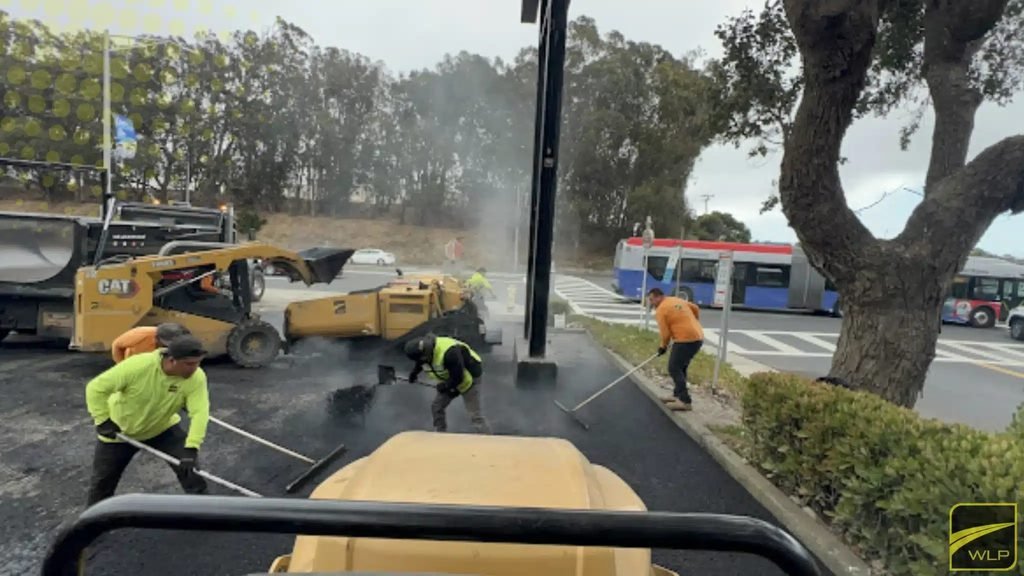
The construction sequence generally follows the layer order described above: subgrade preparation and compaction, base course placement and compaction, prime or tack coat application, then binder and surface course paving, each compacted to spec before the next lift goes down.
Compaction is arguably the single most important quality control point in the entire process. Under-compacted asphalt has higher void content, which lets water and air infiltrate the mix, accelerating oxidation and leading to premature cracking and raveling. Over-compaction, on the other hand, can crush the aggregate structure and cause bleeding, where excess asphalt binder rises to the surface. Site supervisors typically rely on nuclear density gauges or core samples to verify compaction meets the target percentage of the mix’s theoretical maximum density.
Temperature control during placement matters just as much as compaction effort. Asphalt mix needs to be placed and compacted within a specific temperature window. If the mix cools too much before compaction is complete, the aggregate particles cannot be properly reoriented and locked together, leaving a weaker, more permeable pavement structure.
Common Pavement Defects and Their Root Causes
Understanding failure modes helps engineers design better and helps supervisors catch problems early.
Rutting, the formation of depressions along wheel paths, usually points to an unstable mix design, an undersized base layer, or subgrade weakness under heavy repeated loading.
Alligator cracking, a network of interconnected cracks resembling reptile skin, is a classic sign of structural fatigue, often from insufficient pavement thickness for the traffic load it carries, or from water infiltration weakening the base and subgrade over time.
Potholes almost always start as a smaller defect, usually a crack, that lets water penetrate the pavement structure. Once water reaches the base or subgrade, traffic loading pumps the material out, creating a void beneath the surface that eventually collapses.
Climate Considerations in Mix Design
Regional climate plays a bigger role in asphalt performance than many people expect. In hot climates like much of California, mix design has to account for high pavement surface temperatures that can soften the binder and increase rutting risk, which is why polymer-modified binders and specific aggregate gradations are often specified for southern and inland regions of the state. Projects that bring in asphalt paving specialists in California from the start tend to fare better here, since local crews already know which mix designs hold up against the region’s heat rather than treating every project with a one-size-fits-all approach.
Working With Experienced Contractors
Because so much of a pavement’s long-term performance is determined during construction rather than design, the contractor executing the work matters enormously. Proper subgrade preparation, correct compaction technique, and attention to temperature and weather conditions during placement are all things that come down to field experience, not just the specification sheet. Choosing a professional asphalt paving contractor that understands these regional factors, rather than a generalist crew, often makes the difference between a pavement that needs attention within a few years and one that holds up as intended. Organizations such as the Asphalt Institute, which publishes widely used technical guidance on mix design and construction practices, consistently identify these field-level details as the difference between a pavement that lasts 20 years and one that needs major repair within five.
For civil engineers and project managers overseeing paving work, the takeaway is straightforward: a good asphalt pavement is the product of sound design, careful material selection, and disciplined construction practice working together. Cutting corners in any one of these areas tends to show up as a maintenance problem within a few years, at a cost far higher than doing it right the first time.