A thriving garden does not happen by accident. Flowers, shrubs, vegetables, and lawns all depend on consistent care, and proper watering is one of the most important parts of maintaining a healthy outdoor space. However, giving every plant the right amount of water can be more complicated than it first appears. Different soil types, changing weather conditions, plant varieties, and garden layouts all influence how much moisture is needed.
Traditional watering methods can also create challenges, particularly when plants grow in elevated containers, crowded flower beds, or areas that are difficult to reach. Fortunately, modern garden watering equipment offers more control and flexibility. Understanding how to select suitable tools, manage water pressure, and develop effective watering habits can help homeowners maintain healthier plants while avoiding unnecessary water waste.
1. Select Watering Tools That Match Your Garden’s Needs
Choosing suitable watering equipment is an important first step toward better garden maintenance. A standard garden hose provides flexibility for outdoor watering, but the attachment connected to its end determines how effectively water reaches different plants.
A garden hose nozzle is useful for general watering because it can provide different spray patterns for different outdoor tasks. A gentle shower setting works well for flowers and young plants, while a stronger stream can help rinse garden paths or remove loose dirt from outdoor surfaces. Adjustable flow control also allows gardeners to regulate water pressure instead of using the same setting for every task.
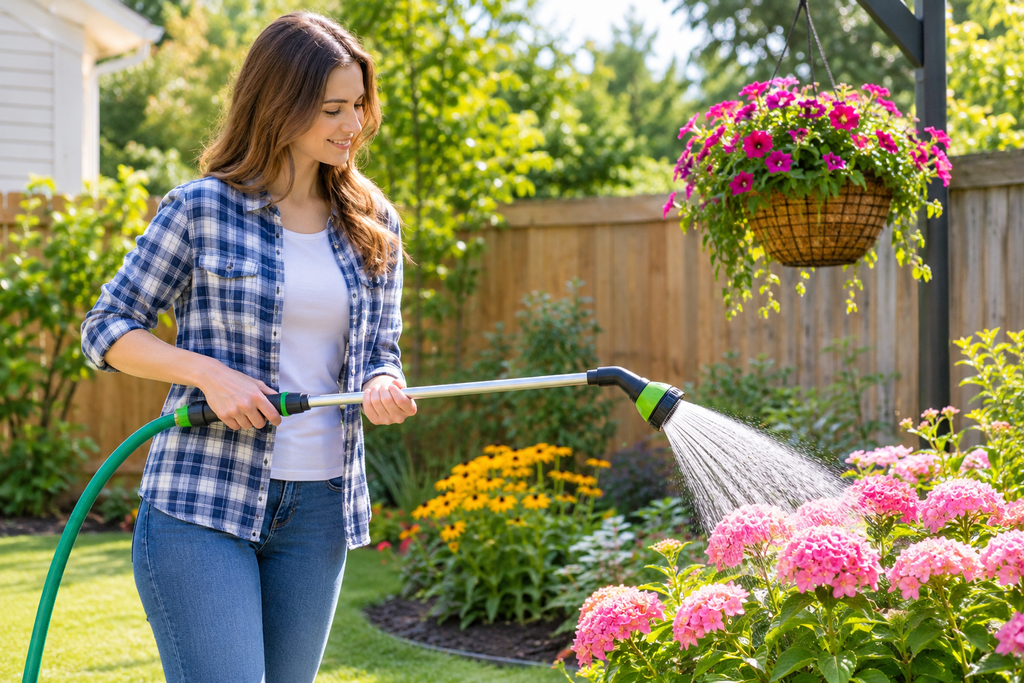
For areas that require additional reach, a watering wand can offer greater convenience. Gardeners comparing the best watering wand should consider handle length, spray options, construction quality, and ease of controlling water flow.
The garden’s size and layout should guide the final decision. A compact yard may only need a basic nozzle, whereas larger gardens with elevated planters and dense planting areas can benefit from longer watering tools.
2. Understand How Different Plants Respond to Water
Every plant has its own moisture requirements. Vegetables, flowering plants, shrubs, and ornamental grasses may grow in the same garden but respond differently to watering frequency and soil conditions.
For example, newly planted flowers generally need closer attention because their roots have not yet spread deeply into the surrounding soil. Established shrubs may tolerate longer periods between watering sessions, depending on their species and local weather conditions.
Soil composition also affects moisture retention. Sandy soil drains relatively quickly, while clay-heavy soil can hold water for longer periods. Gardeners should consider these differences before deciding how frequently to water.
Checking the soil is often more useful than following a strict daily schedule. Insert a finger a short distance into the ground to determine whether the root zone still contains moisture. If the soil is dry, watering may be necessary. If it remains damp, additional water could create unsuitable growing conditions.
Observing plants for signs of stress is equally important. Wilting, dry leaf edges, and slow growth can indicate watering problems, although other environmental factors may produce similar symptoms.
3. Protect Flower Beds and Young Plants with Gentle Watering
Flower beds often contain plants at different stages of development. Some may have established root systems, while others are recently planted and more sensitive to changes in water pressure.
Using excessive pressure can disturb loose soil, damage delicate stems, and expose developing roots. A softer spray pattern distributes moisture more evenly and reduces the risk of disturbing the growing area.
When watering flowers, directing water toward the base of each plant is generally a practical approach. This allows moisture to reach the soil around the roots without unnecessarily soaking leaves and flower petals.
Garden hose wands with adjustable spray settings can make this process easier. A gentle shower pattern is suitable for many delicate plants, while other settings may be useful for larger containers or established shrubs.
Gardeners should also pay attention to drainage. Water should soak into the soil rather than collecting around plant stems or running across the surface. If water begins pooling, pause and allow the ground to absorb the moisture before continuing.
These small adjustments can help maintain healthy flower beds and reduce the risk of common watering mistakes.
4. Make Hanging Baskets and Hard-to-Reach Areas Easier to Water
Hanging baskets and elevated containers add visual interest to patios, porches, and garden entrances. However, their position can make regular watering difficult. Reaching them with a conventional hose may require stretching, moving furniture, or using a ladder.
Longer garden hose wands provide a practical way to reach these areas from the ground. Their extended handles help gardeners direct water toward elevated containers, deep shrubs, and plants positioned behind other vegetation.
The spray pattern matters just as much as the length of the tool. A gentle shower can distribute water across the growing medium without washing away soil or damaging flowers. Adjustable flow control is also useful when moving between small containers and larger planting areas.
Hanging baskets require particular attention because their limited soil volume can dry out faster than garden beds. During hot weather, gardeners may need to check them more frequently, especially when exposed to direct sunlight or strong winds.
Water should be applied slowly until the growing medium becomes evenly moist. Checking the drainage holes can help confirm that water has reached the lower portion of the container.
5. Improve Water Efficiency Through Better Gardening Habits
Efficient plant watering involves more than selecting suitable equipment. Good habits can significantly influence how much water is used and how effectively it reaches plant roots.
Watering early in the morning is often beneficial because temperatures are generally lower and evaporation is reduced. This gives moisture more time to enter the soil before the hottest part of the day. Gardeners should also adjust their schedules after rainfall instead of continuing automatic watering without checking ground conditions.
Mulching is another useful technique. A layer of organic material, such as shredded bark, compost, or dried leaves, helps slow moisture loss from the soil. It can also reduce weed growth and gradually improve soil quality as organic materials decompose.
Grouping plants with similar watering requirements makes garden maintenance more manageable. Plants that prefer consistently moist conditions can be placed together, while drought-tolerant varieties can occupy areas that receive less frequent watering.
For larger outdoor spaces, sprinkler timers and water flow meters can provide additional control. Timers help maintain consistent watering schedules, while flow meters allow gardeners to monitor how much water passes through a hose during each session.
Regularly checking hose connections, washers, and attachments is also important. Small leaks may seem insignificant, but they can waste water over repeated watering sessions.
6. Maintain Garden Watering Equipment for Reliable Performance
Even well-designed gardening tools require regular maintenance. Outdoor equipment is exposed to sunlight, moisture, dirt, and changing temperatures, which can affect its condition over time.
After watering, gardeners should inspect hose connections for leaks and make sure fittings are properly secured. Worn washers should be replaced when necessary because damaged seals can allow water to escape around threaded connections.
Nozzles and watering wands should also be checked for mineral deposits or debris. Blocked spray openings can create uneven water distribution, making it harder to maintain consistent moisture across a garden.
Cleaning attachments according to their manufacturer’s instructions helps preserve their performance. When storing equipment, avoid leaving hoses exposed to unnecessary tension or sharp bends. Keeping tools in a suitable storage area can also protect them from prolonged exposure to harsh weather.
For seasonal maintenance, inspect equipment before the growing season begins. Testing connections and checking spray patterns early can prevent interruptions when plants need regular watering.
Reliable equipment, combined with sensible maintenance, makes routine garden care more predictable and less demanding.
Conclusion
Successful garden watering requires a balance between understanding plant needs, choosing appropriate equipment, and developing consistent maintenance habits. From protecting delicate flowers to reaching hanging baskets and managing moisture in larger planting areas, thoughtful watering practices can make a noticeable difference in outdoor plant health.
Homeowners should consider their garden’s layout, soil conditions, local climate, and plant varieties when selecting watering methods. Adjustable hose nozzles, extended watering wands, sprinkler timers, and water flow meters can all serve useful purposes depending on the size and requirements of an outdoor space.
Long-term garden care is not about applying as much water as possible. It is about delivering the right amount where it is needed and avoiding unnecessary waste. By combining practical tools with careful observation and regular equipment maintenance, gardeners can create healthier, more sustainable outdoor spaces throughout the growing season and beyond.