Introduction
A floating vanity can change the mood of a bathroom faster than most homeowners expect. I have seen perfectly good remodels still feel ordinary until the cabinet came off the floor and the room finally had space to breathe. That open area underneath does more than look modern. It makes the bathroom feel lighter, calmer, and more intentional, which is exactly why floating vanities have become so closely tied to spa-like design in today’s homes.
That shift is not just aesthetic. According to NKBA, bathrooms are getting bigger, brighter, and better organized to support wellness, comfort, and individual lifestyles.
(Source: NKBA)
1. Why a Floating Vanity Feels More Luxurious
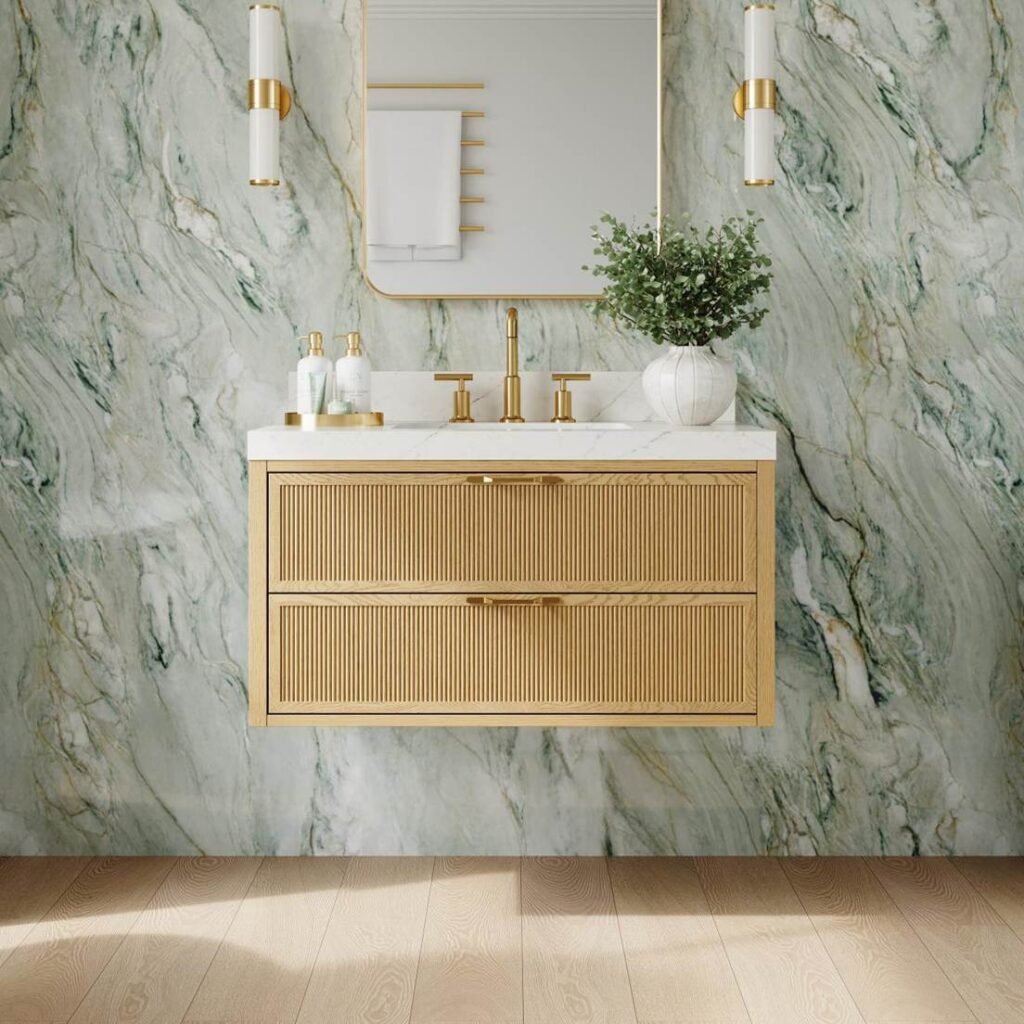
The first reason is visual weight. Traditional vanities sit heavily on the floor, which can make even a well-designed bathroom feel dense. A floating vanity removes that heaviness. The eye can travel under it, across the floor, and around the room without stopping at a bulky block of cabinetry.
That matters because luxury is often less about adding more and more about taking visual pressure away. Good spa interiors rarely feel crowded. They feel composed. Quiet. A little edited. A floating vanity helps create that same effect because it introduces negative space, and negative space is one of the most underrated tools in bathroom design.
It also has a cleaner architectural line. In modern homes, that matters. A floating vanity tends to look more tailored than a furniture-style cabinet with a heavy base, especially when paired with a simple mirror, a restrained stone top, and softer wall finishes.
I notice this most in primary bathrooms and refined guest baths. In a larger suite, the vanity helps the room feel custom instead of builder-basic. In a smaller space, it can make the layout feel noticeably more open without moving a single wall.
2. How a Floating Vanity Supports the Spa Experience
A spa-like bathroom is not just about expensive materials. It is about how the room makes you feel at 6 a.m. and again late at night. A floating vanity supports that feeling because it reduces visual clutter and creates a smoother flow through the room.
In practical terms, it also helps maintain that polished look. Cleaning underneath is easier. Hair, dust, and water spots are easier to reach. That may not sound glamorous, but bathrooms that are easier to clean are easier to keep serene. A space that stays neat without much effort will always feel more luxurious than one that looks good only in staged photos.
This is one reason floating vanities continue to show up in trend reporting and real inspiration projects. Houzz’s roundup of the most popular new bathrooms of 2026 includes a floating vanity with underlighting that helps create an uplifting, spa-like atmosphere, while their broader floating vanity idea galleries show how often homeowners and designers still turn to this format for a lighter, more open look.
(Source: Houzz)
A common mistake buyers make
A lot of people assume “floating” means delicate. It does not.
A properly installed floating vanity can be very solid. The real issue is not strength. It is planning. If the wall is not reinforced correctly, if the mounting hardware is under-specified, or if the countertop weight was not considered early enough, the vanity may underperform. That is not a design flaw. It is an installation failure.
Where the spa look can go wrong
Not every floating vanity feels high-end. Some are too shallow to be useful. Some are too small for the wall and look visually lost. Some are mounted at awkward heights, which makes the whole sink area feel disconnected from daily use.
I have also seen homeowners choose a sleek floating vanity for a busy family bathroom and then regret it because the storage was too limited. The room looked stylish. The countertop became cluttered in a week. That is when the spa feel disappears.
3. When It Works Best, and When It Does Not
A floating vanity works especially well in modern, minimalist, Japandi, Scandinavian, and soft contemporary bathrooms. It also performs beautifully in bathrooms where the floor deserves to be seen, whether that means large-format tile, stone, or a warm wood-look porcelain.
It is a particularly smart choice in compact bathrooms because it makes the room feel less boxed in. Even when the cabinet is not physically small, lifting it off the floor makes the footprint feel lighter. Trend coverage for 2026 keeps repeating this point: floating vanities remain popular because they create a more open, airy aesthetic while helping bathrooms feel larger and more refined.
Still, this style is not ideal for every project. In a traditional bathroom with ornate trim and classic furniture details, a floating vanity can feel too crisp. In a household that needs maximum under-sink storage, it may not be the best answer unless the cabinet is carefully designed with deep drawers. And in older homes with weak walls or awkward plumbing locations, installation can become more complicated than expected.
Real buying advice from experience
Start with the wall, not the finish. Buyers often do the opposite.
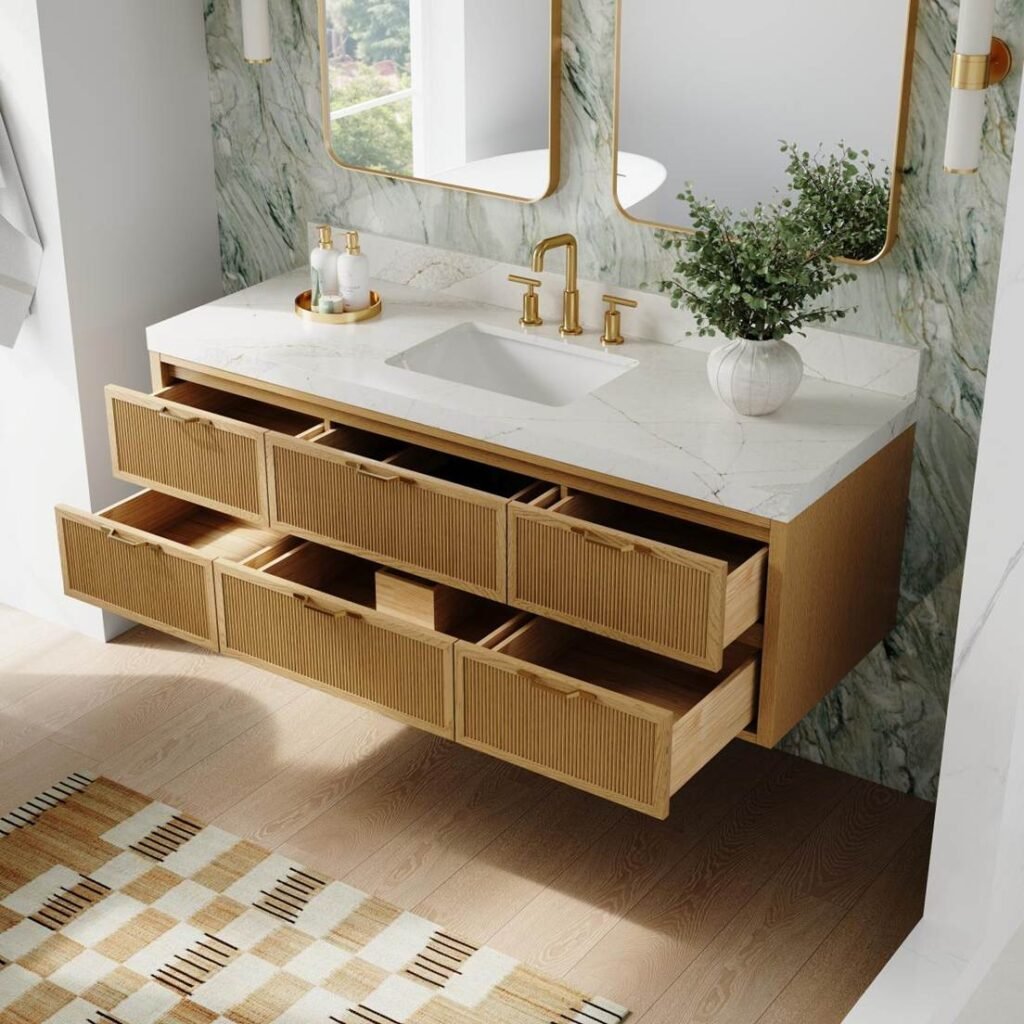
Before choosing color, wood tone, or hardware, confirm that the wall can support the vanity properly. Then think about scale. A floating vanity should feel substantial enough to anchor the sink area, but not so deep that it defeats the airy effect. Drawer layout matters too. If the goal is a calm bathroom, closed storage usually works better than open shelving that collects clutter.
4. Choosing One That Still Feels Good a Year Later
The floating vanity worth buying is the one that balances beauty with use. That means clean lines, moisture-resistant materials, sensible drawer depth, and a finish that works with the rest of the room instead of fighting it. In many homes, a warm wood floating vanity creates the most inviting spa-like mood. In others, a matte white version feels cleaner and more architectural. The better choice depends on the room’s light, materials, and daily habits.
For homeowners considering a brand like Wellfor, my advice is simple: choose a floating vanity when you want the bathroom to feel calmer, lighter, and more elevated every day, not just more modern on install day. Pay attention to structure, storage, and proportion. When those details are handled well, a floating vanity does not just improve the look of the room. It changes the way the whole bathroom feels to live in.