Bad design intent is seldom the cause of a construction project’s failure. When there is a disconnect among the design, detailing, and field implementation phases, the result falls short. Refusals, delays, conflicts, and expensive rework are all symptoms of that chasm.
That void is filled by coordinated shop drawings. To ensure that supplies are prepared and construction runs smoothly on site, professional shop drafting services translate design intent into exact, buildable details and identify conflicts early.
Shop drawing services provide a purpose beyond mere submittals for civil engineers, site supervisors, and contractors. They are useful tools that reveal whether a project is well-managed or needs continual rescuing.

Alt Text: Shop drawing workflow and coordination to reduce rework and site delays
What Are Shop Drawings in Construction?
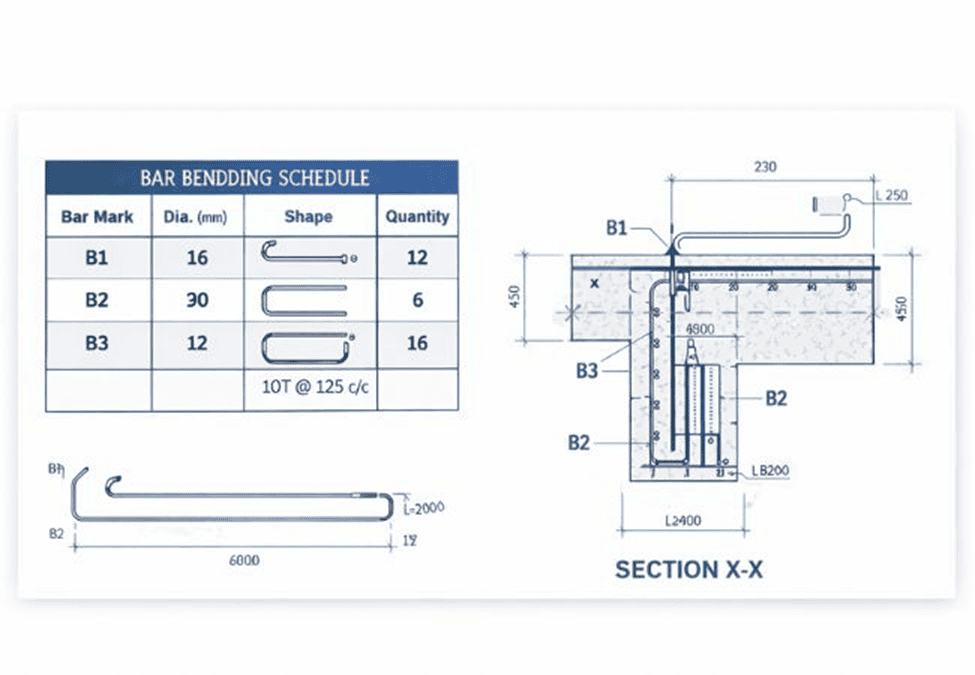
Shop drawings are created by contractors, fabricators, or drafting experts and include comprehensive instructions for fabrication and installation
Distinctive feature:
• IFC drawings convey the overarching design goal.
The precise “how-to-build” details are shown in shop drawings.
Situations in civil and structural engineering
• Layouts for rebar that include anchoring, stirrup spacing, and lap lengths.
• Fabrication of members and connections through steel.
• Clearances, MEP sleeves, and hangers.
• Joints and embeds for precast panels. Patterns for formwork and pour orders.
Site crews make mistakes when they have to guess how to interpret IFC drawings without the drawings themselves.
Why Rework and Delays Happen on Site
Common triggers:
- Collisions between MEP and building components.
- Openings in the slab or column are incorrect.
- Congestion of rebar at joints.
- Differences in fabrication. Older versions were utilized
- Outdated revisions used.
These aren’t usually design flaws — they’re documentation gaps. More RFIs → slower approvals → site idle time → money lost.
How Coordinated Shop Drawings Cut Clashes and Rework
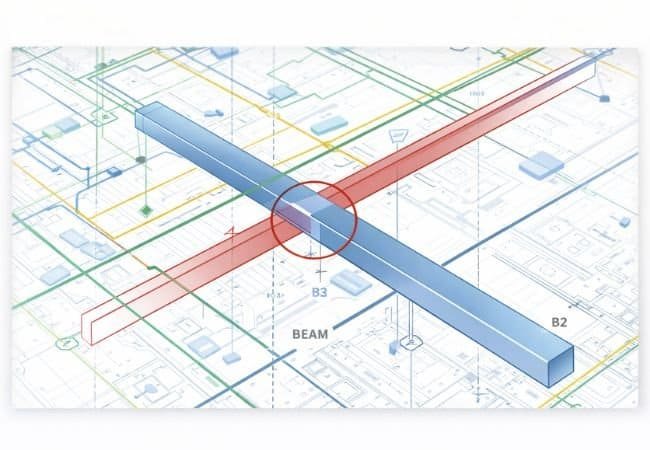
Alt text: MEP coordination drawing highlighting duct and beam clash detection
The coordinating bridge is provided by specialized services:
- Verify IFC settings in different fields.
- Clash spots (such as ducts and beams).
- Ensure thorough installation plans are created.
- Be sure to explicitly mark modifications.
- Record the history of approvals.
Not after physical sets have been formed, but before, conflicts are resolved on paper. Reduced material waste, quicker deadlines, and fewer cut/patch repairs.
Mini Example: Slab with MEP Penetrations
Scenario: Reinforced Concrete Slab with MEP Penetrations
Without coordinated shop drawings:
- A Structural IFC was used to pour the slab.
- MEP crew locates sleeveless garments.
- I need to drill a core hole.
- We added more rebar.
The expense of rework plus a delay of four to five days.
With coordinated shop drawings:
• Joint evaluation of rebar and MEP plans completed.
• Insert the sleeves before pouring.
• We fixed the conflict throughout the revision cycle.
• One go, no need to drill. There will be no lag time.
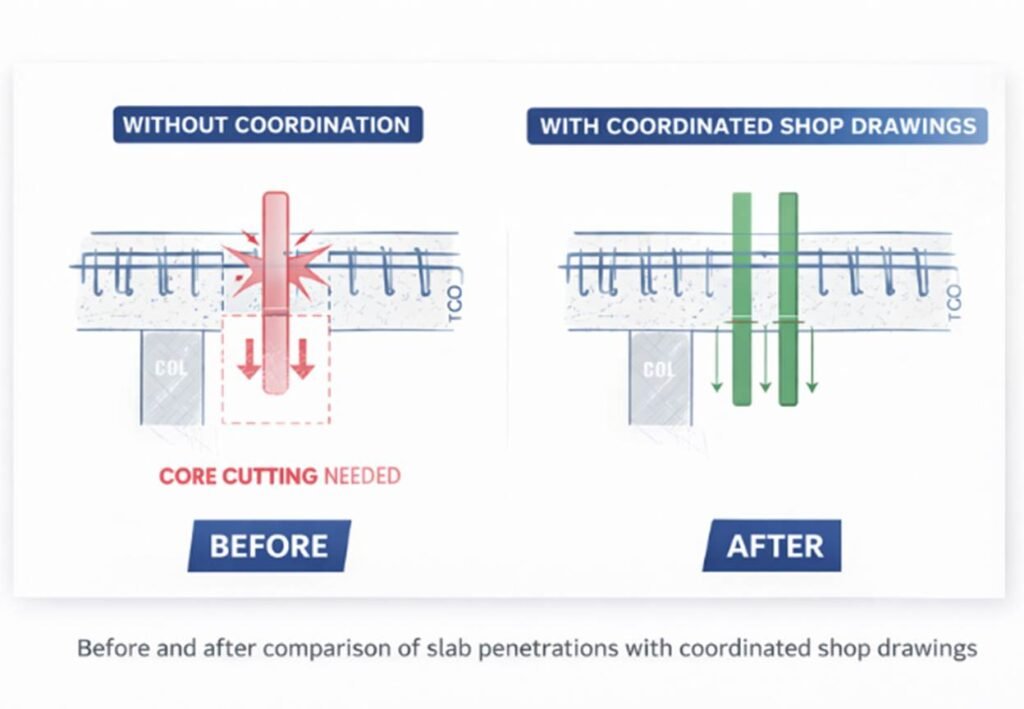
ALT text: “Before and after comparison of slab penetrations with coordinated shop drawings”
Preparation leads to cost and time savings.
Practical Checklist: Reviewing Shop Drawings Before Approval
Use this before stamping “approved”:
Structural/Rebar Checklist
- The bar-bending schedule is in accordance with the structural detailing.
- Verified lap lengths and anchoring.
- Congestion in the joints was assessed.
- MEP is in sync with openings.
- Can you see the revision clouds? Measurements are related to grid lines.
- The cover and thickness are accurate.
MEP Coordination Checklist
- Structures are evaded via routes.
- Hangers fail to reach the rebar.
- Penetrations are free of obstructions.
- Access to equipment verified
- Referenced the most recent IFC
Through these brief inspections, 80% of problems are detected early.
The Shop Drawing Approval Workflow (RFI → Revision → Approved Set)
Standard flow:
- A set is submitted by the contractor.
- Feedback from experts in the field.
- Request for Information (RFI), if necessary.
- Approval granted.
- A seal of approval.
- The site received the approved set.
Maintain meticulous revision tracking; issues typically arise from using outdated sets.
What Good Shop Drawings Speed Approvals
Consultants reject due to a lack of coordination, unclear dimensions, and insufficient references. Shorter cycles, faster procurement, quicker starts are the result of clean, cross-checked submittal process.
How Coordinated Drawings Speed Up Approvals
Incorrect dimensions, missing references, inadequate information, muddled modifications, and an absence of interdisciplinary cooperation are the most common reasons consultants reject submittals. Less time and effort are needed for reviews when shop drawings are well-organized, comprehensive, and in sync with IFC sets. Approvals, procurement, and installation are facilitated by reduced revision loops. Cutting out even one approval step can free up a few days of precious time on massive civil engineering projects.
How Shop Drawings Improve Site Productivity
Clear drawings reduce uncertainty.
- It takes less time to set up
- Lessening of inquiries
- Changes made on the spot lessen
- Decreases in material waste
- Additionally, subcontractor coordination is enhanced.
Every trade that deals with steel, rebar, or mechanical, electrical, or plumbing (MEP) uses the same reference.
The result is fewer commercial disputes.
Role of Shop Drawings in Reducing Site Delays
Reducing construction rework due to disputes, improper fabrication, misunderstandings between trades, and waiting for updated permissions is a common cause of site delays. By fixing problems before site execution starts, coordinated shop drawings reduce these hazards. Schedule performance and overall progress are directly affected by the clarity of construction documentation in civil engineering projects with tight schedules.
Improving Site Productivity and Reducing Delays
Installation times, foreman inquiries, trade disputes, and material waste can be reduced with well-defined designs. This helps keep targeted delivery dates and safeguards milestones in tightly scheduled civil projects.
Best Practices for Contractors / Site Engineers
Site engineers and contractors should hold pre-pour coordination drawings meetings, compare shop drawings to the most recent IFC changes, maintain a revision and drawing record, use only authorized sets on site, and cross-review drawings across disciplines. Reducing stress and site difficulties is made much easier with disciplined recordkeeping.
Common Mistakes to Avoid
Some common mistakes include using obsolete revisions, failing to mark modifications, failing to account for consultant comments, providing incomplete drawing sets, and failing to align MEP and structural drawings appropriately.
FAQs
1. Are shop drawings mandatory before the concrete pour?
Yes, particularly for embeds and rebar. Valid sets avoid structural problems and redos.
2. Do shop drawings replace IFC drawings?
They supply installation details, but IFC provides purpose.
3. How long for shop drawing approval?
Depending on the complexity and amount of modifications, the typical timeframe is 7-14 days.
4. Who ensures the latest revision on the site?
Only sets that have been approved should be completed, site engineer/contractor.
5. Do coordinated shop drawings reduce RFIs?
Yes, many conflicts are resolved before construction begins, reducing the need for RFI workflow.
6. Can poor shop drawings cause delays?
Without a doubt, color clashes, incorrect fabric, modifications pending, extra time added.
Conclusion:
Good documentation is more cost-effective than rework and delays. Projects go from a reactive fix phase to a planned execution phase when shop drawings are coordinated. Civil engineering teams begin risk control from the drawing stage, not with solid submittals.