1. Introduction
Skyscrapers combine architectural ambition with demanding structural requirements. While every tall building must safely carry its gravity loads, one of the most significant challenges in high-rise design is controlling the structure’s response to lateral forces such as wind and seismic effects. As buildings become taller and more slender, drift, vibration, and stability increasingly govern the design process, requiring careful coordination to ensure that structural performance aligns with the broader design intent.
This article focuses on the lateral behavior of tall buildings, particularly the balance between stiffness and flexibility, the effects of wind-induced motion, and the stability concerns that arise in slender towers. Although foundations, load paths, and construction staging remain critical in high-rise construction, the control of movement is often among the most sensitive aspects of tall-building performance.
2. Lateral Loads and Tall-Building Performance
There are two primary load-resisting systems for any type of structure: the gravity load-resisting system and the lateral load-resisting system. Gravity loads are vertical loads arising from the self-weight of the structure, superimposed dead loads from cladding and electrical or mechanical equipment, live loads due to occupancy, and snow loads acting on exposed flat or sloped surfaces. These loads are carried by floor slabs, joists, and girders, which in turn transfer the load to vertical load-carrying elements such as walls and columns, and finally into the foundation.
Lateral loads, on the other hand, are horizontal loads created by wind and seismic effects. These loads are resisted by such structural elements as shear walls, diagonal bracing systems, rigid moment frames, and reinforced concrete cores. As with gravity loads, lateral loads must also be transferred safely into the foundation; however, in tall buildings they often control serviceability, occupant comfort, and overall stability. In many situations, a structural element will carry loads induced by both gravity and lateral effects, which often requires detailed analysis and coordination supported by an experienced engineering consulting firm to ensure reliable performance under combined loading conditions.
3. The Balance Between Stiffness and Flexibility
Two seemingly counterintuitive objectives exist when engineers design tall buildings: the structure must be stiff enough to minimize excessive lateral deflection, yet flexible enough to prevent sudden brittle failure and to absorb energy associated with building movement. This balance is one of the central challenges in high-rise structural design.
Taipei 101 is an excellent example of this design philosophy. Its stiffness is derived from a massive reinforced concrete core with trussed composite outriggers extending to exterior super columns. At the same time, the structure’s ability to accommodate movement comes from ductile detailing and connections, as well as a 660-tonne tuned mass damper positioned between the 87th and 92nd floors. Rather than relying on stiffness alone, the building combines strength, ductility, and supplemental damping to control motion in a more balanced way.
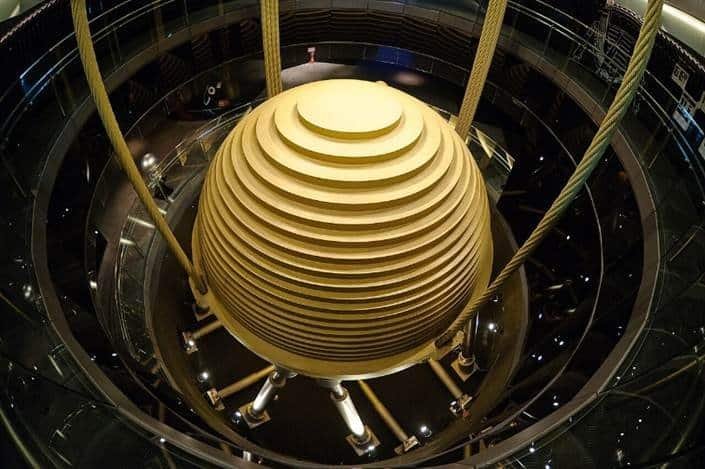
Figure 1: The tuned mass damper of Taipei 101 in Taipei [1].
An important concept in structural engineering is that the more stiffness a structural element has, the greater load it will attract. Designing a building with heavier and bulkier elements to reduce movement can therefore become detrimental, particularly in seismic design. Successful tall-building design is not about making the structure as rigid as possible, but about selecting an appropriate combination of stiffness, strength, and ductility for the demands of the project.
4. Wind-Induced Motion and Building Form
Wind is often one of the governing design considerations in modern skyscrapers. In addition to overall strength demands, engineers must consider dynamic effects created by airflow around the building. One such phenomenon is vortex shedding, where alternating wind patterns generate oscillating forces that can induce sway and vibration.
For this reason, the geometry of a tall building can be just as important as the strength of its structural system. The Burj Khalifa, for example, uses a tapered setback spiral configuration that helps disrupt wind flow as it passes the tower, thereby reducing organized wind effects and minimizing excessive movement. In this case, the architectural form itself contributes to structural performance.

Figure 2: The Burj Khalifa in Dubai.
Supplemental damping systems can also play an important role in improving performance. In very tall residential and office towers, the issue is not only whether the structure is strong enough, but also whether building motion remains within a range that is comfortable for occupants. Drift, acceleration, and vibration control are therefore essential considerations in tall-building design.
5. P-Delta Effects and Slender Towers
The P-Delta effect is a critical measure of structural stability. When a structure is laterally displaced, the gravity load produces a destabilizing moment equal to the product of the vertical load “P” and the lateral deflection “Delta.” This secondary moment tends to amplify the displacement and can increase the risk of instability if not properly addressed in design.
For very slender buildings, P-Delta effects can become significant and must be carefully evaluated. If a small increase in displacement causes a disproportionately large increase in destabilizing moment, the building may become vulnerable to collapse. As tower slenderness increases, engineers must pay close attention not only to first-order loads, but also to second-order behaviour and the interaction between gravity and lateral effects.
432 Park Avenue in New York is a notable example of this challenge. With its extremely slender proportions, the tower relies on thick concrete core walls, outrigger action to exterior columns, and tuned mass dampers located at mechanical floors to control wind response and maintain acceptable comfort for residents. In buildings of this type, stability is achieved through the combined action of stiffness, damping, geometry, and careful analysis.
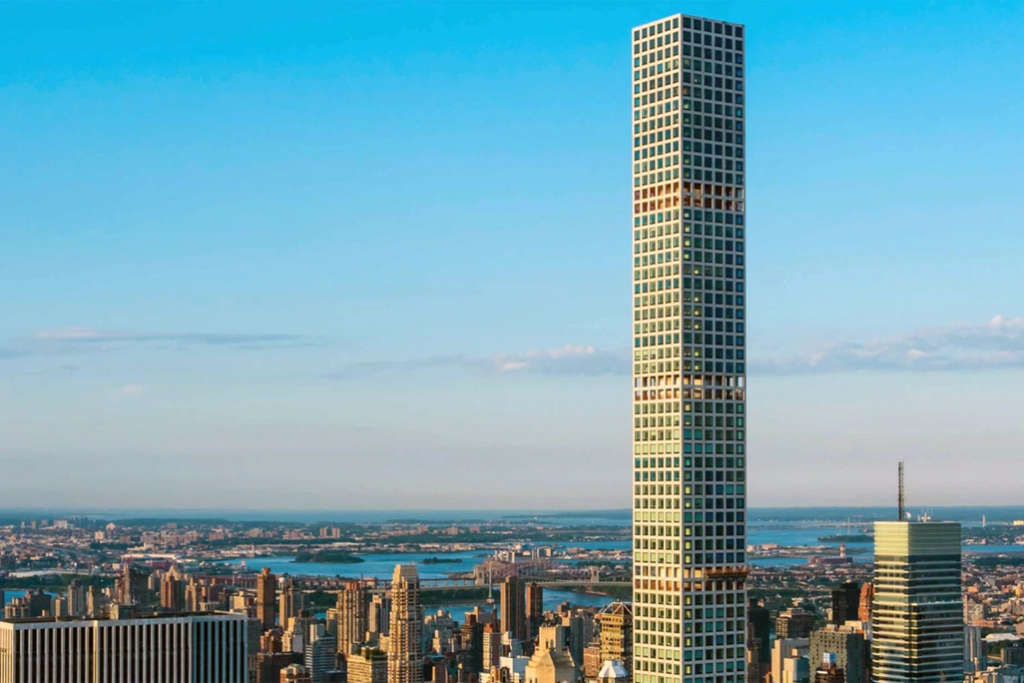
Figure 3: 432 Park Avenue in New York [2].
6. Analysis, Coordination, and Construction Considerations
Although this discussion emphasizes lateral behaviour, these issues cannot be separated from the broader design and construction process. Structural engineers must coordinate extensively with architectural, electrical, mechanical, and building science teams to ensure that structural requirements are integrated with the functional and visual intent of the project.
Temporary conditions during construction must also be considered. The building will behave differently throughout erection than it will in its completed state. Wind loads on open frames can differ from wind loads on a clad structure, and some bracing or structural elements may not yet be in place. In addition, the structure must carry temporary loads arising from construction operations such as cranes, equipment, and material staging.
In modern practice, structural analysis and finite element analysis software are often employed to study the behaviour of tall buildings under a range of loading and construction conditions. These tools provide an efficient way to predict complex system response and to optimize the sizing and placement of structural elements. However, the engineer must still ensure that modelling assumptions, applied loads, structural idealizations, and boundary conditions are appropriate. As with any engineering software, results must be verified and supported by sound judgment and manual checks based on first principles.
7. Final Thoughts
Tall buildings present a unique combination of structural demands, but the control of movement remains one of the most challenging aspects of their design. A successful high-rise must be stiff enough to limit deflection, flexible enough to absorb energy, and stable enough to resist the secondary effects that come with height and slenderness.
For the structural engineer, designing a tall building is a detailed process that requires careful analysis, coordination, and an understanding of how the structure behaves under both permanent and temporary conditions. As the demand for increasingly taller and more slender buildings continues, the importance of sound engineering judgment in controlling wind response, stability, and occupant comfort will only continue to grow. In many cases, this level of performance review is best supported through collaboration with an experienced engineering consulting firm.