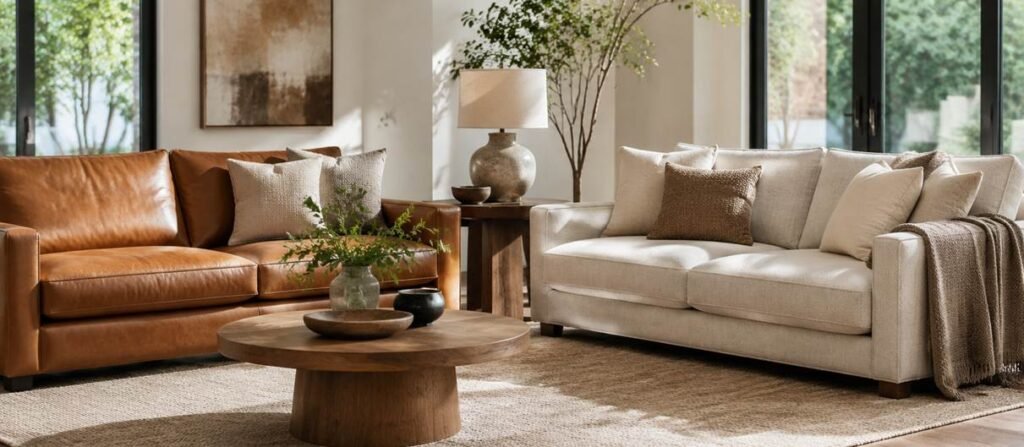
Leather and fabric can both create a comfortable, durable living room. The better option depends on contact, climate, cleaning habits, pets, sunlight, and the way the household prefers to sit.
Comparing only color and price misses the daily work. A material that photographs beautifully may feel too warm, show every hair, or require care the owner will not perform.
Browsing leather sofas & fabric sofas side by side helps reveal differences in texture, maintenance, depth, and function across many designs. Use the category as a comparison set, then read the exact specifications for the model and color selected.
Begin With the Room’s Workload
List who uses the sofa, how many hours per day, and what arrives with them. Include snacks, pets, work devices, blankets, shoes, and direct contact from skin or hair.
Rank the likely sources of wear. A home with a shedding pale dog has different needs from a sunlit apartment used by one adult. The material should solve repeated problems rather than a hypothetical worst case.
Compare Touch and Temperature
Leather can feel cool at first and warmer after contact. Fabric varies widely, from smooth and breathable to plush and insulating.
Sit on the sample or showroom model long enough to notice grip, heat, and pressure. Clothing changes the experience, so test with the types of clothing worn at home. A brief hand touch cannot predict a full evening.
Read the Material Name Precisely
Natural top-grain leather, corrected leather, bonded material, and performance leather are not interchangeable. Fabric labels also cover polyester, chenille, velvet, linen blends, and many constructions.
Confirm which surfaces use the stated material and which use a coordinating substitute. Read fiber content and care guidance for the exact option. Marketing color names do not identify construction.
Plan for Spills
Many leather and performance surfaces allow prompt wiping, while fabrics may offer water- or stain-resistant treatments. Neither choice makes seams, cushion gaps, and interiors immune to liquid.
Keep approved cloths nearby and respond quickly. Do not apply conditioner, solvent, stain spray, or detergent without checking guidance. The wrong cleaner can alter finish, color, or texture.
Account for Pets
Smooth surfaces may release hair easily but can show claw marks. Tightly woven fabric can resist snagging better than loose texture, yet it may hold fur depending on pile and static.
Test a swatch with clean shed hair and inspect the weave under light. Maintain nails and provide pet alternatives regardless of material. No ordinary upholstery is immune to repeated digging or chewing.
Consider Sun and Heat
Direct sun can affect color and surface over time, and strong heat can dry or stress some materials. Follow the placement guidance for the exact sofa.
Observe the proposed location through the day. Use suitable window treatment when needed and leave distance from radiators or heat sources. A beautiful material is a poor fit when the room exposes it to conditions the maker says to avoid.
Compare Cushion Feel Separately
Upholstery affects surface sensation, but foam, springs, webbing, frame, and cushion shape determine much of the support. Do not attribute a soft or firm seat to leather or fabric alone.
Test the same positions on each candidate: upright, sideways, edge, and center. Notice ease of standing and cushion recovery. A supportive build can appear in either material family.
Think About Visible Aging
Natural leather develops variation and may gain character that some owners value. Fabric can show pile direction, pilling, fading, or pressure depending on construction and use.
Ask how the material is expected to change and which maintenance slows uneven wear. Choose an aging pattern the household can accept. Expecting every surface to remain identical to a fresh swatch creates disappointment.
Review Repair and Replacement Options
Removable fabric covers can make targeted cleaning or replacement possible on some models. Leather panels may be repairable by specialists, but color matching and panel access vary.
Ask whether individual covers, cushions, or modules can be ordered later. Keep the product code and material name. Serviceability can matter more than a small difference in initial maintenance.
Match the Material to the Visual Goal
Leather emphasizes clean planes and can feel more architectural. Fabric introduces texture and can make large seating feel softer in the room.
Use the existing rug, curtains, wood, and wall color as context. Request samples and view them in morning and evening. The room’s light can change undertones and sheen more than an online image suggests.
Include Delivery and Assembly
Material does not determine whether a sofa can reach the room. Compare package dimensions, weights, modular sections, and required assembly for each candidate.
Protect upholstery during handling and keep packaging away from sharp tools. Follow the recommended number of movers. Damage during delivery can erase any benefit of choosing the more durable surface.
Choose With a Weighted Score
Rate each option for comfort, cleaning, pet fit, temperature, light exposure, expected aging, repair, and style. Double the two categories that affect the household every day.
The better sofa is the one whose material and cushion system fit the routine the household already lives. Leather and fabric are both broad families; precise construction and realistic care decide the outcome.
Run a Sample Maintenance Test
Ask for exact swatches and keep them in the proposed room for several days. Handle each sample with clean hands, brush off lint, and follow any seller-approved spot-care demonstration.
The test should focus on ease and appearance, not deliberate damage. Notice which sample releases hair, which shows pressure, and which requires a tool the household does not own. A material that needs specialized daily attention should receive a lower practical score.
Compare Sound and Movement
Material can change the sounds produced when people shift. Some leather and performance surfaces create more friction noise, while textured fabric can damp movement but collect more debris in its weave.
Test the full sofa if sound sensitivity affects the room. Reclining mechanisms, cushion liners, and frame connections also contribute, so do not attribute every noise to the cover. Observe the sofa through several movements and positions.
Plan the First Year of Care
Write a realistic schedule for vacuuming, wiping, cushion rotation, and any manufacturer-approved conditioning or professional cleaning. Add the expected cost and storage needed for supplies.
If the routine feels excessive before purchase, it will not become easier later. Choose the material whose approved care can fit ordinary household maintenance. Consistent modest care is more useful than an ambitious plan performed once.