Construction sites change quickly. A route that is clear in the morning may be blocked by materials in the afternoon. Trucks arrive, machines move, and temporary cables appear in new work areas.
These changes can create new risks. Site supervisors should check the ground conditions at the start of each shift. Workers and drivers also need clear instructions before work begins.
Separate Vehicles and Pedestrians to Reduce Accidents
Large vehicles have blind spots. Drivers may not see a worker walking behind a truck or beside an excavator.
Give vehicles a fixed route from the gate to the unloading area. Keep this route away from site entrances, welfare areas, and busy work zones. Reduce reversing where possible.
Workers also need their own route. It should not pass through loading or reversing areas. If pedestrian and vehicle routes must cross, stop vehicle traffic while workers cross. Choose a crossing point with good visibility and low vehicle speeds.
Use a spotter when a driver must reverse or turn in a tight area. Give delivery drivers clear instructions at the gate. Tell them where to wait, unload, and leave the site.
Close the work area before lifting operations or large deliveries begin. Do not wait until the vehicle is already moving.
Create Clear and Safe Walking Routes on Site
A safe walkway should be easy to find and easy to use. Workers should not need to step around pallets, timber, tools, or piles of waste.
Walk the route before each shift. Check for mud, standing water, damaged surfaces, and changes in ground level. Remove anything that could cause a trip.
The surface should be firm and wide enough for normal use. Protect open edges near excavations and service trenches. Temporary steps and ramps should be stable. They also need handrails and non-slip surfaces.
Provide enough lighting for early starts, late shifts, and enclosed areas. Check stairs, scaffold access, and corners where workers may not see the ground clearly.
Prepare a new route before closing an existing walkway. Put signs in place before workers reach the closed area.
Protect Cables and Equipment to Prevent Trip Hazards
Temporary power is common on construction sites. Cables may connect tools, pumps, welders, lights, and site offices.
Keep cables away from walking and driving routes where possible. Run them overhead or along the edge of the work area.
Some crossings cannot be avoided. In these areas, use cable ramps with channels that fit the cables or hoses. Check the load rating before installation. A ramp used by workers may not support a truck or telehandler.
Do not cover cables with loose timber or metal sheets. These covers can move and create another trip hazard.
Connect each ramp section properly. Add visible markings on both sides. Check the crossing after heavy vehicles pass over it.
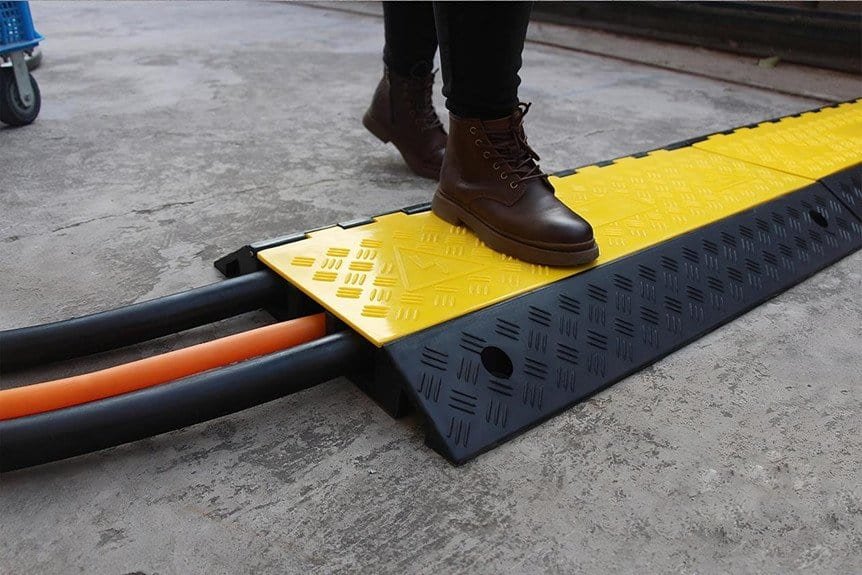
Remove damaged cables, leaking hoses, and unused extension leads. Do not leave them on the ground for later use.
Keep Traffic Areas Organized and Easy to Control
Busy gates and unloading areas can become crowded very quickly. Several vehicles may arrive while workers are moving materials through the same space.
Give each delivery a time slot. Avoid bringing several large vehicles onto the site at once. Create a waiting area that does not block the gate, road, or emergency access.
Keep unloading areas clear. Move delivered materials to the correct storage area as soon as possible. Do not leave them in turning spaces or vehicle routes.
Set parking areas for excavators, forklifts, and lifting equipment. Parked machines should not block signs or create blind spots.
Remove mud, loose stone, and waste from traffic routes. Keep direction signs clean and easy to see.
Update the traffic plan after every route change. Remove old arrows and signs. Drivers should never have to choose between two different instructions.
Adapt Site Safety Measures as Projects Change
Each stage of a project changes the site. New excavations open. Scaffolding moves. Another floor becomes available. Temporary power is moved closer to the next work area.
Check the site after each major change. Review vehicle routes, walking routes, signs, lighting, and cable crossings.
Make the changes before workers enter the new area. Explain the new route during the next shift briefing. Give delivery drivers updated instructions at the gate.
Assign someone to check temporary safety measures. Signs can fall over. Cones can move. Cable ramps can become loose. Lights can stop working.
Remove old controls when they are no longer needed. Too many outdated signs can confuse both workers and drivers.
Workers should know where to walk. Drivers should know where to stop and unload. Cables should be protected wherever they cross a route. These simple checks can prevent many common site accidents.