Scour is hard to catch early because it happens underwater. Flowing water strips sediment from around bridge piers, footings and channel beds over weeks or months, and there’s often nothing visible at the surface until the structure above starts to move. By then, the repair is rarely simple or cheap. These five signs can point to active scour before it reaches that stage.
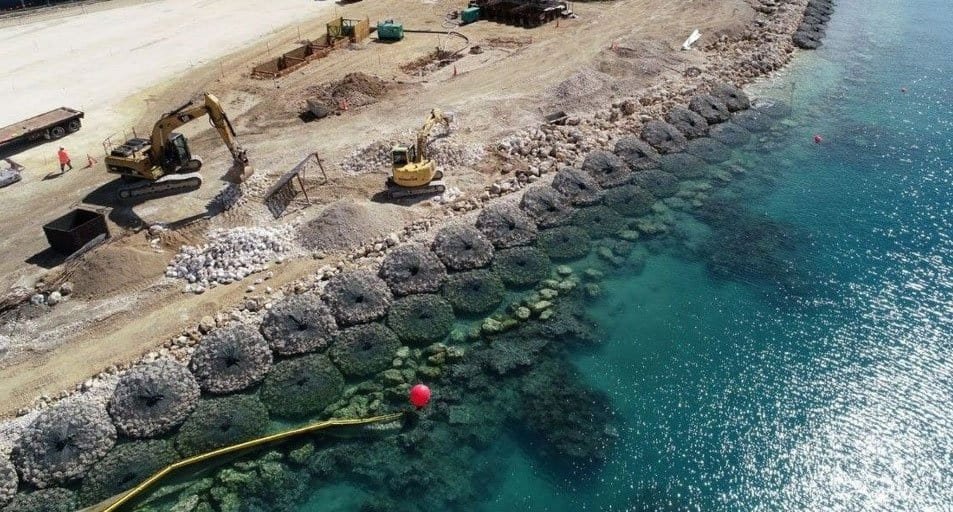
1. Unexplained Settlement at the Base of Structures
Footings and base slabs don’t sink without a reason. When they do, particularly near water, scour is near the top of the list. A good guide to scour protection will point to this as one of the most reliable early indicators, because once sediment migrates from beneath a foundation, the structure starts to settle. It tends to be gradual enough that people write it off as normal movement until it’s well past that point.
2. Turbid Water Discharging from Unexpected Locations
If water is running cloudy and sediment-heavy from a location that has no business carrying sediment, something is moving underground. Scoured channel beds, undermined embankments, and active subsurface piping all present this way. The tricky part is that the discharge point and the actual source are often well separated: you might be looking at an outlet fifty meters from where the material is actually leaving.
By the time turbid water shows up somewhere visible, the migration has usually been going on for a while. Not finding an obvious upstream source doesn’t mean there’s no problem. It usually means you haven’t found it yet.
3. Cracking or Differential Settlement in Adjacent Infrastructure
When a foundation loses support, the structures tied to it move too. That movement doesn’t announce itself directly: it’s a diagonal crack in a concrete wall, a joint that no longer lines up, a door near a water crossing that suddenly won’t close. Those details usually show up weeks before anything at base level looks wrong.
4. Unexpected Changes in Water Depth at a Monitoring Point
A scoured channel is a deeper channel. If you have a bathymetric baseline for a site and the numbers have changed after a flow event, that’s not incidental. The bed has dropped, sediment has moved, and the scour risk around nearby foundations has gone up with it. This one doesn’t get caught without a monitoring baseline, which is as good a reason as any to establish one.
5. Displaced or Missing Riprap and Armoring
Riprap rolls and shifts because something moved it, most likely scour working around or beneath the armor. Either the hydraulic load exceeded the design assumption, or scour found a gap in the armor and took it. Sections moving on a calm day belong on an investigation list, not a watchlist.
Conclusion
Floods, storm surges and high-flow periods are when most scour damage happens, and also when inspection is off the table. Post-event checks are the most important window, and running through these indicators every time you get access after a significant event is the difference between catching a problem and inheriting one. Scour doesn’t pause between visits.