Civil engineering projects are often associated with large excavators, bulldozers, and heavy earthmoving equipment operating on major highways or commercial developments. While these machines remain essential for large-scale work, a significant portion of today’s infrastructure projects are completed on a much smaller scale. Residential developments, rural road improvements, agricultural drainage systems, utility repairs, and landscape grading frequently require equipment that is compact, efficient, and economical.
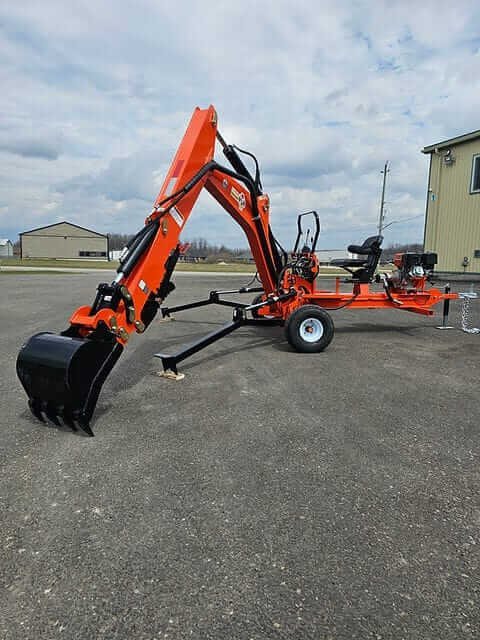
Selecting the appropriate machine for these projects has become increasingly important as contractors look to reduce operating costs while maintaining productivity. Oversized equipment can increase transportation expenses, require larger work areas, and create unnecessary site disturbance. In contrast, compact excavation machinery provides the flexibility needed to complete many common construction tasks efficiently.
One category that continues to gain attention is portable backhoe solutions. These machines combine mobility with practical digging capability, making them useful for contractors, municipalities, farmers, and property owners who regularly perform light excavation work. Professionals researching portable backhoe solutions can compare specifications and available models at https://farmersequipment.org/product/towable-backhoe-for-sale before selecting equipment suited to their operational requirements.
The Importance of Matching Equipment to the Job
Equipment selection directly influences project efficiency. Using machinery that exceeds the actual requirements of a project often results in higher fuel consumption, increased transportation costs, and unnecessary wear on equipment. Conversely, machines that are too small may reduce productivity or require additional labor.
Civil engineering projects involving trenching, drainage installation, utility maintenance, irrigation systems, and site preparation often benefit from compact excavation equipment because these tasks typically require precision rather than maximum digging capacity.
Modern project planning emphasizes selecting equipment that delivers sufficient performance while minimizing costs throughout the project lifecycle.
Applications in Civil Engineering
Portable excavation equipment supports a wide range of engineering activities across public and private sectors.
Drainage Installation
Effective drainage is fundamental to road construction, agricultural development, and commercial property management. Installing drainage pipes, culverts, and surface water channels frequently requires narrow trenches that compact digging equipment can complete efficiently.
Utility Infrastructure
Water supply lines, electrical conduits, telecommunications cables, and fiber-optic networks often require excavation in developed areas where space is limited. Compact machines provide better maneuverability while reducing disruption to surrounding infrastructure.
Road Maintenance
Local road authorities frequently perform shoulder repairs, drainage improvements, culvert replacements, and erosion control projects. Smaller excavation equipment can access these locations quickly while minimizing traffic disruption.
Rural Construction
Agricultural infrastructure projects—including irrigation systems, livestock facilities, access roads, and fencing—benefit from portable excavation equipment because many rural sites are difficult to reach with conventional heavy machinery.
Advantages of Portable Equipment
One of the greatest strengths of compact excavation machinery is mobility. Contractors working across multiple locations can transport equipment more easily, reducing project delays and lowering logistical costs.
Additional benefits include:
- Reduced transportation requirements
- Lower fuel consumption
- Easier storage
- Simplified maintenance
- Improved access to confined work areas
- Lower ground disturbance
- Reduced operating expenses
These advantages make portable equipment particularly attractive for small construction firms and independent contractors managing multiple projects simultaneously.
Supporting Sustainable Construction
Sustainability has become an increasingly important consideration within the construction industry. Engineers and contractors are under pressure to reduce emissions, minimize waste, and improve operational efficiency without compromising project quality.
Compact excavation equipment contributes to these objectives by consuming less fuel than larger machines during comparable light-duty operations. Smaller equipment also creates less soil compaction, preserving existing landscapes and reducing restoration requirements after project completion.
For environmentally sensitive projects such as wetland restoration, drainage improvements, and utility upgrades within established communities, minimizing site disruption is often just as important as completing the excavation itself.
Improving Productivity on Smaller Projects
Many civil engineering projects involve repetitive excavation rather than deep earthmoving. Installing hundreds of meters of drainage pipe or preparing utility trenches requires consistent performance, accuracy, and efficient operation.
Portable excavation machinery enables operators to move quickly between work areas while maintaining precise control over trench dimensions. This reduces unnecessary excavation and limits the amount of backfill material required after installation.
The ability to complete work accurately on the first attempt also improves project scheduling and reduces labor costs.
Considerations Before Purchasing Equipment
Selecting the right machine involves evaluating several operational factors beyond purchase price.
Contractors should consider:
- Maximum digging depth
- Hydraulic performance
- Engine reliability
- Transport weight
- Trailer compatibility
- Parts availability
- Routine maintenance requirements
- Attachment compatibility
- Ground conditions
- Expected annual operating hours
Carefully assessing these factors helps ensure that equipment remains productive throughout its service life while minimizing unexpected maintenance costs.
The Future of Compact Excavation
As infrastructure investment continues to expand, demand for versatile construction equipment is expected to remain strong. Urban redevelopment, rural infrastructure improvements, utility modernization, and agricultural development all create ongoing opportunities for compact excavation machinery.
Manufacturers continue to improve hydraulic efficiency, operator comfort, and attachment versatility, allowing smaller machines to perform an increasingly wide variety of construction tasks.
For contractors seeking practical equipment capable of supporting multiple project types, portable backhoe systems represent a flexible solution that balances performance with affordability. Their ability to handle drainage work, utility installation, landscaping, site preparation, and maintenance projects ensures they will remain an important part of modern civil engineering operations for years to come.