Large rail terminals must move thousands of people through platforms, concourses and exits without creating unsafe crowding or unnecessary delays. That task becomes harder when passengers carry suitcases, pause to read signs or wait near boarding areas. Station planners can improve passenger flow through wider circulation routes, clearer zoning, off-site baggage options and reliable movement data. These measures also make terminals easier to use during service disruptions and seasonal travel peaks.
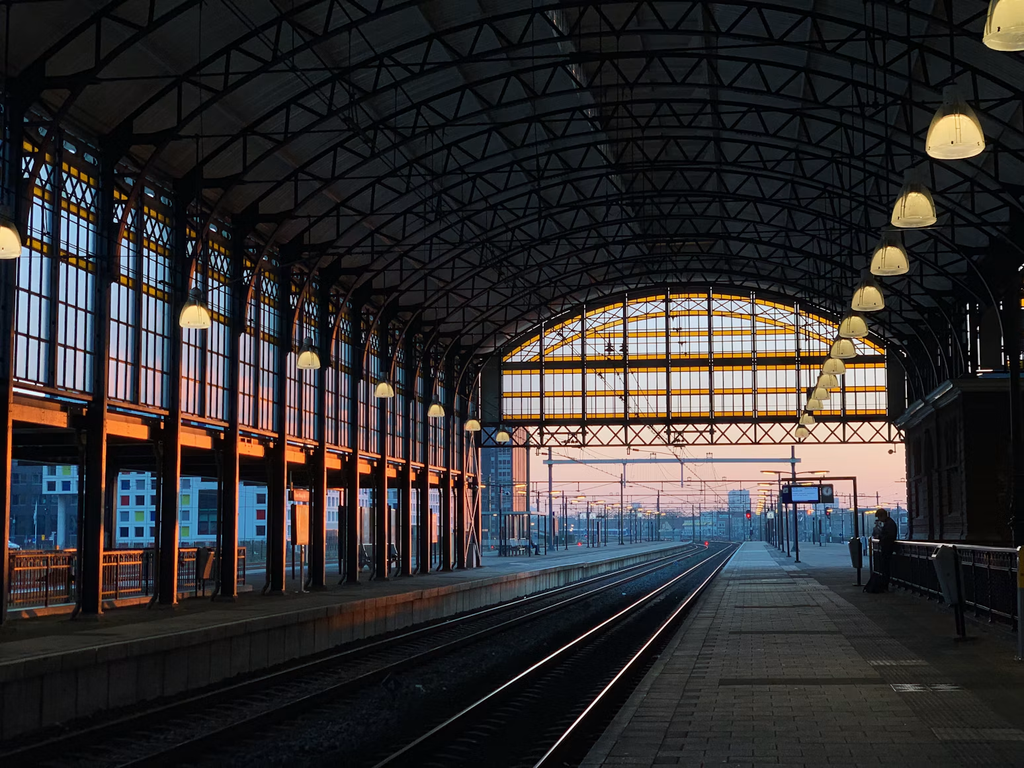
Bottlenecks in Major Rail Terminals
Bottlenecks often form where several activities compete for limited floor space. Ticket machines near entrances can block arriving passengers, while queues outside restrooms or food outlets may narrow busy corridors. Escalator landings and platform stairs are especially sensitive because a small slowdown can spread quickly through the station.
Design teams should map each decision point, queue and change in walking speed. Modern pedestrian movement simulation can test ordinary demand as well as delayed trains, closed escalators and event-day surges before construction begins. Operators can also reduce existing bottlenecks with floor markings, relocated kiosks and staff positioned upstream of crowded areas to direct passengers before congestion develops.
Designing Walkways for Heavy Baggage
Walkway capacity calculations should account for passengers moving at different speeds and occupying more space with rolling bags. A corridor that works for commuters during the morning peak may perform poorly when families and long-distance travelers arrive with multiple suitcases. Sharp turns, narrow doorways and sudden level changes make the problem worse.
Continuous routes with gentle turns give travelers room to pull baggage without cutting across opposing traffic. Planners should keep seating, advertising panels and retail queues outside the main circulation zone. Near major terminals, travelers with long gaps between services may also use temporary storage such as Union Station Chicago luggage lockers, which can reduce the number of large bags moving through crowded public spaces. Clear directions to storage points should appear before passengers reach the busiest concourse.
Integrating Dedicated Luggage Drop Services
A luggage drop service works best when it connects logically with entrances, local transit and surrounding destinations. If passengers must cross several platforms or pass through a security checkpoint to reach it, many will keep carrying their bags. Locations near station approaches or trusted nearby businesses can intercept baggage earlier.
Station managers should provide consistent signs that identify operating hours, walking distance and booking requirements. Digital maps can show storage locations alongside exits and accessible routes. Operators also need a plan for short queues so customers don’t obstruct doors or pedestrian lanes. Where space permits, a marked waiting area of a few feet can protect the primary walkway. Service providers and terminal staff should regularly check that directions remain accurate after construction changes or temporary closures.
Data-Driven Station Capacity Planning
Manual counts provide a useful baseline, but they capture only a limited period. Automated sensors can measure pedestrian volume, direction and dwell time across different hours and days. Privacy-conscious systems can record movement patterns without identifying individual passengers.
Research into underground station passenger flows shows why planners must examine platforms, stairs and passageways as connected parts of one system. A wider concourse offers limited value if the stairs leading from it remain undersized.
Teams should compare measured demand with planned capacity after schedule changes, major developments and new transit connections. Useful indicators include passengers per minute, queue length and the time needed to clear a platform. Repeated crowding at the same point can then support a specific response, such as adjusting signal timing, moving fixtures or opening another route during peak periods.
Smarter passenger flow comes from treating baggage, walking routes and station operations as one coordinated system. When terminal managers test changes against real movement data, they can address the exact doorway, stair landing or queue that causes delays before the next peak places it under pressure.