Open the tailgate, stack pre-cut timbers like oversize Lego, and watch a rustic retreat rise in weeks—not months. Data from the Log Cabin Hub shows most owners land near a 1 : 2 budget if they self-build and 1 : 3 when they hire trades.
This guide bridges that gap. We rank the ten strongest kits that keep the base package below $100,000 and map every hidden dollar—foundation, permits, utilities, finish work—so you start with clear eyes and a solid plan.
Why prefab log cabin kits?
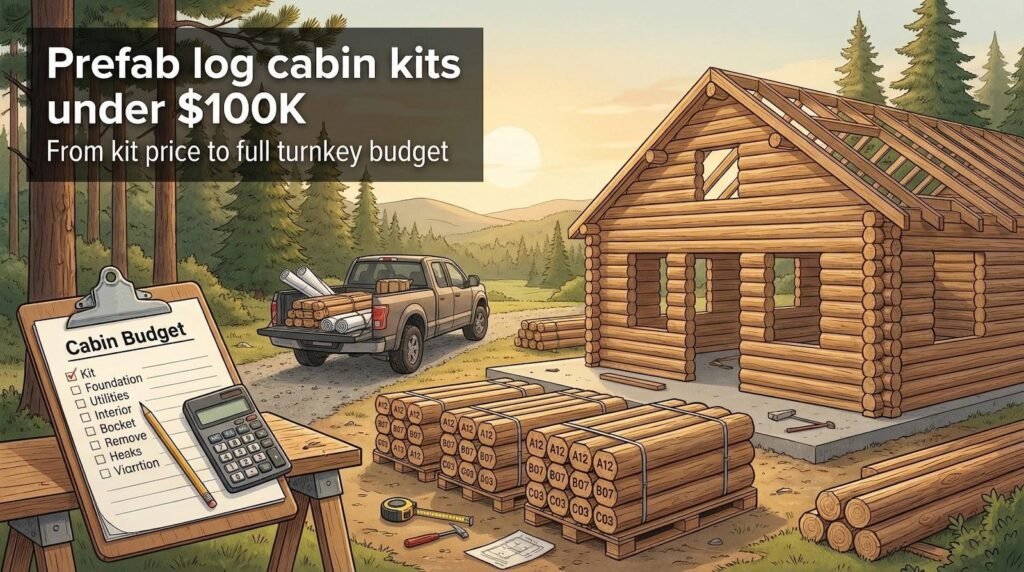
We love kit cabins for the same reason people like meal kits: the hard parts arrive pre-measured and ready to assemble, so you save time.
Buying a kit trims material costs. Manufacturers bundle lumber, hardware, and plans, then cut each piece to size at the factory. That efficiency keeps price per square foot below a custom stick build, even before you lift a hammer.
Speed is another win. Because every log, beam, and rafter is labeled, crews (or ambitious weekend warriors) can make the shell weather-tight in a few weeks. Fewer workdays translate to fewer weather delays and lower carrying costs on construction loans.
You also gain predictability. Surprise lumber shortages? Already handled. Design conflicts? Solved upfront with engineered drawings. That certainty is priceless when you build far from the nearest big-box store.
A kit is not a miracle shortcut. You still need permits, a solid foundation, and dependable utilities. Maintenance matters too; log walls need fresh stain and sealing every three to five years to stay gorgeous.
Worried a kit stifles creativity? Most suppliers now tweak floor plans at little or no cost, and modern CAD tools make moving a window or stretching a porch routine.
In short, a prefab log cabin kit gives you a faster, clearer, often cheaper path to cabin life if you respect the work that comes after the truck leaves. We will keep that full picture front and center as we compare the best kits on the market.
How we ranked the kits
You need more than a random top ten, so we built a scoring system that mirrors the questions buyers ask most.
First, we gathered fresh price sheets and spec docs for dozens of North-American models priced under one hundred grand. Any product lacking residential code compliance or U.S. shipping was cut.
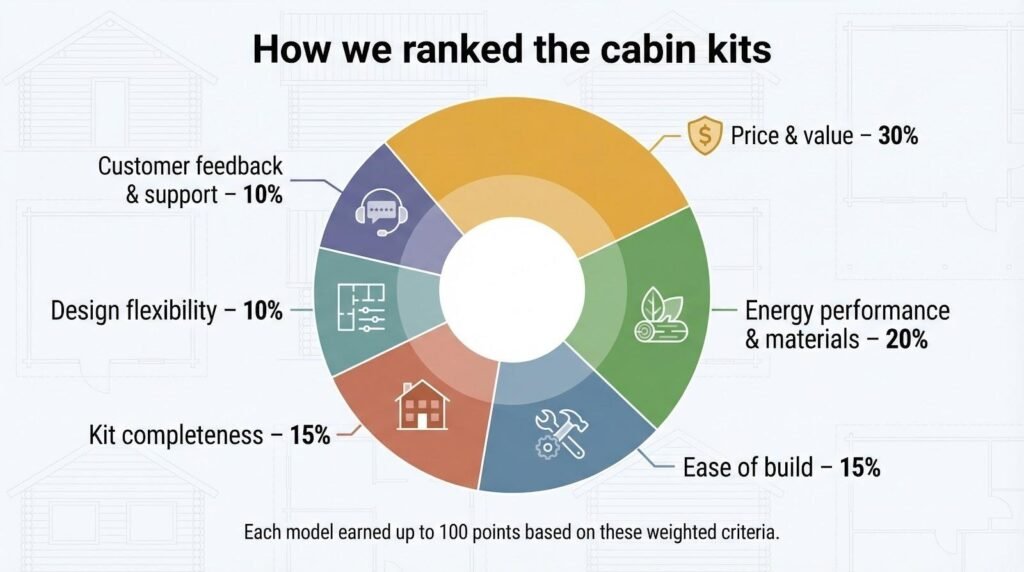
Each remaining kit earned points in six categories:
Price and value (30 percent). Does the square footage and what is in the box justify the sticker?
Energy performance and materials (20 percent). Thick logs, insulation options, sustainable sourcing.
Ease of build (15 percent). Pre-cut parts, clear manuals, optional on-site help.
Kit completeness (15 percent). Windows, doors, roof decking: how close to dry-in on delivery?
Design flexibility (10 percent). Floor-plan tweaks, porch add-ons, ADA layouts.
Customer feedback and support (10 percent). Warranty terms and how real buyers rate the experience.
Scores rolled up to a clean one hundred. The result is a transparent ranking you can trust as you compare the contenders that follow.
At-a-glance comparison
Before we tour each cabin in detail, use this snapshot to see how the leaders stack up on the numbers that matter.
| Rank | Kit (Manufacturer) | Size | Kit price* | Est. turnkey** | Stand-out feature |
| 1 | Juniper (Coventry) | 924 sq ft, 2-bed loft | $95,950 | $190–285 K | Windows, doors, interior framing included |
| 2 | Mountain King (Conestoga) | 1,080 sq ft, 3 sleeping zones | $101,000 | $200–300 K | Covered porch, engineered pine logs |
| 3 | Bear View (Battle Creek) | 578 sq ft, 1-bed loft | $59,300 | $70 K | Wrap-porch option, quick dry-in |
| 4 | Pioneer (Schutt) | 800 sq ft, 2 bed / 2 bath | $44,500 | $90–120 K | Oak logs, full side porch |
| 5 | Riverside (BZB) | 499 sq ft + loft | $38,200 | $75–100 K | European interlocking plank system |
| 6 | Montana Cabin (Meadowlark) | 432 sq ft, 1 bed | $37,500 | $70–100 K | Pre-assembled wall panels, off-grid ready |
| 7 | Eagle Point (Allwood) | 1,108 sq ft, large loft | $52,000 | $120–150 K | Viral buy-on-Amazon kit, modern lines |
| 8 | Crittenden (Southland) | 469 sq ft, studio plan | $25,000 | $50–80 K | Budget entry, beginner-friendly design |
| 9 | Pawnee Shell (eLogHomes) | 1,100 sq ft, ranch | $80,000 | $160–240 K | Shell lets you finish at your pace |
| 10 | Custom Timber Kit (Hamill Creek) | 800–1,200 sq ft | $80–100 K | $160–300 K | Premium Douglas-fir frame, SIP enclosure |
*Prices verified late 2024; freight not included.
**DIY on left, hired-out on right; based on the 1 : 2 or 1 : 3 cost rule cited earlier.
Look at the table and a few trends appear. Smaller footprints cut turnkey budgets, yet the best cost-per-square-foot values sit in the mid-range, where the kit price buys more livable room without inflating labor costs.
Now that you know the field, let’s walk through each kit and see why it scored where it did.
Top prefab log cabin kits under $100k
1. Juniper: Coventry Log Homes
Think of Juniper as the “Goldilocks” of log cabins: roomy enough for year-round living, compact enough to stay on budget.
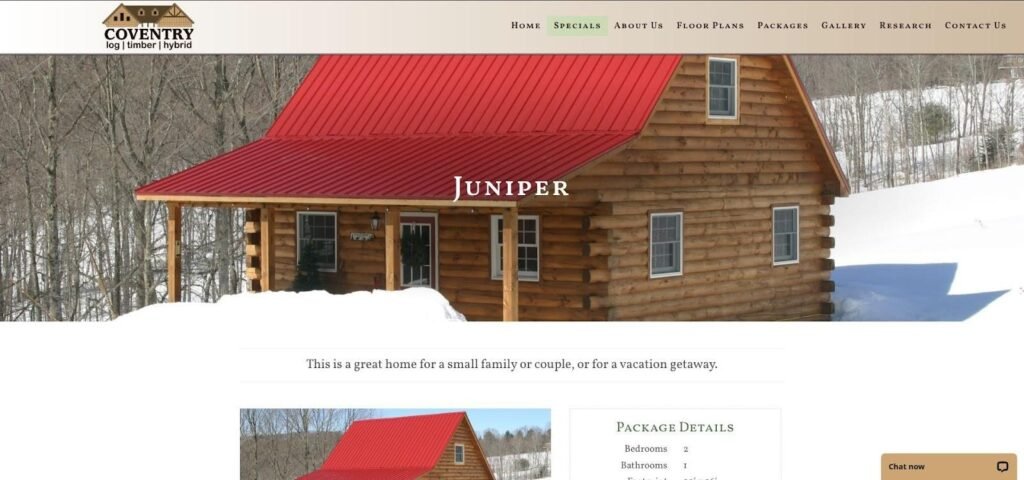
The 924-square-foot layout tucks two bedrooms beneath a generous sleeping loft, all wrapped in kiln-dried Eastern-pine walls. Coventry ships every log pre-cut and numbered, plus windows, exterior doors, roof system, and interior framing, so you can reach dry-in fast.
The kit lists at $95,950 as of late 2024, the best complete-package value we found under six figures. Follow the 1 : 2 cost rule and you land around $190 K if you self-manage or $285 K with a pro crew.
Why it ranks first:
- Strong value per square foot without skimping on components.
- Lofted design boosts sleeping capacity without inflating the footprint.
- Coventry’s customer support earns five-star praise for on-time deliveries and clear build manuals.
Things to note: the eight-inch log profile meets code in most regions, but colder zones may need interior insulation. Shipping outside New England typically adds a few thousand dollars.
For families or retirees who want a two-bed cabin that still feels like a weekend project, Juniper hits the sweet spot.
2. Mountain King: Conestoga Log Cabins
If Juniper is the balanced all-rounder, Mountain King is the roomy adventure hub. The 1,080-square-foot footprint spans thirty-six feet, giving you a real living room plus two main-floor bedrooms and a generous sleeping loft.
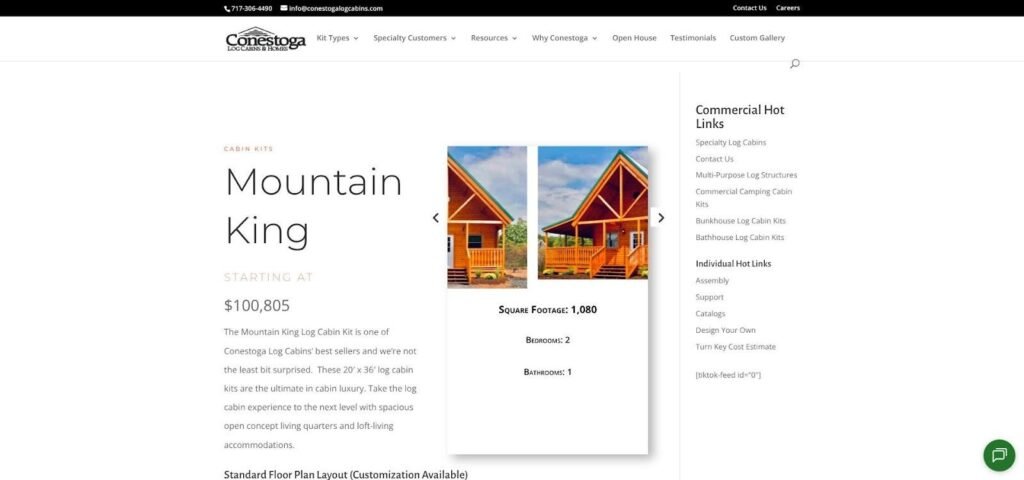
Mountain King log cabin kit exterior by Conestoga Log Cabins
Conestoga ships engineered Northern-pine logs, metal fasteners, roof system, floors, windows, doors, and a covered front porch. Everything arrives pre-cut, pre-drilled, and numbered, so a small crew can stand walls in days.
Expect the base package to sit near $101,000, right at our price ceiling but delivering the most indoor space per dollar in this lineup. Using the same 1 : 2 or 1 : 3 math, turnkey totals roughly $200–300 K.
Why it ranks second:
- Big-home comfort without crossing six figures on the kit.
- Porch and loft add lifestyle perks that raise short-term rental appeal.
- Conestoga’s decades building camp cabins translate into clear manuals and steady tech support.
Flag upgrades early; thicker log profiles, extra dormers, or climate-specific options raise costs fast. Stick with the standard plan for family-friendly space on a sub-$300 K turnkey budget.
3. Bear View: Battle Creek Log Homes
Bear View shows you do not need large square footage to create cabin charm. The 18-by-32-foot footprint fits a vaulted ceiling, open living area, and loft bedroom into just 578 square feet.
Battle Creek’s dry-in package supplies milled Eastern-white-pine walls, second-floor joists, roof beams, porch posts, windows, and exterior doors for $59,300. One owner added about thirteen thousand in local labor and reached turnkey at roughly $70 K, making Bear View the most affordable full-loft design in this lineup.
Why it ranks third:
- Low total cost yet a real second story for guests.
- Optional wrap-around porch boosts outdoor living space.
- Simple rectangular shell speeds assembly and limits custom cuts.
Consider the trade-offs: limited floor space demands smart storage, and the six-inch log profile suits mild to moderate climates unless you add interior insulation. For a weekend retreat or an Airbnb starter, Bear View delivers strong rustic value per dollar.
4. Pioneer: Schutt Log Homes
Pioneer fits notable elbowroom into an 800-square-foot rectangle. Two bedrooms and two full baths sit at opposite ends, leaving a vaulted great room and kitchen in the center. That split plan feels larger than the numbers suggest.
Schutt mills the walls from fully dried oak, a denser, dent-resistant species than the pine most rivals use. The base kit, priced at $44,500, includes those oak wall logs, floor and roof systems, porch materials, and the hardware needed to lock everything together.
Owners value the math: double bathrooms, a 10-by-14-foot side porch, and hardwood durability while staying below the fifty-grand mark. After interior finishes, most budgets fall between $90 and 120 K.
Why it ranks fourth:
- Hard-wearing oak boosts longevity without raising price.
- Split bedrooms add privacy for roommates or rental guests.
- The kit arrives owner-assembly ready, and Schutt’s phone support guides first-timers step by step.
Considerations: oak logs weigh more than pine, so plan for extra helpers or a forklift on delivery day. The single-story roofline limits loft potential. For a compact cabin that feels custom and endures decades of foot traffic, Pioneer remains a strong choice.
5. Riverside: BZB Cabins
Riverside delivers imported Nordic spruce, precise European joinery, and a near-weekend build.
The 499-square-foot shell arrives on pallets, each wall plank milled with interlocking tongue-and-groove edges. Two people with a rubber mallet and cordless drill can stack the walls and set roof panels within three days, making Riverside the speed leader in this roundup.
At $38,200, you receive solid wood walls, pre-hung double-glazed windows, doors, floor joists, and basic roof insulation. Finish costs typically place turnkey totals between $75 and 100 K, still under the six-figure goal.
Why Riverside ranks fifth:
- European precision cuts onsite errors and shortens move-in timelines.
- Modern-rustic style fits both mountain and suburban settings.
- Compact footprint keeps permits simple and property taxes low.
Consider that 1.75-inch wall planks lack the thermal mass of full logs. Cold-climate buyers usually add interior insulation or wood-fiber panels before finishing. Plan for that upgrade and Riverside rewards you with boutique style at a budget price.
6. Montana Cabin: Meadowlark Log Homes
Montana Cabin champions the off-grid dream. Its 18-by-24-foot footprint creates 432 square feet of interior space plus a nine-foot covered porch perfect for sunrise coffee.
Meadowlark pre-assembles each log wall panel in Montana, numbers the panels, and ships them ready for a barn-raising. With friends and a telehandler you can reach dry-in over a long weekend.
The base kit costs about $37,500 and includes those panels, a metal roof package, floor system, and basic interior framing. Owners who add solar, a composting toilet, and a wood stove typically finish between $70 and 100 K, which matches tiny-house budgets for a true-log structure.
Why it ranks sixth:
- Fastest assembly among true-log kits thanks to pre-built wall sections.
- Dead-standing timber sourcing reduces environmental impact.
- Porch overhang shields logs and lowers future maintenance.
If you need more interior room, choose a higher-ranked model. For a small footprint with low energy needs and the pride of raising a cabin in four days, Montana Cabin is hard to beat.
7. Eagle Point: Allwood Outlet
Eagle Point gained online fame for good reason. Few purchases thrill like clicking “Add to Cart” on Amazon and later unloading 1,108 square feet of cabin in flat-packs.
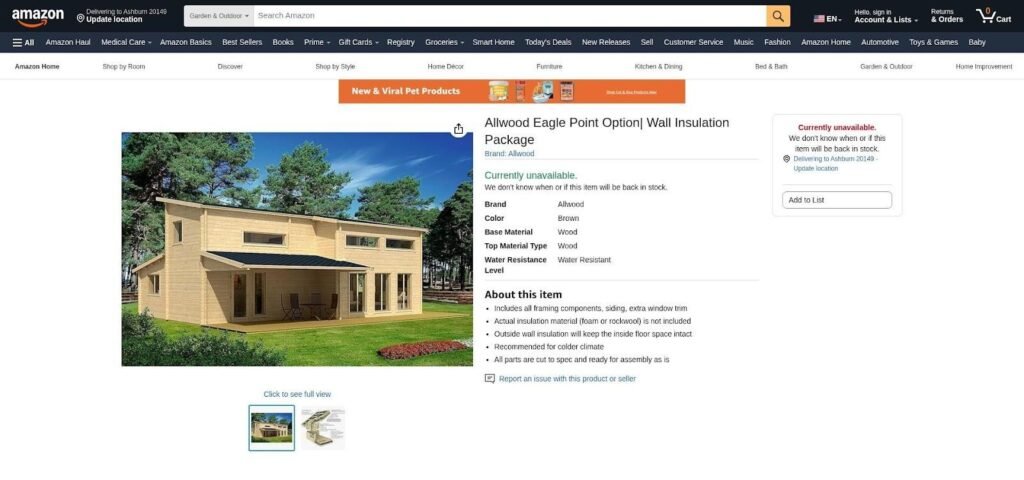
The layout blends an A-frame vibe with modern chalet lines. A fifteen-foot ridge crowns an open great room, and a 396-square-foot loft sleeps a sizable group. Thick 70-millimetre Nordic-spruce walls lock together with double tongue-and-groove joints that resist wind and rain.
The kit lists at $52,000. Assembly requires more muscle than smaller kits; Allwood suggests three skilled people for about a week, or you can hire a local crew. Owners who finish with mid-grade kitchens and baths report $120 to 150 K turnkey.
Why it ranks seventh:
- Strongest cost per square foot in this roundup.
- Online purchase convenience paired with sleek European styling.
- Roof insulation package included, rare at this price.
Check your climate zone. Walls rate near R-10, suitable for three-season or mild regions but needing extra layers in colder areas. Add those upgrades and Eagle Point stays a value choice for a spacious cabin.
8. Crittenden: Southland Log Homes
Crittenden opens the door to log-home ownership. At 469 square feet, it offers one bedroom, one bath, and a petite porch, yet the layout signals an efficient weekend escape.
Southland’s basic log package costs $25,000 and supplies milled pine walls, rafters, and interior framing. Windows, doors, and finishes raise the total, but DIY builders have completed Crittenden for $50 to 80 K.
Why it ranks eighth:
- Lowest buy-in on our list for a code-ready shell.
- Simple rectangular form trims site prep, crane, and labor costs.
- Southland’s design team guides first-time owners through permits and foundations.
You give up elbowroom, and extra amenities quickly raise cost per square foot. If your land sits deep in hunting country and you want an affordable, fast build, Crittenden fits the brief.
9. Pawnee shell: eLogHomes
Sometimes you want space now and finishes later. Pawnee’s 1,100-square-foot ranch offers that option with a shell-only “Silver Package” priced at $80,000.
The shell provides kiln-dried pine walls, roof system, windows, and exterior doors. You or your contractor add insulation, wiring, plumbing, and interior walls at your pace. Most owners finish between $160 and 240 K, spreading costs over several seasons.
Why Pawnee ranks ninth:
- Large footprint without paying for full finishes upfront.
- Ships to meet the 2015 International Residential Code, smoothing permit approvals.
- Optional on-site technical advisor supports DIY crews.
Expect plywood floors and open stud walls until interior work is complete, but the staged path suits buyers who prefer sweat equity over extra financing.
10. Custom timber kit: Hamill Creek Timber Homes
While early cabins were hewn from whatever logs stood on site, most modern projects start with factory-prepared bundles; Hamill Creek’s overview of log cabin kits explains how those pre-cut packages streamline builds yet still deliver authentic timber aesthetics. Building on that approach, Hamill Creek finishes the list with custom timber-frame packages that stay below the $100 K kit ceiling when you keep the design near 1,000 square feet.
Douglas-fir posts and beams arrive pre-cut and labeled, paired with SIP wall and roof panels that deliver higher R-values than solid logs. Plan on $80 to 100 K for the kit, then roughly double or triple that to finish, depending on craftsmanship choices.
Why it ranks tenth:
- Premium timber joinery and energy-efficient SIP enclosure raise performance.
- Fully custom design lets you move walls, add dormers, and match almost any site.
- Transparent pricing locks lumber costs the day you sign, shielding you from market swings.
Fine craftsmanship takes time and specialized labor, so budgets vary widely. For buyers craving cathedral ceilings, green materials, and heirloom quality, Hamill Creek’s custom route justifies the higher investment.
The real budget: from kit price to front-door keys
Sticker shock often arrives after the kit truck leaves. Here is where the rest of your dollars go so you can budget with confidence.
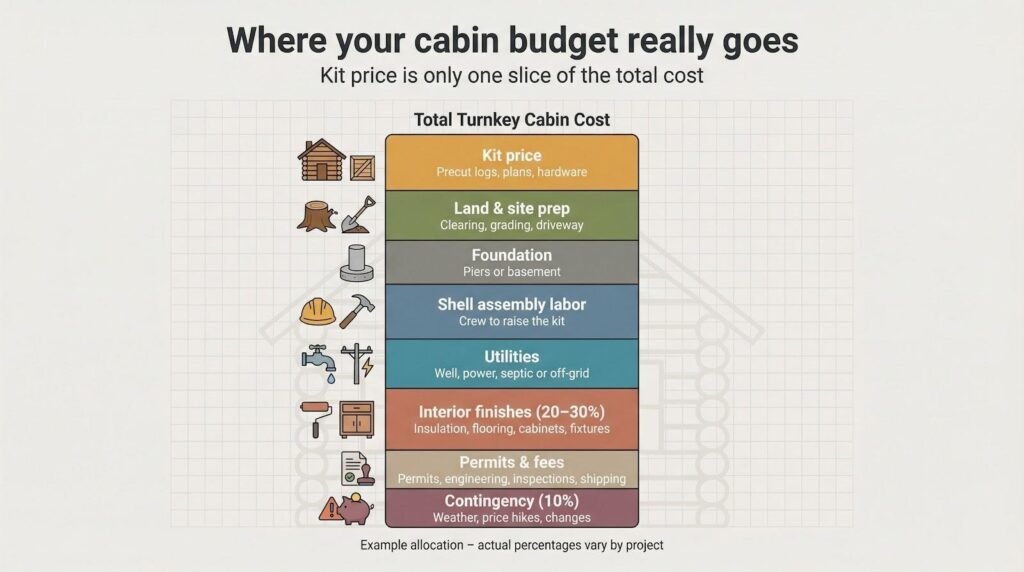
Land and site prep start the meter. Clearing trees, rough grading, and adding a gravel driveway can run four or five figures. A simple pier foundation may cost about $10,000, while a full basement can exceed $30,000.
Next comes the shell raise. If friends handle the lift with rented tools and pizza, labor stays low. Hire a crew and assembly alone can match the kit price, doubling material costs before interior work even starts.
Utilities hold the biggest wildcards. Drilling a well, trenching power, or installing a septic system ranges from $5,000 to $20,000 each, depending on soil, distance, and local fees. Off-grid gear such as solar panels, batteries, and composting toilets replaces monthly bills with a larger upfront spend.
Interior finishes complete the spending sprint. Budget for insulation, wall coverings, flooring, cabinets, plumbing fixtures, and lighting. Even thrifty shoppers should allocate 20 to 30 percent of the total here. Custom hardwood and artisan tile can push totals far higher.
Do not overlook the paper chase. Building permits, engineer stamps, and inspections add a few thousand dollars and plenty of calendar days. Shipping surcharges for remote sites or oversized loads can surprise, so lock that quote early.
Finally, pad every line with a 10 percent contingency. Weather delays, price hikes, or a last-minute porch upgrade all cost real money. Plan for surprises now, and your cabin project stays exciting instead of stressful.
Trends shaping cabin kits in 2024
The cabin-kit world keeps evolving. Three shifts belong on your planning board.
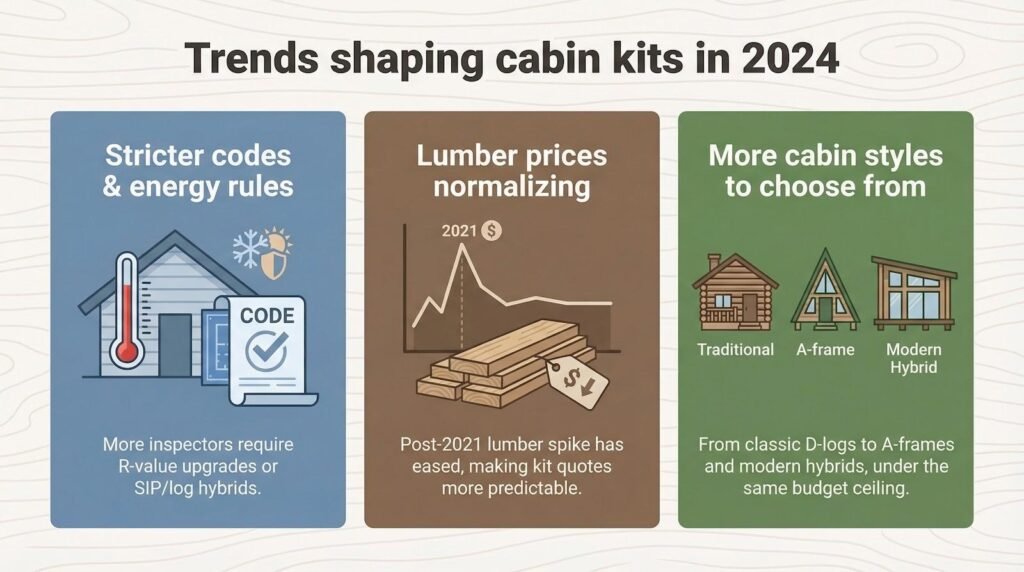
First, building codes tighten each year, particularly on energy use. Many jurisdictions now test solid-log walls against modern R-value targets, and inspectors rarely grant exceptions. Manufacturers respond with thicker profiles, chinked foam cores, or structural insulated panels. Frontier Log Homes notes a growing list of counties that require ICC-400 compliance or extra insulation before issuing permits. When you shop, request stamped drawings that meet your local code.
Second, lumber volatility has eased. After the 2021 spike, softwood prices slid toward historical norms through late 2023. Suppliers dropped “lumber surcharges,” and some trimmed kit prices or added free upgrades. Lock a quote now and most companies will freeze it for 30–90 days, shielding you from short-term swings.
Third, style options have widened. A-frames, modern silhouettes, and hybrid timber-and-glass kits now sit beside traditional D-logs. Younger buyers want clean lines and social-media-ready interiors, so manufacturers offer minimalist floor plans and black-frame windows. The result: you can pick rustic, contemporary, or a mix and still keep the kit under six figures.
Conclusion
Track these trends to future-proof both your build and your resale value.
Frequently asked questions
Can I build one of these kits myself?
Yes, if you are comfortable with basic carpentry and can coordinate a small crew of friends. Manuals guide every log and truss, and most companies staff phone support. Hire licensed pros for electrical, plumbing, and HVAC to keep inspections smooth.
Will the kit pass my local building and energy codes?
Reputable suppliers design to the International Residential Code. Still, share the stamped plans with your building department before purchase. Some cold-climate counties require added insulation on log walls, so budget for that upgrade early.
How long does construction take?
Dry-in on a small kit can happen over a long weekend. Larger shells often stand in two to four weeks, weather permitting. Interior finishes add another month or two, depending on your pace and the complexity of your choices.
What ongoing maintenance do log homes need?
Keep water and sun off the wood. Wash and re-stain every three to five years, check caulk lines, and clear gutters. Modern stains and deep roof overhangs shorten the work compared with older log homes.
Can I finance a cabin kit?
Construction loans cover kit builds just like stick-framed homes, but lenders want a detailed budget, timeline, and proof that you or your contractor can finish the job. Some manufacturers maintain relationships with lenders familiar with log projects, so request referrals.
Is it hard to add on later?
No. Many owners start small, then attach a mudroom, porch, or even a full wing when budgets allow. Match rooflines and use compatible flashing so the addition sheds water cleanly.