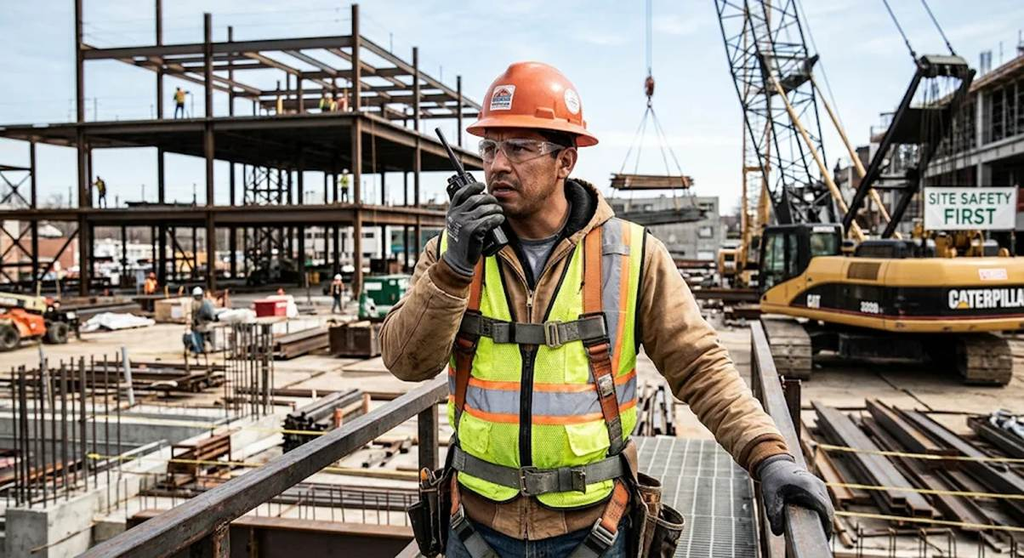
Construction site safety can depend on how quickly one worker warns another about a changing hazard. Singapore’s Ministry of Manpower reported an annualised rate of 24.1 fatal and major injuries per 100,000 construction workers in the first half of 2026, highlighting the continuing need for effective workplace safety measures.
Moving machinery, elevated work, restricted visibility, and overlapping contractor activities can turn a small communication gap into a serious incident. Written instructions and safety signs remain important, but workers also need a fast way to exchange urgent information.
Instant voice communication can help construction teams coordinate movements, report hazards, and respond to emergencies while keeping safety decisions connected to the conditions on site.
Why Communication Breaks Down
Construction sites rarely remain static throughout a shift. Excavations expand, delivery vehicles arrive, scaffolding changes, and several trades may work in neighbouring areas. A route that was safe in the morning can become hazardous by lunchtime.
Traditional communication methods have practical limitations. A phone call may go unanswered, text messages require attention to a screen, and hand signals can become difficult to interpret when equipment blocks the operator’s view. Background noise, distance, dust, and protective equipment can create further obstacles.
These problems become more serious during tasks that require close coordination, including lifting operations, concrete placement, reversing vehicles, and work near open trenches.
Consider the following situations:
- An excavator operator needs an immediate warning that a worker has entered the machine’s operating area.
- A crane team must coordinate the movement of a suspended load with workers on the ground.
- A supervisor discovers an unstable trench edge and needs nearby crews to stop work.
- An electrical team identifies an exposed cable that affects other contractors working in the same area.
In each case, a clear spoken warning can help workers understand the hazard and act sooner. The value lies in reducing the time between noticing a danger and communicating what needs to happen next.
How Push-to-Talk Supports Site Teams
Push-to-talk (PTT) technology allows workers to communicate through a dedicated device or compatible mobile application by pressing a button and speaking. Depending on the system, messages can reach an individual, a designated group, or a wider team almost immediately.
For construction operations, this approach can reduce the need to dial numbers, wait for calls to connect, or compose messages during active work. A supervisor can alert ground crews, equipment operators, and traffic marshals through a shared communication channel, helping everyone receive the same instruction.
Platforms such as Peak PTT provide a push-to-talk communication option that organisations can assess as part of their site coordination arrangements. The important consideration is how the chosen system fits the project’s working conditions, team structure, and safety procedures.
Useful features to assess include:
- Group communication: Relevant workers can hear the same urgent instruction.
- Hands-free operation: Compatible accessories may let workers communicate while keeping their hands available for their tasks.
- Wide-area coverage: Cellular-based systems can support communication across dispersed project areas, subject to network availability.
- Dedicated channels: Teams can separate routine coordination from emergency traffic where the system supports it.
PTT communication works best when workers understand channel assignments, use standard terminology, and know who has authority to issue stop-work instructions.
Preventing Equipment-Related Accidents
Moving equipment creates some of the most challenging communication conditions on construction sites. Excavators, dump trucks, forklifts, cranes, and telehandlers have blind spots and can expose nearby workers to struck-by or crushing hazards.
A documented OSHA investigation describes a fatal incident during a noisy highway paving project in October 2020. A worker acting as a traffic-control spotter was struck and run over by a road grader while the crew worked around closely positioned vehicles and machinery. The investigation noted that the worker was new and untrained for the task.
This case demonstrates why assigning a spotter alone cannot guarantee safety. Workers need suitable training, clearly defined responsibilities, and reliable coordination with equipment operators.
Instant voice communication can support these controls by allowing a designated spotter to give short, direct instructions, confirm that a route remains clear, and warn the team when a person enters a restricted zone.
For example, a delivery coordinator could announce that a truck is approaching an unloading area. The ground team could confirm that pedestrians have moved behind the barrier before the vehicle begins reversing. If visibility deteriorates, the spotter can call for an immediate stop.
Radio communication should complement physical exclusion zones, reversing alarms, traffic management plans, and agreed hand signals. Operators must stop if instructions become unclear or contact with the spotter is lost.
Responding Faster to Site Emergencies
When an accident or dangerous condition occurs, workers may need to alert several people at once. Delays can complicate first aid, evacuation, equipment shutdown, and access for emergency responders.
A shared voice channel can help a worker report the location and nature of an incident while a supervisor coordinates the response. For example, a worker who notices water entering an excavation could warn the excavation crew, request that nearby work stop, and alert the responsible supervisor.
A practical emergency message should communicate four things:
- Location: Identify the building, floor, access point, or site zone.
- Hazard: State what happened or what danger has been identified.
- Immediate action: Tell affected workers to stop, withdraw, or follow the established emergency procedure.
- Assistance required: Request first aid, emergency services, or specialist support through the designated process.
Why does this level of clarity matter? Under pressure, lengthy or vague messages can cause confusion. A short, structured report gives responders a more useful starting point.
Construction companies should establish emergency channel procedures before work begins. Workers need to know how to raise an alarm, who coordinates the response, and how to contact emergency services if radio coverage fails. Communication devices should also be checked regularly and kept charged.
Choosing the Right Communication Tools
A suitable communication setup depends on site size, network conditions, equipment, and the tasks being performed. One device or application may work well on a compact building project but prove less reliable across a remote roadworks corridor.
Before selecting a system, site managers should assess:
- Coverage: Test communication in basements, stairwells, tunnels, excavation areas, and other known dead zones.
- Durability: Check resistance to dust, water, impact, and the temperatures expected on site.
- Usability: Make sure workers can operate the device while wearing gloves and required protective equipment.
- Battery life: Confirm that devices can last through the shift, with a process for charging or replacement.
- Compatibility: Check that accessories and communication methods suit the equipment and work environment.
- Emergency backup: Maintain an alternative procedure for network outages, device failures, or areas without signal.
A balanced system may combine two-way radios, mobile PTT applications, visual signals, alarms, and face-to-face briefings. The aim is to provide a reliable communication route for each task rather than depend on one tool in every situation.
Companies can also review their site safety practices and traffic arrangements to identify where better communication could support existing controls.
Building Better Communication Habits
Even a capable communication system depends on workers using it correctly. Poor radio discipline can flood a channel with unnecessary conversation and make urgent instructions harder to hear.
Construction managers can improve everyday communication through simple, consistent habits:
- Start each shift with a briefing on the day’s hazards, work zones, and communication channels.
- Assign clear call signs or team identifiers so workers know who is speaking.
- Use agreed words for critical instructions, especially stop-work warnings.
- Ask recipients to repeat high-risk instructions when confirmation is necessary.
- Keep routine messages brief and leave priority channels available for urgent traffic.
- Report faulty equipment and coverage gaps rather than assuming the system will work everywhere.
- Review near misses to identify communication failures and improve procedures.
Training should cover realistic conditions, such as noisy equipment areas, changing access routes, and simultaneous lifting activities. New workers and subcontractors need the same essential information as established crew members.
Supervisors can also include communication checks in toolbox talks and daily inspections. Guidance on construction accident risks can help teams connect communication procedures with broader hazard prevention.
The goal is to make clear communication part of the working routine, not something workers remember only after an incident.
Measuring the Safety Benefits
Construction managers can evaluate communication improvements by reviewing practical indicators rather than assuming that new equipment automatically makes a site safer.
Useful measures include response times during drills, the number of failed communication checks, reported near misses involving misunderstood instructions, and the time required to notify responsible personnel about hazards.
Teams can also ask workers whether they can reach the right person quickly, understand emergency instructions, and communicate effectively in high-noise areas. Regular feedback may reveal problems that equipment inspections alone cannot identify.
A 2026 report from the International Powered Access Federation recorded 170 reported fatal and major incidents in 2025, down from 201 in 2024. The report discusses recurring hazards and operational pressures, including communication challenges. These figures cover reported incidents involving powered access equipment across participating countries, rather than all construction accidents, so they should be interpreted within that scope.
Communication performance should be assessed alongside physical safeguards, worker training, supervision, and incident trends. The results can guide improvements to procedures, equipment selection, and refresher training.
Making Every Safety Warning Count
Construction sites will always involve changing conditions, complex tasks, and workers who depend on one another to stay safe. Instant voice communication can help teams share warnings quickly, coordinate equipment movements, and organise a more effective response when conditions become dangerous.
Its value depends on more than buying devices. Clear procedures, trained users, tested coverage, reliable backup methods, and strong supervision all matter. Voice communication should work alongside barriers, protective equipment, safe work plans, and established emergency arrangements.
When workers can reach the right people quickly and understand the instructions they receive, they may be better positioned to identify hazards before those hazards escalate. For construction managers, making communication a planned part of daily site safety can strengthen coordination and help create a workplace where everyone has a clearer role in protecting the crew.