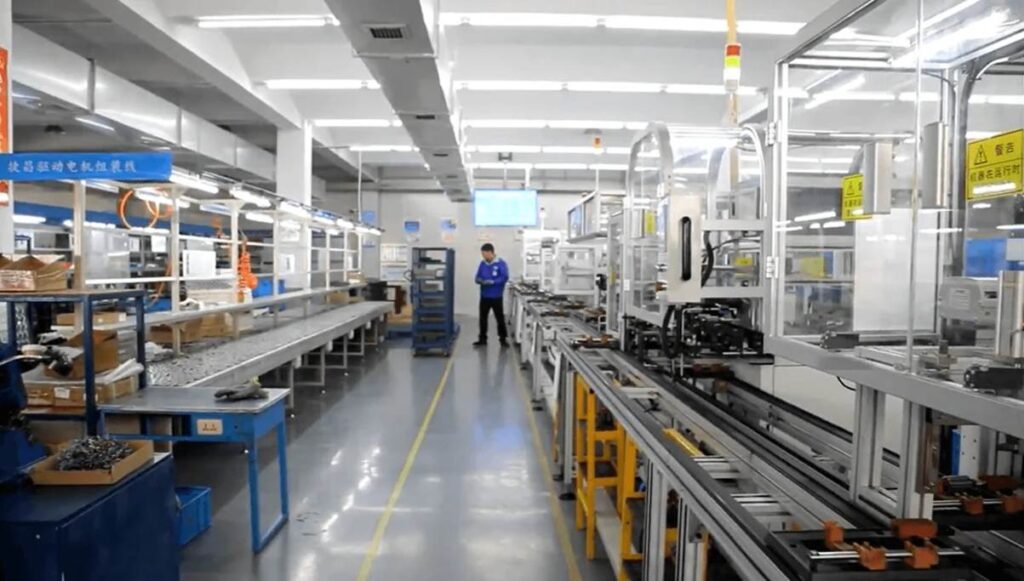
Most facility engineers encounter linear actuators constantly without thinking much about them as a category. The damper that adjusts airflow in a ventilation shaft. The valve on a water treatment line that opens in response to a level sensor. The conveyor gate that diverts product without anyone pressing a button. They’re just things that move reliably in the background, which is exactly what good industrial components are supposed to do.
The technology behind most of this is simpler than the range of applications suggests. A motor turns a lead screw. The drive nut can’t rotate, so it travels along the screw instead. That converts rotary motion into straight-line force at the rod. Extend, retract, stop precisely, repeat. What varies enormously is the specification: force rating, stroke length, duty cycle, environmental protection, control interface. Getting those right for the application is where the engineering actually lives.
Why Electric Actuation Displaced Pneumatics in So Many Applications
Pneumatic cylinders dominated industrial motion for decades because they’re simple and they apply substantial force. They still make sense in certain contexts. But the shift toward electric linear actuators in a wide range of applications over the last twenty years reflects real performance differences that matter in modern automated systems.
Electric actuators can be positioned precisely. A pneumatic cylinder is essentially on or off. An electric actuator under closed-loop control can stop at any point in its travel and hold that position accurately. For applications where the load needs to be positioned rather than just moved, that distinction is fundamental.
They integrate cleanly with PLC and SCADA architecture. Position feedback, speed control, force limiting, all of this communicates through the same control infrastructure as the rest of a modern plant. Pneumatic systems require separate compressed air distribution, which is its own maintenance and energy overhead.
Leakage is the other thing. Compressed air leaks are endemic in pneumatic systems and represent real energy losses that accumulate over time. Hydraulic systems carry the additional concern of fluid contamination in sensitive production environments. Electric actuation removes both problems.
Where Civil and Infrastructure Engineers See These Most
Flood defence and water management infrastructure is a category where the stakes attached to actuator reliability are hard to overstate. Automated sluice gates, flood barriers, intake control valves, these operate under remote or autonomous control in environments where the failure mode isn’t an inconvenience, it’s a flood event. The force requirements are significant. The operating environments are exposed and often corrosive. Maintenance access is sometimes severely constrained. All of these push specification toward the most robust available options.
HVAC damper systems in large commercial and industrial buildings are a much higher volume application. Variable air volume systems adjust damper positions continuously in response to occupancy sensors, temperature data, and air quality monitoring. In a significant building, hundreds of these operate simultaneously. The aggregate effect of well-specified actuators with accurate position feedback versus poorly specified ones shows up in both energy bills and indoor air quality, neither of which is trivial.
Infrastructure access control is a broader category than it might sound. Walkway barriers on elevated structures. Equipment access hatches on mechanical plants. Automated security barriers at entry points to secure facilities. These share a common requirement: reliable, controlled movement in environments that range from covered and temperature-stable to fully exposed and subject to whatever weather the installation is in.
Manufacturing and Process Industry Applications
On the production side, the application diversity is wider still.
Automated clamping and press systems in fabrication benefit from something pneumatic systems genuinely can’t provide: force modulation. An electric actuator can apply a specific, consistent clamping force rather than simply the maximum available pressure. In applications where consistent clamping directly affects product quality, that control matters.
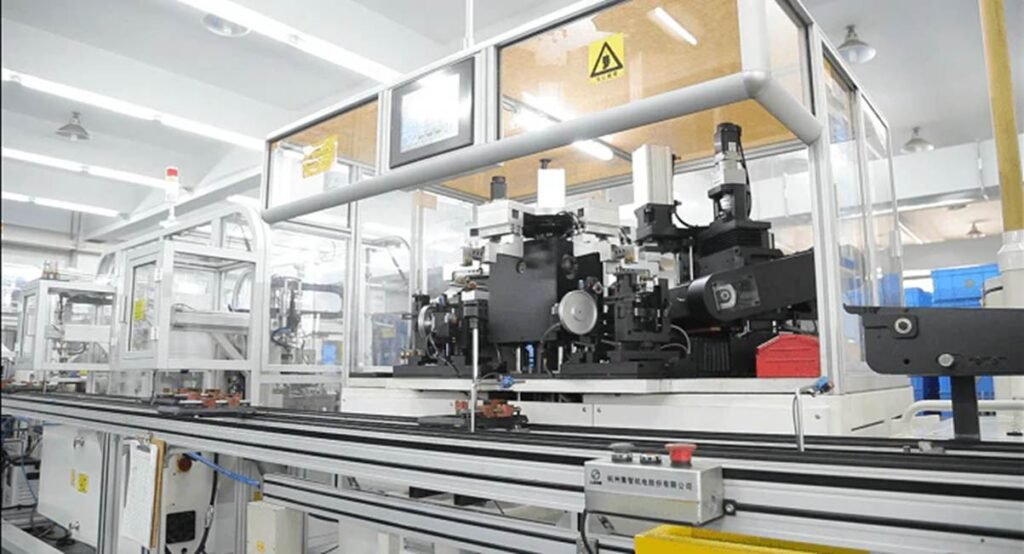
Conveyor divert and sortation systems can run at high cycle rates. Hundreds of operations per shift is not unusual. At that duty cycle, the thermal management and rated cycle life of the actuator become the critical specification parameters, not just the force and stroke ratings that dominate lower-cycle applications.
Food and beverage processing introduces the washdown requirement that changes everything else about the specification. Actuators in direct or indirect contact with production environments need to survive high-pressure washdown with cleaning chemicals. IP69K rating, appropriate seal materials, no internal spaces where contamination can accumulate. The cost difference between correctly specified washdown-rated actuators and standard units is modest. The cost of contamination events or premature failure in service is not.
Supplier Selection in Industrial Contexts
For project engineers and facility managers specifying motion systems, the supplier relationship is a specification variable in itself. Industrial actuator applications frequently involve non-standard requirements, integration questions, and long operational lifespans during which replacement components need to remain available.
Progressive Automations covers a genuinely broad range of industrial application sectors, from agriculture and marine to medical devices and heavy manufacturing. That breadth matters because the questions that arise during specification of an agricultural irrigation gate are different from those for a food processing line, but the underlying technical depth required to answer them properly is the same.
Working with a supplier that defaults to understanding the industrial context rather than fitting a commercial product to an industrial requirement reduces specification risk. The conversation about duty cycle, environmental rating, and control integration goes differently with a supplier that has encountered those questions across multiple industries than with one encountering them for the first time.
Specification Principles That Hold Across Applications
Load characterisation comes before everything else. Static load, dynamic load, and shock load are different from the actuator’s perspective. A system specified for static load that encounters shock loading in service will underperform its rated life by a margin that’s embarrassing to explain after the fact.
Duty cycle is what separates industrial specification from everything else. The nominal force rating of an actuator means something specific under laboratory conditions. What it means under actual operating conditions depends on how many cycles per hour the application demands, what the thermal environment looks like, and whether the actuator has adequate time to dissipate heat between cycles.
Environmental rating needs to match the actual installation rather than a general category. The gap between IP65 and IP69K is significant in both protection level and cost. Paying for IP69K in a dry indoor application wastes money. Specifying IP54 for an outdoor coastal installation saves money once and costs considerably more than that in premature replacement.
Control integration should be in the conversation from the earliest stage of the project. An actuator with position feedback in a compatible format saves integration work later. One specified without considering the control architecture creates problems that are solvable but shouldn’t have existed in the first place.
The industrial motion systems that work best over time are the ones where these questions were answered properly during specification rather than worked around during commissioning. The mechanism is simple. Getting the specification right is where the engineering actually earns its keep.