With AI, many teams have discovered an uncomfortable truth: it accelerates development, but it also poses quality risks. AI changes software development faster than most engineering teams expected. At the same time, software complexity is growing. So, software quality becomes one of the most important things when developing software.
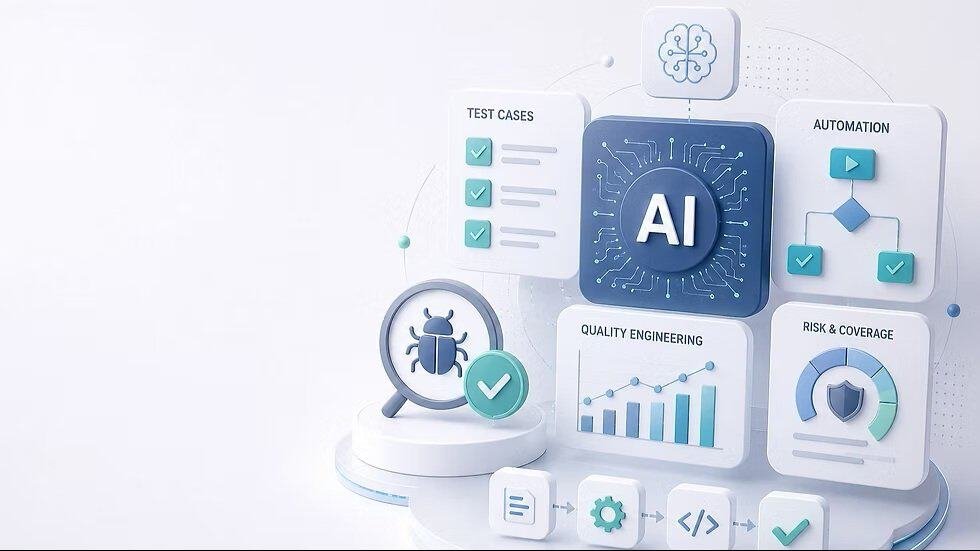
As AI changes the way software development is done, it also changes the way a QA engineer performs their job. As stated in the World Quality Report 2025-26, more than 80% of enterprises are piloting or deploying Generative AI in their quality engineering processes. Although AI-driven testing is becoming more popular, and the share of non-adopters rose from 4% in 2024 to 11% in 2025, there are more worries about protecting sensitive data when using AI tools.
The Changes in the QA Process
Early QA processes relied heavily on manual testing, where engineers validated functionality step by step through repetitive test cases. Then, the shift toward automation transformed QA. Traditional automation frameworks like Selenium and JUnit helped teams scale testing and accelerate release cycles.
With AI, the QA’s work is reshaped. Today’s QA teams combine traditional frameworks such as Cypress, Playwright, and JUnit with AI-assisted platforms to accelerate testing. As a result, QA engineers spend less time on maintaining repetitive test scripts and more time focusing on product quality strategy, edge cases, and user experience validation.
Speaking about the future, AI-driven testing will continue to evolve. AI tools that assist QA engineers will automate repetitive validation tasks, so the transition from automated testing to autonomous testing will take place. But, at the same time, as the use of AI increases, human expertise will become more in demand.
Where AI can be used in QA
Instead of replacing existing QA practices, AI is integrated into them. It works as an additional layer that supports engineers in areas where testing can be automated.
- Test cases generation: AI analyzes application requirements, user stories, and existing code, and generates relevant test scenarios.
- Automating repetitive tasks: AI reduces the need for repetitive manual work, as with AI tools, tasks like regression execution, test maintenance, data preparation, result analysis, and others can be automated.
- Predicting failures: Machine learning models can analyze historical testing data, code changes, and deployment patterns, and identify areas with high risk of an application before defects reach production.
- Catching visual bugs: AI-driven visual testing tools compare layouts, UI elements, fonts, colors, and responsive behavior across devices and browsers. Unlike traditional pixel-based comparisons, AI can distinguish between intentional design updates and actual visual defects.
- Improving test prioritization: AI helps teams optimize regression suites. Based on recent code changes, business impact, and previous failure patterns, it identifies the most critical tests.
- Continuous Testing in CI/CD Pipelines: DevOps practices demand continuous testing integrated seamlessly into development workflows. AI-driven testing tools naturally fit into CI/CD pipelines. They automatically trigger appropriate tests when code is committed, provide immediate feedback, and block deployments when quality thresholds aren’t met.
The role of artificial intelligence in QA is expected to grow beyond automation support. Over time, it will become more involved in areas such as risk assessment, test prioritization, and continuous improvement of quality processes within modern development pipelines.
The Benefits AI-Driven Testing Brings to QA
The impact of AI in QA becomes particularly clear when looking at specific areas of the testing process.
One of the most significant advantages of AI-driven testing is the reduction in time spent creating and maintaining test cases. Machine learning algorithms can analyze application behavior, user interactions, and code changes to automatically generate relevant test scenarios.
AI also excels at identifying testing gaps that human testers might overlook. AI-driven tools can suggest additional test scenarios that expand coverage beyond manual planning.
Beyond executing tests, AI-driven systems provide insights into quality trends. Machine learning models can predict which features or modules are likely to have defects based on code metrics, development patterns, and historical data.
Also, a lot of modern QA teams are lacking time, and AI can solve this problem. AI reduces manual effort and accelerates repetitive testing activities. It shortens feedback loops by providing faster insights after each code change, without waiting for the full manual regression cycle.
Still, these advantages represent only one side of AI in QA. AI follows predictable patterns and lacks human feeling. It can also misinterpret edge cases or overlook issues that require contextual understanding. It also doesn’t care about awkward UI or other issues that are obvious to people but may not be considered problems from a technical perspective. This is why AI is best seen as a supporting tool rather than a replacement for human QA expertise.
Conclusion AI doesn’t make QA engineering obsolete. Indeed, quality assurance is becoming more important, not less. However, the role of QA engineering is expanding beyond traditional testing. The QA teams now use AI tools like TestRail, TestRigor, Mabl, and others for software testing that support test generation, defect prediction, test optimization, smart test maintenance, and automated test execution. If you are worried that AI will replace QA engineers, then the reality is that so far, AI lacks human judgment, experience, and understanding of product context, and can support, not replace, human expertise. With AI, QA engineers just work smarter, not harder.