A crack in an outdoor concrete slab is easy to blame on winter. The real explanation is usually more complicated.
Concrete naturally shrinks as it hardens, and some cracking is possible even when the work is done properly. Cold climates introduce additional stresses because the slab may also have to deal with freezing soil, moisture beneath the concrete, repeated freeze-thaw exposure and de-icing chemicals.
What happens before the concrete truck arrives can therefore be just as important as the concrete itself.
A stable subgrade, adequate drainage, an appropriate concrete mixture, correctly positioned joints and proper curing all influence how well a driveway, patio or sidewalk performs through future winters. When several of these details are overlooked, cold weather can expose the weaknesses surprisingly quickly.
Concrete Alberta notes that completely crack-free concrete cannot consistently be produced, but it identifies poor subgrade preparation, improper jointing, excessive slump, poor finishing and inadequate curing among the major factors that increase cracking.
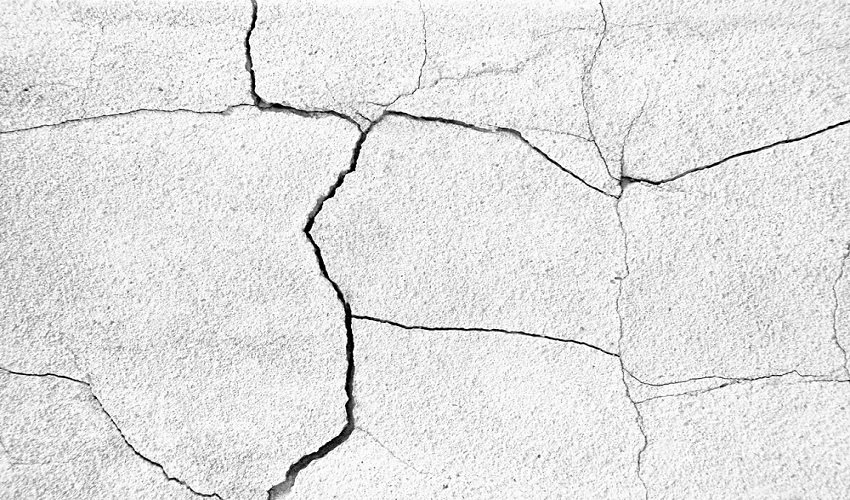
Why Does Concrete Crack Even Before Winter Becomes a Factor?
Concrete undergoes physical changes as it develops strength.
The water and cementitious materials react through hydration, creating the hardened cement paste that binds the aggregate together. At the same time, moisture leaves the concrete and the material tends to shrink.
A slab cannot always contract freely.
Friction against the base, connections to other construction and variations within the slab can restrain that movement. When tensile stresses exceed what the young concrete can accommodate, cracking can occur.
This is why a crack appearing during the first summer does not necessarily indicate frost damage.
Cold weather becomes another source of stress later. If water reaches susceptible concrete or the supporting soil beneath it, freezing can affect both the slab and the ground on which it rests.
Understanding which process caused the crack matters because repairing the visible line without addressing movement underneath it may achieve very little.
Why Is Subgrade Preparation So Important?
Concrete is rigid, but the material supporting it is not necessarily stable.
If a slab sits on poorly compacted soil, a soft pocket beneath one area can settle while the rest remains supported. The concrete then has to bridge the difference. Because concrete is much stronger in compression than in tension, differential support can eventually contribute to cracking.
Concrete Alberta recommends removing topsoil and soft spots before slab construction and compacting the underlying soil through rolling, vibration or tamping. It also recommends keeping the subgrade smooth and providing slope for drainage.
Those steps become especially important in a cold climate because the supporting soil is not exposed to identical conditions throughout the year.
Water can enter the ground from rainfall, snowmelt, irrigation or poor surface drainage. Once temperatures fall far enough for frost to penetrate the soil, moisture and frost-susceptible soil can create vertical movement beneath the slab.
A beautifully finished concrete surface cannot compensate for a base that moves unpredictably beneath it.
How Does Frost Heave Crack Concrete?
Frost heave is not simply the ground becoming slightly larger because existing water freezes.
In frost-susceptible soils, freezing conditions can draw additional moisture toward the freezing zone. Ice can accumulate within the soil and cause the ground surface to rise.
If the movement occurs uniformly beneath the entire slab, the concrete may rise and fall with relatively little distress. Uneven movement is more troublesome.
Research published through Canada’s National Research Council examined concrete sidewalks in Prairie cities including Calgary, Edmonton and Camrose. The field observations showed seasonal upward movements beginning around November, generally reaching their highest levels around March and returning toward normal during spring. The study concluded that differential vertical movement, rather than uniform lifting alone, was the damaging component.
That distinction explains why one section of a driveway may crack while the neighbouring section remains intact.
The issue is not merely that the ground froze. Different parts of the slab experienced different amounts of support or movement.
Why Does Drainage Beneath the Slab Matter?
Water is a central part of most freeze-related deterioration.
Good drainage limits the amount of moisture available to contribute to frost action beneath the slab. It also reduces the likelihood of persistently saturated conditions around the concrete.
The NRC sidewalk research found that a coarse granular subgrade approximately 150 mm thick could help improve drainage and reduce unequal moisture accumulation beneath sidewalks in frost-prone conditions.
Concrete Alberta also notes that, where a geotechnical evaluation calls for a capillary break, approximately 150 to 200 mm of pit-run gravel or coarse crushed stone may be recommended between the slab system and underlying soil. The exact design depends on the project and site conditions rather than a universal depth for every residential slab.
Surface drainage matters as well.
If a driveway or patio directs water toward a low spot along its edge, the supporting soil in that location may remain wetter than the rest. Once winter arrives, the slab can experience different conditions from one area to another.
Proper concrete work therefore begins with thinking about where water will go long after the finishing crew has left.
Does Concrete Thickness Help Prevent Cracking?
Thickness contributes to slab capacity, but increasing thickness does not correct every cracking problem.
For residential driveways used exclusively by passenger vehicles, Concrete Alberta recommends a minimum slab thickness of 100 mm. Where heavier vehicles such as moving vans or trucks carrying materials may use the driveway, it recommends approximately 150 mm.
That extra depth improves the slab’s ability to carry greater loads, but thickness does not replace subgrade preparation, drainage or proper jointing.
A thick slab placed over unstable soil can still move.
Likewise, reinforcement should not be misunderstood as a guarantee against cracks. Concrete Alberta notes that reinforcing steel does not prevent cracks from forming, although correctly positioned reinforcement can help control their behaviour and may influence joint requirements.
For Calgary-area residential work, a contractor such as Deluxe Concrete Services can consider the slab, site preparation and intended use together rather than treating the visible concrete surface as the entire project. The company currently undertakes residential and commercial concrete work including patios, sidewalks, stairs and structural concrete projects across Calgary and surrounding Southern Alberta communities.
Why Are Control Joints Necessary If Concrete Is Going to Shrink?
Control joints acknowledge a basic fact about concrete: some movement is expected.
Instead of assuming a large slab will remain completely uncracked, properly designed joints create deliberate weakened planes where shrinkage movement is more likely to concentrate.
That produces a more predictable result than allowing the slab to decide where a random crack will form.
Joint layout matters because slab geometry affects stress.
Long, narrow sections and irregular shapes are more difficult to control than well-proportioned panels. Corners, columns, changes in thickness and other restraints can also concentrate stress.
Isolation joints serve a somewhat different purpose. They separate the slab from structures or components that may move independently, allowing each element some freedom rather than forcing all movement through the concrete.
Concrete Alberta lists omitted or improperly constructed isolation and control joints among the common causes associated with concrete cracking.
Joints do not eliminate the forces acting on the slab. They help manage where those forces are relieved.
Why Can Adding Water at the Jobsite Cause Problems?
Wet concrete can be easier to move and finish, which makes adding water tempting when the mixture begins to feel stiff.
The convenience has consequences.
Concrete Alberta warns against unnecessarily increasing slump with additional water at the jobsite. Its placement guidance notes that adding excess water can increase shrinkage potential by approximately 10% and reduce freeze-thaw resistance by about 20%.
More water can also encourage bleeding and segregation and may reduce the quality of the hardened concrete if the mixture is altered beyond its intended proportions.
Workability should instead be addressed through an appropriate concrete mixture supplied for the conditions of the project.
This matters particularly for exterior flatwork. A driveway or sidewalk does not merely need to look smooth on placement day. It has to enter winter with sufficient strength and durability to resist future moisture and freezing cycles.
Why Is Air Entrainment Important in Exterior Concrete?
Concrete contains pores, and some degree of moisture can enter them.
When saturated concrete freezes, water within the pore structure can contribute to internal pressures capable of damaging the hardened material.
Air-entrained concrete is intentionally produced with a network of very small air voids. These voids provide space that helps relieve pressure as freezing occurs.
Concrete Alberta specifically recommends air-entrained concrete for outdoor slabs exposed to freezing weather. It also identifies inadequate air entrainment as one of the principal reasons concrete surfaces can scale when exposed to freezing, thawing and moisture.
Air entrainment is therefore different from accidentally trapping large air pockets during poor placement.
The air-void system is an intentional part of the concrete mixture designed to improve durability under freeze-thaw exposure.
Why Is Fresh Concrete Especially Vulnerable to Cold Weather?
Concrete needs time and suitable temperature conditions to develop strength.
Cold temperatures slow hydration. If fresh concrete actually freezes before it develops enough strength, the damage can be much more serious than simply extending the curing schedule.
Concrete Alberta’s cold-weather guidance notes that fresh concrete can freeze when its temperature falls below approximately 4°C and that premature freezing can reduce the concrete’s potential strength by more than 50%.
That is a substantial difference.
Cold-weather concreting therefore involves more than ordering concrete and hoping daytime temperatures remain above freezing. The subgrade, forms and concrete temperature all need consideration, along with protection after placement.
Concrete should not be placed onto a frozen base. As the frozen ground later thaws, support can change and the slab may settle unevenly. Concrete Alberta’s cold-weather construction guidance recommends thawing frozen excavation conditions or otherwise addressing frost before concrete construction proceeds.
The condition beneath the pour matters just as much as the air temperature above it.
What Does Proper Curing Actually Do?
Curing gives concrete suitable moisture and temperature conditions so hydration can continue and the material can develop the properties expected from the mix.
It should not be confused with simply waiting for concrete to dry.
Allowing the surface to lose moisture too quickly can interfere with strength development and contribute to shrinkage-related problems. Wind, low humidity and temperature conditions can all affect how quickly water leaves young concrete.
Common curing approaches include curing compounds, plastic sheeting, wet coverings and controlled application of water, depending on the project and weather conditions. Concrete Alberta lists continuous water spray, wet burlap, plastic sheeting, ponding and curing compounds among recognized methods.
Cold-weather exterior concrete requires additional attention.
Concrete Alberta states that CSA A23.1 guidance for concrete exposed to freeze-thaw cycles and de-icing chemicals calls for curing while maintaining concrete at a minimum of 10°C for seven days, or until the concrete reaches 70% of its specified 28-day strength.
Those numbers demonstrate why curing cannot be treated as an optional finishing detail.
The concrete may look hard the next morning, but appearance does not mean the material has finished developing.
Why Can Freeze-Thaw Cycles Damage Hardened Concrete?
Once concrete is in service, moisture becomes the critical factor.
NRC research into concrete durability under winter conditions notes that concrete exposed to continuous or frequent wetting is particularly susceptible to damage from freezing and thawing.
Repeated cycles can produce cumulative deterioration when the concrete becomes sufficiently saturated.
One common visible form is scaling, where the finished surface begins flaking or peeling away. Concrete Alberta identifies freeze-thaw exposure in the presence of moisture and de-icing salts as a major scaling condition.
Air entrainment, a suitable water-cementitious material relationship, proper finishing and curing all influence resistance to that deterioration.
The goal is therefore not to make concrete immune to winter. It is to construct concrete capable of enduring the exposure for which it was intended.
What Role Do De-Icing Salts Play?
Winter maintenance can create another source of stress.
De-icing products make walking and driving surfaces safer, but some chemicals can intensify freeze-thaw damage and surface scaling.
Concrete Alberta advises against using damaging salts and chemicals on concrete and notes that concrete less than one year old is especially vulnerable.
Its technical guidance also states that concrete intended for freeze-thaw and de-icer exposure should be allowed to air-dry for at least one month following the specified curing period before exposure to freezing and de-icing chemicals.
That first winter therefore deserves particular care.
A newly poured driveway may look fully finished, but its long-term durability is still affected by moisture exposure, curing history and how the surface is maintained.
Are All Concrete Cracks a Structural Failure?
No.
Concrete Alberta notes that most isolated random cracks do not compromise structural integrity, although they can be visually undesirable and may allow water into the slab. Closely spaced pattern cracking associated with freeze-thaw deterioration is a different concern because it can be linked with progressive damage.
The location and behaviour of a crack matter.
A narrow, stable shrinkage crack is different from a slab section that has lifted, settled or separated vertically. Repeated opening and closing, significant displacement, widespread scaling or deterioration around the crack can indicate a broader problem.
For an existing driveway, patio or walkway, Deluxe Concrete Services provides concrete repair and sealing services in addition to new concrete construction, giving Calgary-area property owners an opportunity to assess whether the visible crack is primarily cosmetic or connected to a larger condition.
A repair should respond to the cause rather than simply hide the symptom.
FAQs About Concrete Cracking
Can concrete be completely prevented from cracking?
No practical concrete installation can guarantee that a slab will never crack. Concrete naturally shrinks and responds to loading and environmental conditions. Good subgrade preparation, proper mix selection, correctly located joints and adequate curing can greatly improve crack control and reduce avoidable deterioration.
How cold is too cold for fresh concrete?
Concrete Alberta notes that fresh concrete can freeze when its temperature falls below approximately 4°C. Cold-weather placement requires specific protection because premature freezing can significantly reduce potential strength.
Does reinforcement stop a driveway from cracking?
Reinforcing steel does not prevent concrete from cracking. Its purpose is generally to help hold the concrete together and control behaviour after cracking occurs. Subgrade condition, slab thickness, joints, concrete quality and curing remain important.
Why does my concrete look worse after winter?
Freeze-thaw exposure can reveal weaknesses associated with moisture, inadequate air entrainment, poor curing, surface finishing or de-icing chemicals. Frost movement beneath the slab can also create lifting or differential settlement. Determining whether the problem is surface scaling or movement of the slab helps identify the appropriate response.
Cold-Climate Concrete Performance Starts Before the Pour
Winter is often blamed when concrete cracks, but the weather is only one part of the explanation.
The long-term performance of an exterior slab begins with the soil beneath it. Soft areas need to be removed, the supporting base needs to be appropriate for the site, and water needs somewhere to drain. The slab then needs suitable thickness, a concrete mixture designed for its exposure, sensible jointing and careful placement.
After finishing, curing becomes equally important.
Concrete placed in cold conditions needs protection while it gains strength, and exterior concrete facing Canadian winters requires enough durability to tolerate moisture and repeated freezing and thawing.
When these details are coordinated, cold weather becomes a design condition the concrete is prepared to handle rather than an unexpected test of the finished slab.
That is ultimately the difference between simply pouring concrete and constructing it for the climate where it will spend the next several decades.